
Why Fuel Prices Are Rising In India Amid Iran War?
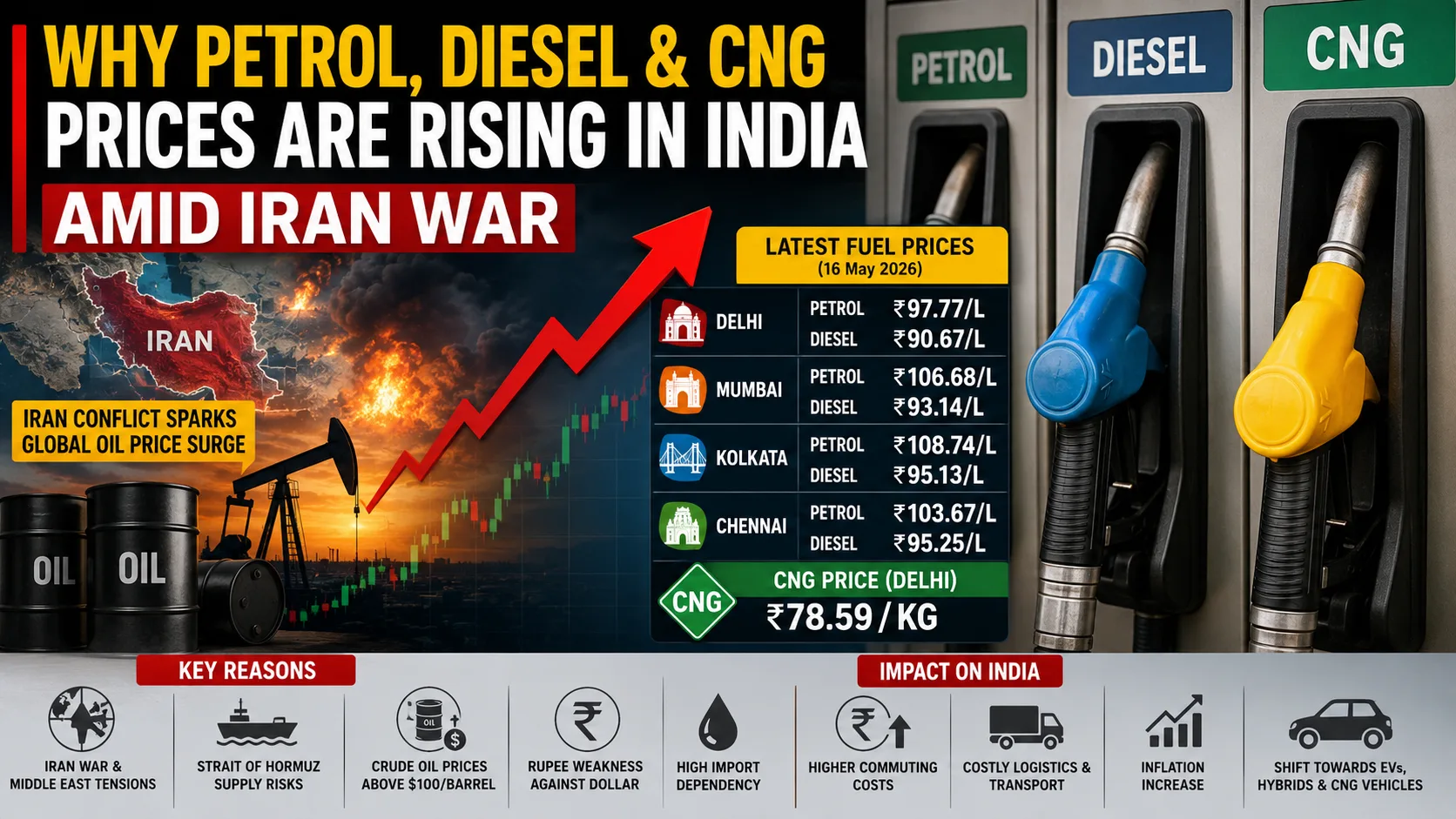
Fuel prices in India have witnessed a sharp increase once again, sending ripples through the economy and directly impacting daily commuters, transport businesses, and household budgets. After an unprecedented four-year freeze, petrol and diesel prices were recently hiked by nearly ₹3 per litre across the country.
This surge is primarily driven by skyrocketing global crude oil prices triggered by the ongoing Iran-West Asia conflict and significant maritime disruptions near the Strait of Hormuz.
The latest retail prices in major Indian metros highlight the growing burden on consumers:
Delhi: Petrol ₹97.77/litre, Diesel ₹90.67/litre
Mumbai: Petrol ₹106.68/litre, Diesel ₹93.14/litre
Kolkata: Petrol ₹108.74/litre, Diesel ₹95.13/litre
Chennai: Petrol ₹103.67/litre, Diesel ₹95.25/litre
Beyond liquid fuels, CNG prices have also climbed in several cities, with the price in Delhi now nearing ₹79/kg, further straining the logistics and public transport sectors.
The Iran Conflict and Global Oil Markets
Geopolitical tensions involving Iran have a direct and immediate impact on global energy security. The Strait of Hormuz is recognized as one of the world’s most critical oil shipping routes; any threat or disruption to traffic in this narrow passage immediately sends crude oil prices higher.
Recent escalations, shipping risks, and supply concerns pushed international crude oil prices above $120 per barrel, though they have recently stabilized in the $100–$105 range. As long as the conflict remains unresolved, the volatility in global markets is expected to persist.
India’s Vulnerability to Global Fluctuations
India is particularly susceptible to these international shocks because the country imports over 85% of its crude oil requirements. This high level of dependency means that any spike in international energy prices leads to a massive increase in fuel import costs.
Furthermore, rising oil prices often weaken the Indian Rupee against the US Dollar, making imports even more expensive. Eventually, Oil Marketing Companies (OMCs) are forced to pass these increased costs to consumers by raising domestic petrol, diesel, and CNG prices.
Also Read: Tata Motors Expands Green Portfolio: Flex-Fuel Launch Confirmed for 2026
Understanding the Tax Structure on Fuel
The final price you pay at the pump is not just the cost of raw oil. In India, retail fuel prices are composed of several layers:
Central Excise Duty: A flat tax collected by the Union Government.
State VAT (Value Added Tax): A percentage-based tax that varies by state.
Dealer Commission: The margin paid to petrol pump owners.
Additional Costs: This includes freight charges, refining, and distribution costs.
Because taxes form a significant portion of the retail price and State VAT varies widely, consumers in Mumbai often pay much more for fuel than those in Delhi.
Why are CNG Prices Increasing Too?
While often seen as a cheaper alternative, CNG is not immune to global crises. CNG pricing in India is influenced by domestic natural gas production, imported LNG (Liquefied Natural Gas) prices, and global supply chain disruptions.
The conflict in the Middle East has driven up global natural gas prices, which directly affects the cost of the gas India must import to meet its rising demand.
Combined with government gas allocation policies and transportation costs, these factors have led to the recent hikes in CNG rates.
Also Read: Hyundai to Launch New SUV in India: Bayon-Based “BC4i” Spotted Testing
The Government’s Dilemma on Tax Cuts
Despite public pressure, the government finds it difficult to drastically reduce fuel taxes. These taxes are a massive source of revenue used to fund critical national interests, including:
Infrastructure: Construction of national highways and rural development.
Social Welfare: Funding for various central and state welfare schemes.
Defense & Fiscal Health: Managing the national fiscal deficit and spending on defense. Reducing these taxes significantly could deplete the treasury, potentially hurting government finances and public spending capacity for essential projects.
Impact on the Common Man and the Auto Industry
The cascading effect of fuel price hikes is far-reaching. Higher fuel costs lead to:
Rising Inflation: As transportation costs for food and essential goods increase, so do retail prices.
Increased Commuting Costs: Daily travel becomes more expensive, and cab or delivery services often implement surcharges.
Market Shifts: There is a visible trend toward Electric Vehicles (EVs), hybrids, and high-mileage CNG vehicles as consumers look to bypass expensive petrol and diesel.
Demand Trends: Prolonged fuel spikes often result in a declining demand for “fuel-hungry” large SUVs in favor of more efficient alternatives.
India’s Long-Term Energy Strategy
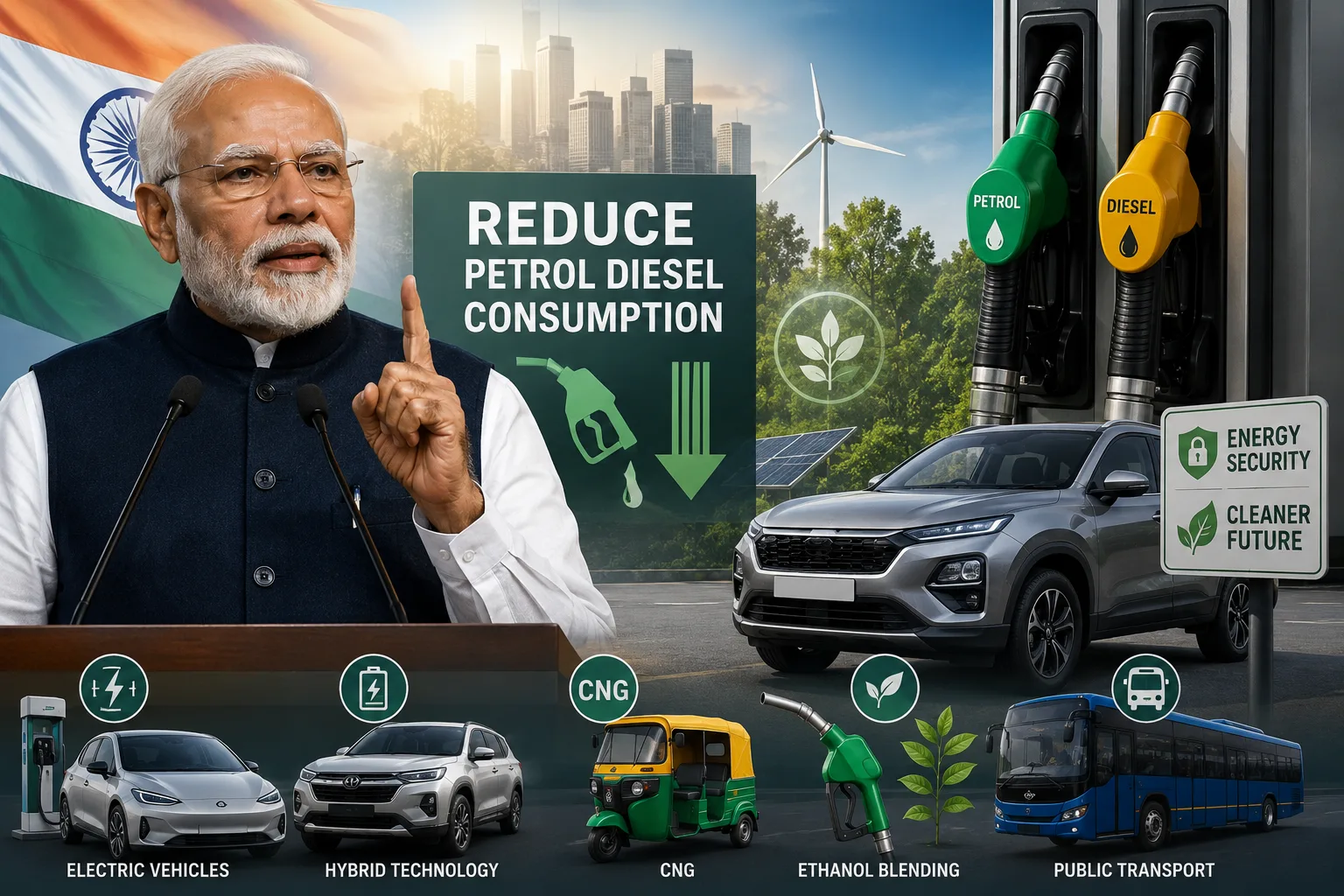
To insulate the economy from future geopolitical crises, the Indian government is aggressively pushing for energy independence. This long-term strategy includes:
EV Adoption & Ethanol Blending: Reducing the volume of pure petrol used.
Alternative Fuels: Encouraging flex-fuel engines, biofuels, and hydrogen mobility.
Public Infrastructure: Expanding metro rails and electric public transport. These initiatives aim to reduce India’s reliance on imported crude and protect citizens from the volatility of international oil politics.
Conclusion
The current fuel crisis in India is a stark reminder of how closely domestic pricing is tied to global geopolitics and energy security. The ongoing conflict involving Iran has underscored India’s vulnerability to international wars, impacting everything from individual savings to the automobile sector’s future.
As global oil volatility continues, India’s transition toward alternative fuels and electric mobility may no longer be just an environmental goal, but a vital necessity for national economic stability.
Also Read: BYD Sealion 6 PHEV Spied Again Ahead Of India Launch