2026 Honda City Facelift Vs Hyundai Verna: Which Car Offers Better Value For Money?
2026 Honda City Facelift Vs Hyundai Verna: The premium mid-size sedan segment in India continues to attract buyers looking for executive comfort, mature performance, and premium features. The newly launched 2026 Honda City facelift has arrived to directly challenge the Hyundai Verna, one of the segment’s most formidable rivals.
Both sedans offer modern styling, highly digitalised, feature-loaded cabins, capable petrol powertrains, and cutting-edge safety technology.
While compact and mid-size SUVs currently dominate the sales charts, low-slung sedans like the Honda City and Hyundai Verna still remain immensely popular among enthusiasts and families who prioritize planted driving dynamics, rear-seat comfort, and effortless highway performance.
So, lets know which among these two models are best choice for you.
2026 Honda City Facelift Vs Hyundai Verna: Exterior Design Comparison
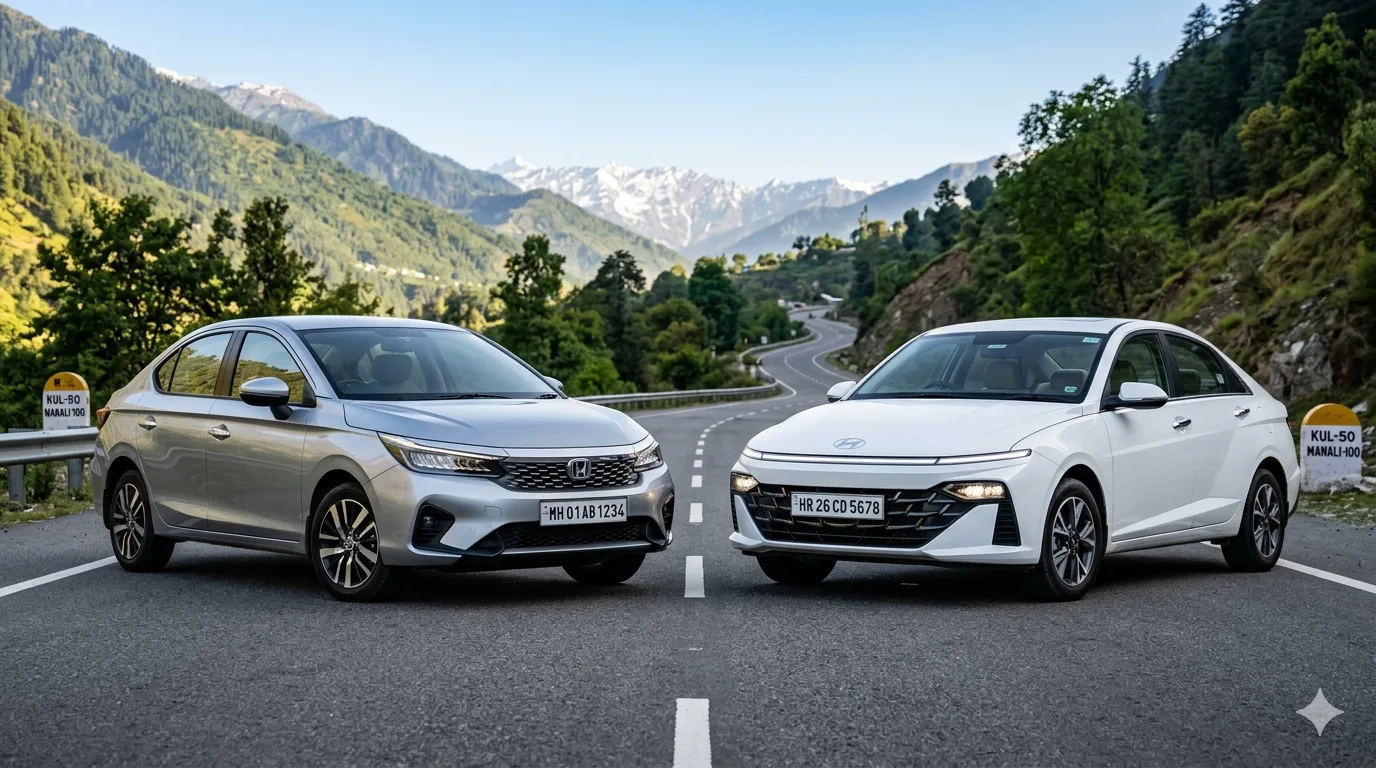
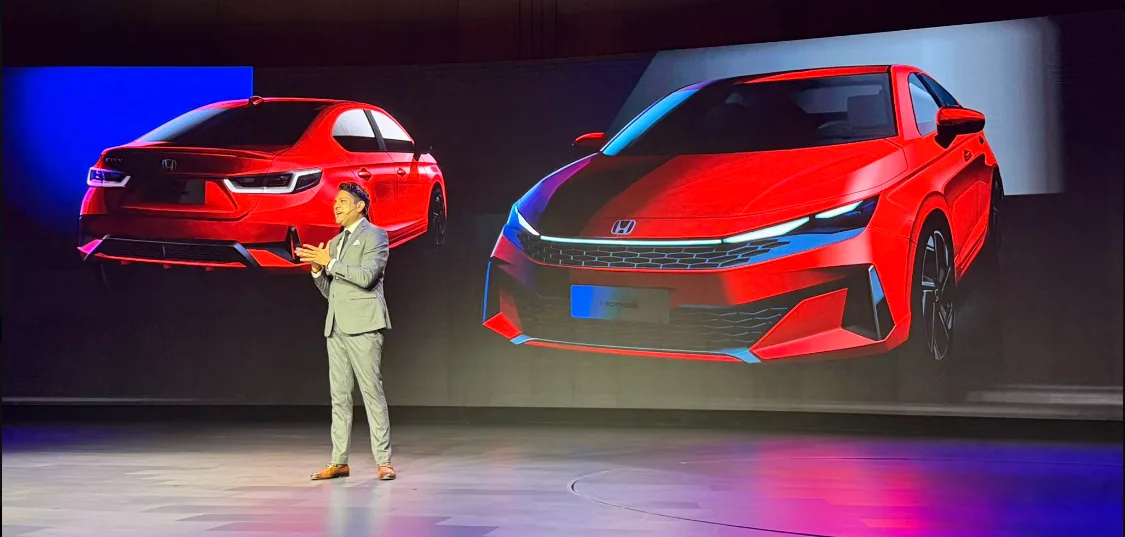
The 2026 Honda City facelift takes a conservative yet razor-sharp approach to styling. It gains an updated honeycomb mesh grille, sharper front and rear bumpers, and elegant connected LED DRLs that emphasize a premium, mature aesthetic.
In stark contrast, the Hyundai Verna relies on a radical, futuristic design language. It boasts a striking horizon-wide connected LED DRL strip across the bonnet, a dramatic coupe-inspired sloping roofline, and aggressive, parametric body lines.
While the City focuses on timeless elegance and sophistication, the Verna targets a younger demographic with its loud, sporty, and distinctly futuristic road presence.
Both feature handsome 16-inch alloy wheels and complete LED lighting setups.
2026 Honda City Facelift Vs Hyundai Verna: Dimensions And Cabin Space
When it comes to interior packaging, both sedans excel at offering spacious cabins well-suited for family vacations and long-distance cruising. The Hyundai Verna sits on a slightly longer wheelbase, translated directly into impressive rear-seat legroom and a massive 528-litre boot.
However, the Honda City has always been the gold standard for rear passenger comfort. Thanks to its plush “sofa-like” rear bench, generous under-thigh support, and better headroom due to a conventional roofline, the City remains the more comfortable chauffeur-driven car. The Verna feels driver-centric, whereas the City balances space perfectly for rear passengers.
2026 Honda City Facelift Vs Hyundai Verna: Features And Technology Comparison
In the tech department, both cars leave very little to be desired, but they execute it differently. The 2026 Honda City facelift steps up its game with a new 10.1-inch touchscreen infotainment system, wireless Android Auto and Apple CarPlay, ventilated front seats, and a newly added 360-degree camera.
The Hyundai Verna, meanwhile, feels like a futuristic cockpit. It features dual integrated 10.25-inch screens, a premium 8-speaker Bose sound system, switchable climate/infotainment controls, and a larger sunroof. If you want cutting-edge gadgetry and tech gimmicks, the Verna edges ahead, while the City packages essential premium luxuries highly effectively for its price.
Engine, Mileage And Driving Experience
Under the hood, the mechanical philosophies diverge significantly. The Honda City relies on its ultra-refined 1.5-litre naturally aspirated i-VTEC petrol engine (121 PS) paired with manual or CVT gearboxes. For mileage seekers, Honda offers the class-exclusive e:HEV strong hybrid powertrain, delivering a phenomenal real-world fuel efficiency of over 25 km/l.
The Hyundai Verna countered with two distinct choices: a smooth 1.5-litre naturally aspirated petrol engine and a wild, class-leading 1.5-litre turbo-petrol motor pumping out an explosive 160 PS. The Verna turbo, with its quick-shifting 7-speed DCT, is clearly the more exciting enthusiast’s car, while the City line-up emphasizes progressive smoothness, hybrid efficiency, and linear power delivery.
Safety Features Comparison
Passenger protection is a primary strength for both of these family sedans. The 2026 Honda City facelift comes loaded with six airbags as standard, alongside the highly reliable “Honda Sensing” Level-2 ADAS suite featuring adaptive cruise control, lane-keep assist, and collision mitigation braking.
The Hyundai Verna matches this with its own comprehensive Level-2 SmartSense ADAS tech, six standard airbags, ESC, and a Tyre Pressure Monitoring System (TPMS). Crucially, the Verna holds a full 5-star safety rating from Global NCAP, offering incredible peace of mind that goes hand-in-hand with Honda’s historically strong structural safety reputation.
2026 Honda City Facelift Vs Hyundai Verna: Price And Value For Money Verdict
The 2026 Honda City facelift launches with a starting price of around Rs 12.00 lakh, stretching up to Rs 21.00 lakh for the flagship strong hybrid variant (ex-showroom). The Hyundai Verna enjoys a slightly lower entry barrier, starting at approximately Rs 10.98 lakh and topping out around Rs 18.25 lakh for the loaded turbo automatic.
If your priority revolves around low running costs, long chauffeur-driven commutes, executive elegance, and high hybrid efficiency, the Honda City facelift is the undisputed choice. However, if you crave blistering turbo performance, a futuristic cabin, and a lower entry price, the Hyundai Verna delivers superior overall value for money.
Conclusion
Ultimately, the 2026 Honda City facelift and the Hyundai Verna remain standard-bearers in the premium sedan segment. Choosing between them simply depends on personal lifestyle priorities.
Test-drive the City if you value classic luxury and unparalleled efficiency, but pick the Verna if aggressive performance and modern technology sit at the top of your wishlist.
Also Read: What To Expect From Updated Tata Tiago And Tiago EV Ahead Of May 28 Launch?