Toyota to Build Racing Go-Kart Factory in Japan: A New Gateway for Future Motorsport Stars
Motorsport has long captured the imaginations of racing fans worldwide, but it carries a well-known reputation for being highly exclusive, incredibly expensive, and exceptionally difficult for beginners to enter.
From purchasing high-end competitive gear to maintaining a vehicle, the financial barriers keep many talented young enthusiasts stuck on the sidelines.
Toyota Motor Corporation is stepping up to shift this dynamic. The automotive giant has announced plans to build a dedicated racing go-kart factory in Japan.
Designed specifically to lower the entry barrier for the next generation of drivers, this initiative aims to help children take their very first steps into competitive racing, injecting new energy into grassroots motorsport while expanding Toyota’s performance ecosystem.
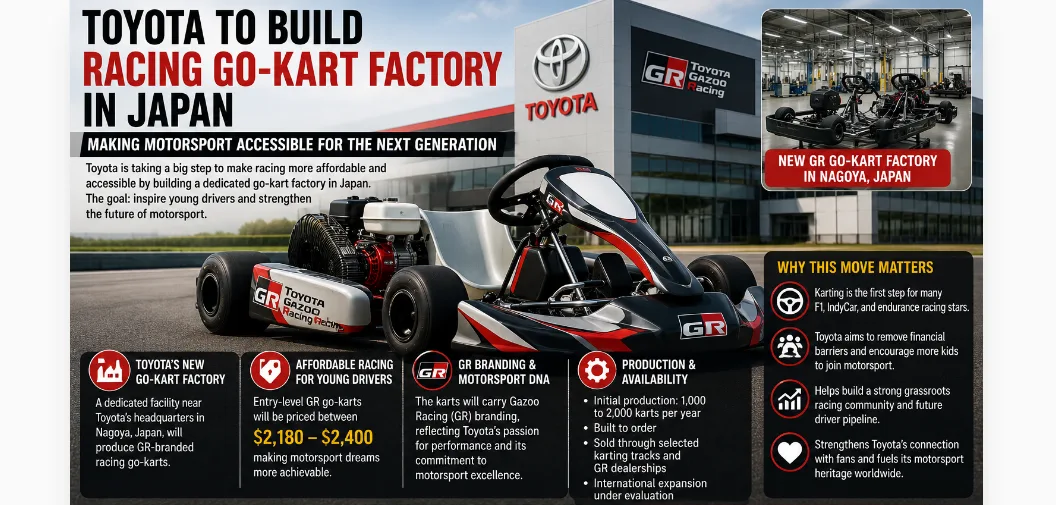
Toyota’s New Go-Kart Factory
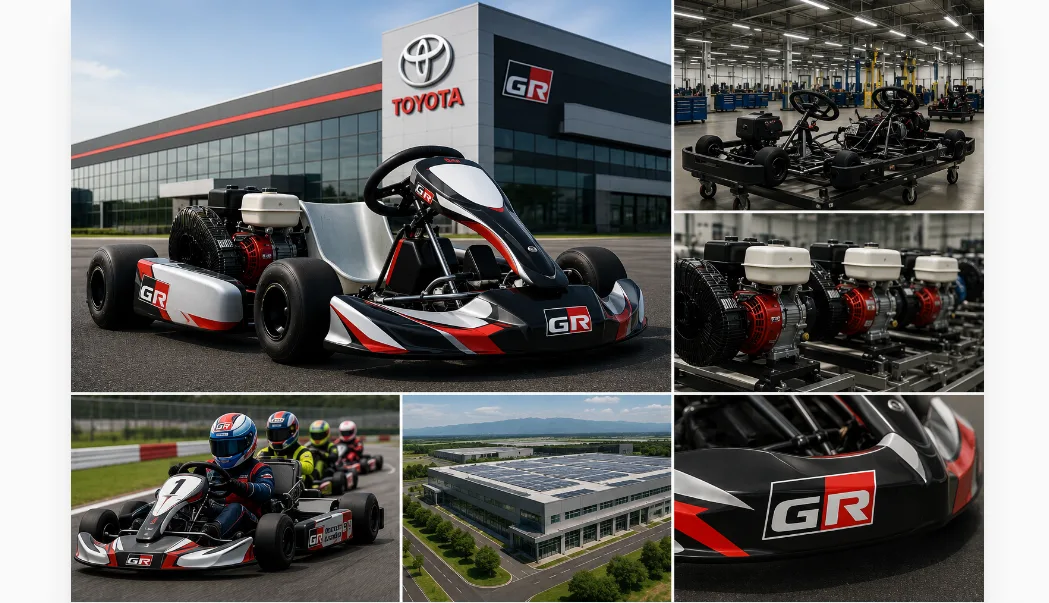
The new manufacturing plant will be established near Toyota’s global headquarters outside of Nagoya, Japan. Rather than building standard passenger cars, this specialized facility will focus entirely on producing entry-level, GR-branded (Gazoo Racing) racing go-karts.
Toyota intends to utilize its world-renowned lean manufacturing expertise, optimized supply chains, and cost-efficient production systems at the new site. By applying mass-production efficiencies to a traditionally low-volume, boutique industry, the automaker can drastically lower structural production costs while ensuring safety and precision craftsmanship.
Affordable Racing for Young Drivers
The primary mission of this venture is to tackle the steep financial hurdles associated with competitive karting. Buying a race-ready competitive kart often requires an investment of many thousands of dollars before adding tracking fees, tires, and mechanical spares.
Toyota plans to launch its entry-level karts with an incredibly disruptive target price ranging between approximately $2,180 and $2,400.
By keeping retail costs below the $2,500 threshold, Toyota makes competitive racing machinery accessible to ordinary families. The company hopes this aggressive pricing strategy will invite a broader demographic of children and young drivers into the sport, ensuring that raw driving talent—rather than a family’s financial background—becomes the deciding factor on the track.
GR Branding and Motorsport Connection
The upcoming go-karts will proudly wear the company’s signature GR (Gazoo Racing) branding. For automotive fans, the Gazoo Racing emblem holds immense weight. It represents Toyota’s elite global motorsport programs, driving victories across the World Rally Championship (WRC), the FIA World Endurance Championship (WEC), and high-profile endurance events like the 24 Hours of Nürburgring.
“We’ll build entry-level karts and hope to see kids move up to more advanced models,” explained Tomoya Takahashi, President of Toyota’s motorsport division.
This initiative integrates perfectly with Toyota’s long-term corporate vision. By attaching the GR name to entry-level karting, the company builds an early emotional connection with young driving talent. Nurturing enthusiasts at the age of seven or eight ensures a sustainable pipeline of future racing drivers, brand ambassadors, and performance vehicle buyers.
Production Plans and Availability
During the project’s opening phase, the Nagoya-adjacent plant is projected to manufacture between 1,000 and 2,000 go-karts annually. To minimize overhead and prevent inventory backlogs, every single kart will be built to order.
Initially, sales will focus primarily on Japan’s domestic market. However, recognizing the universal demand for affordable racing gear, Toyota is already evaluating international markets for future expansion. If greenlit, young drivers worldwide could soon order a race-ready kart directly through their local GR dealership.
Why This Move Matters
Historically, karting has served as the foundational stepping stone for almost every legendary driver in Formula 1, IndyCar, and top-tier endurance racing. Icons like Ayrton Senna, Michael Schumacher, and Lewis Hamilton began their journeys balancing on the simple frames of go-karts.
By making karting genuinely affordable, Toyota is fostering a much larger, highly inclusive grassroots motorsport community. Families who previously dismissed racing as an impossible luxury can now look at a GR-branded kart as a viable weekend hobby. This democratization strengthens Toyota’s consumer fan base and acts as a widespread net for discovering future world-class driving talent.
Potential Global Impact
Toyota’s entry into the karting space is poised to disrupt the wider motorsport industry. If international distribution rolls out successfully, an affordable, factory-backed GR kart could challenge established boutique kart manufacturers who dominate the entry-level space.
Toyota’s aggressive scale and pricing power could force the global karting market to re-evaluate its high pricing structures. This competitive shift could push other major automotive manufacturers to develop their own low-cost, grassroots racing solutions, sparking a welcome trend of affordable motorsport options across Europe, the Americas, and Asia.
Also Read: TVS Launches TVS Paddock Premium Retail Network in India: All You Need to Know
Conclusion
Toyota’s new racing go-kart factory represents much more than a novel addition to its assembly capabilities—it is a strategic, long-term investment in the future of car culture. By dismantling the financial barriers that have long guarded the sport, Toyota is paving an accessible path for the motorsport stars of tomorrow.
Whether these affordable karts produce a future Formula 1 champion or simply give families a fun, accessible hobby, Toyota’s grassroots initiative will leave an indelible mark on the track. It reinforces the brand’s rich motorsport heritage while proving that the thrill of racing should belong to everyone.
Also Read: Honda ADV160 Likely to Be Made in India by 2027: Price, Features & Expectations