Why Chinese Car Buyers Are Disrupting the Global Supercar Market in 2026?
The landscape of the high-end automotive sector is facing a profound shift as the luxury car buyers China cohort rewrites the rules of engagement.
Long considered an insatiable goldmine for European heritage badges, shifting consumer behavior in 2026 is structurally cooling the traditional Chinese supercar market, creating unprecedented ripples across global luxury car trends.
So, lets know about this in detail.
Younger Elite Moving Away from Legacy Badges
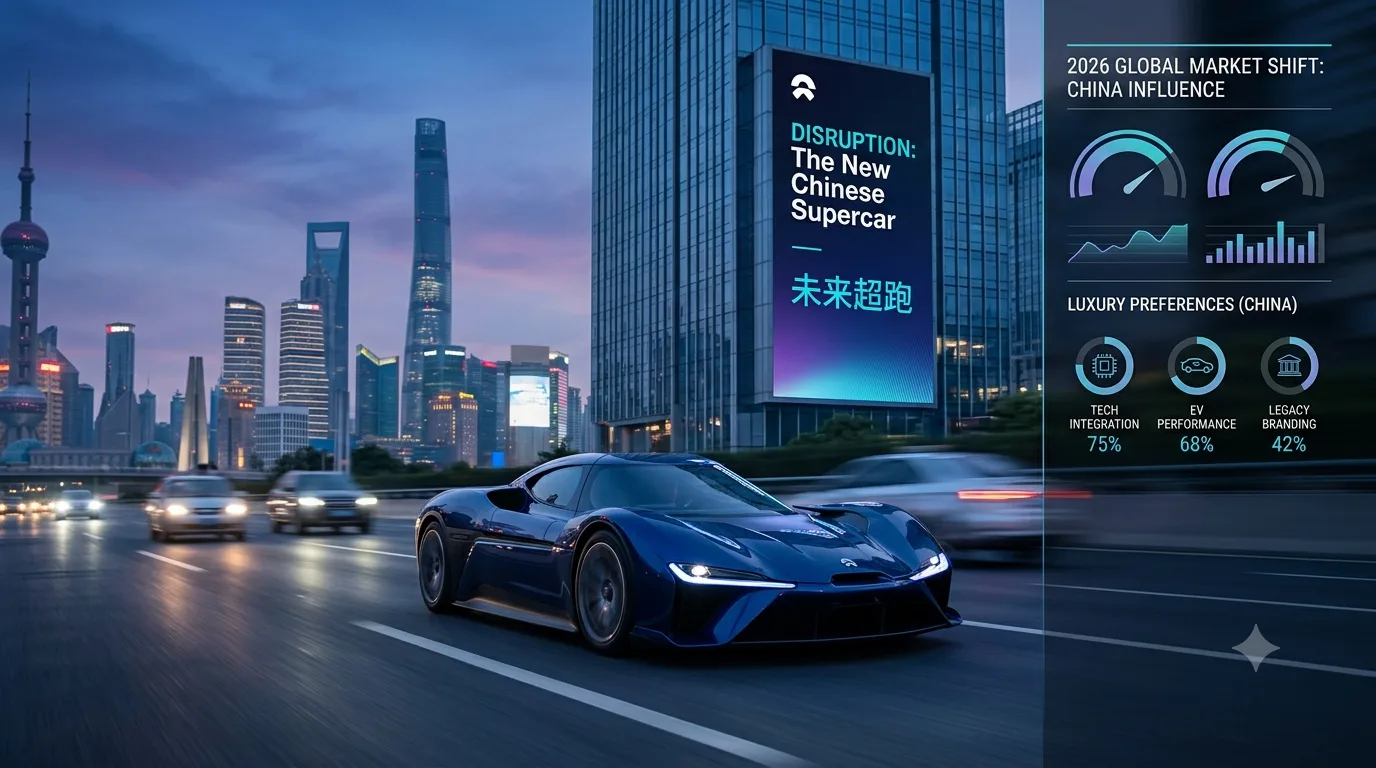
The younger generation of ultra-wealthy Chinese consumers is pivoting away from conventional internal combustion engines toward cutting-edge tech. Status in 2026 is defined less by mechanical legacy and more by advanced digital architecture.
This demographic is increasingly favoring high-tech electric hypercars China manufactures alongside premium, homegrown smart EV ecosystems like BYD’s ultra-luxury Yangwang division, Nio, and Xiaomi.
These domestic performance vehicles offer futuristic digital interiors, autonomous driving capabilities, and rapid over-the-air connectivity, positioning traditional mechanical roaring exhausts as artifacts of the past.
Also Read: Honda Cars India June 2026 Sales Report: Total Dispatches Jump 71% as Exports Surge
Impact on Global Supercar Makers
Consequently, European luxury stalwarts are facing decelerating growth. A clear example of this shift is seen in Ferrari sales China data; while their highly anticipated, tech-laden Luce EV sedan sold out its initial allocation immediately, traditional combustion models are facing headwinds.
Concurrently, brands like Porsche are systematically downsizing their Chinese dealer networks in response to sharp double-digit delivery slides.
To remain competitive against domestic Chinese hypercars that deliver equivalent track performance at lower price points, global automakers are heavily accelerating their plug-in hybrid and fully electric hypercar pipelines.
Industry Outlook: A New Trend Setter
Ultimately, supercar demand 2026 metrics indicate that the industry has entered a permanent phase of transformation. China is no longer merely a high-volume consumption market; it has matured into a powerful trendsetter dictating global automotive demand.
Moving forward, legacy hypercar brands must completely rethink their vehicle exclusivity, baseline pricing strategies, and telemetry integrations to survive an era dictated by digital innovation rather than heritage alone.
Also Read: Tata Motors June 2026 Sales Report: PV Sales Jump 69%