
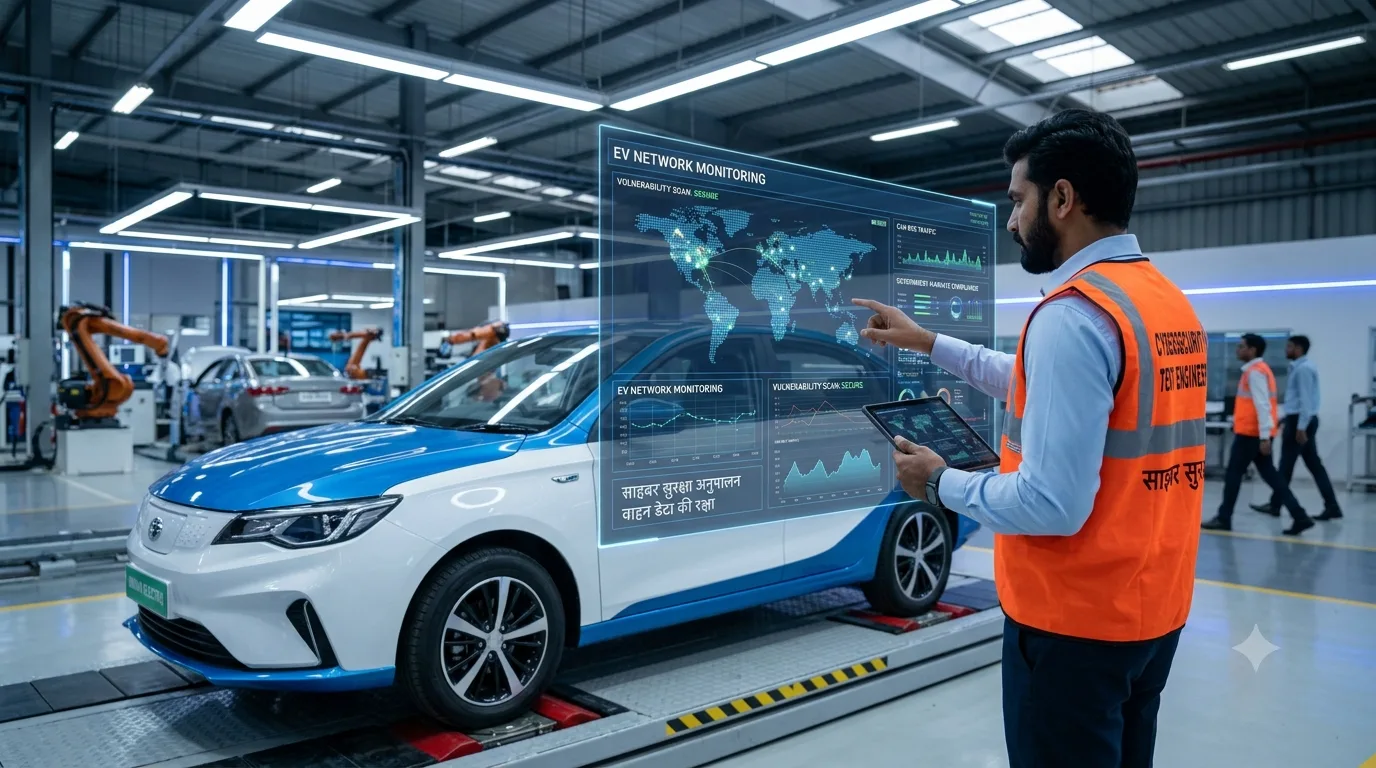
Indian Government Asks Carmakers to Strengthen EV Cybersecurity: Here’s What It Means
India’s electric vehicle ecosystem is becoming smarter with connected features, smartphone integration, and over-the-air (OTA) software updates.
While these advancements improve convenience, they also increase the risk of cyberattacks. To address these concerns, the Indian government has advised automobile manufacturers and component suppliers to conduct cybersecurity audits of electric and connected vehicles.
The move follows concerns that vulnerabilities in battery management systems and connected software could be exploited by hackers. The advisory aims to ensure that future EVs remain secure, reliable, and safe as India accelerates its transition towards electric mobility.
Why Has the Government Issued This Advisory?
Government authorities have reportedly identified potential weaknesses in certain battery management systems and connected vehicle technologies.
These vulnerabilities could allow unauthorized access through weak authentication methods, insecure Bluetooth connections, or default passwords.
If left unaddressed, such security gaps could enable hackers to interfere with critical vehicle functions. As a precaution, automakers and suppliers have been asked to thoroughly inspect their software and hardware systems and eliminate any cybersecurity loopholes before vehicles reach customers.
Focus on Secure Software Updates
Modern vehicles increasingly depend on software for essential functions, including remote diagnostics, connected services, and OTA updates.
The government has urged manufacturers to strengthen these systems by adopting encrypted communication channels, stronger authentication protocols, and secure software validation processes.
Companies are also expected to integrate cybersecurity measures during the vehicle development stage instead of addressing security concerns after production.
New Cybersecurity Standards Expected
The advisory encourages manufacturers to prepare for upcoming Indian automotive cybersecurity regulations, including standards related to cybersecurity management and secure software update systems.
These guidelines are expected to require automakers to establish dedicated cybersecurity frameworks that continuously monitor, detect, and respond to potential digital threats throughout a vehicle’s lifecycle.
The standards are designed to align India’s automotive industry with global best practices for connected and software-defined vehicles.
Why This Matters?
As vehicles become increasingly connected, cybersecurity is becoming just as important as traditional safety features. Strong digital protection can help prevent unauthorized access, safeguard customer data, and ensure the safe operation of connected vehicle systems.
The government’s latest advisory highlights the growing importance of cybersecurity in India’s automotive industry and is expected to encourage manufacturers to build safer, more secure electric vehicles for the future.