
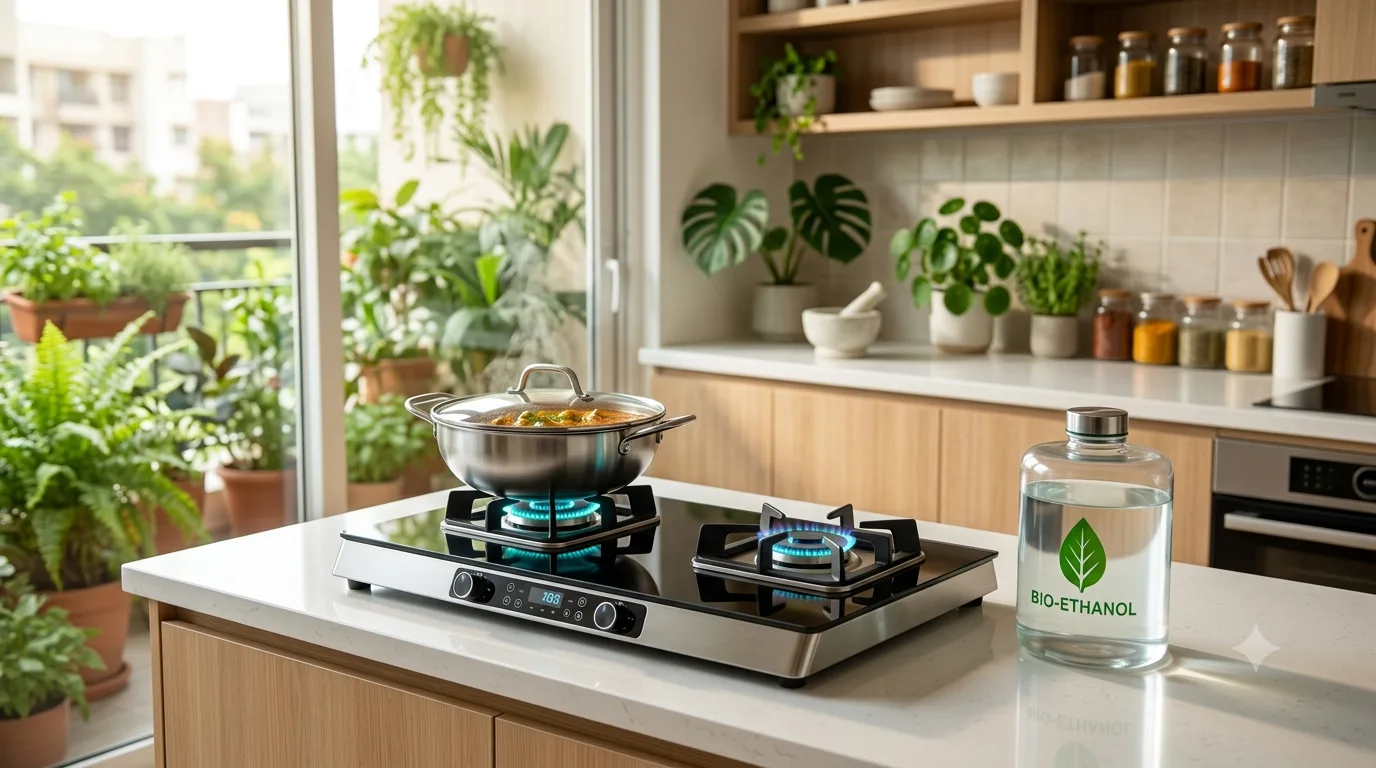
Soon You Can Use Ethanol As Cooking Fuel: Government Explores New Alternative Energy Solution
Imagine cooking your daily meals using the same fuel that is currently being blended with petrol to power vehicles. A fuel that is produced from crops, reduces dependence on imported crude oil and supports farmers could soon find a place inside Indian kitchens.
India is now exploring the possibility of using ethanol as a cooking fuel, marking a major shift in the country’s clean energy strategy. The idea is aimed at reducing the dependence on traditional cooking fuels like LPG, improving energy security and creating new demand for domestically produced ethanol.
Why Is India Considering Ethanol For Cooking?
India has been aggressively promoting ethanol production as part of its energy diversification plan. While ethanol blending in petrol has already become a major initiative, the government is now looking at expanding its usage beyond transportation.
The main idea behind using ethanol for cooking is to create an additional clean fuel option that can be produced within India. Since ethanol is made from renewable sources such as sugarcane, maize, rice and other biomass materials, it could help reduce India’s dependence on imported fossil fuels.
The move could also create another market for ethanol producers and provide additional income opportunities for farmers involved in supplying raw materials.
How Will Ethanol Cooking Fuel Work?
Unlike petrol ethanol blends used in vehicles, cooking ethanol would require specially designed stoves and fuel storage systems. Ethanol-based cooking systems are already being used in some countries where they are considered a cleaner alternative to traditional fuels.
Ethanol stoves are expected to work similarly to LPG burners but will use liquid ethanol as the energy source. These systems would need proper safety mechanisms because ethanol is a highly flammable fuel.
The government and industry players are expected to focus on developing affordable ethanol cooking appliances suitable for Indian households.
Also Read: Mahindra Vision T Patented in India Ahead of 2027 Debut
Benefits Of Using Ethanol For Cooking
1. Cleaner Alternative To Traditional Fuels
One of the biggest advantages of ethanol cooking fuel is lower emissions compared to conventional solid fuels such as firewood and coal. It can help improve indoor air quality, especially in rural areas where traditional cooking methods are still common.
2. Reduced LPG Dependence
India imports a significant amount of crude oil and relies heavily on LPG for household cooking. Increasing the use of ethanol could reduce pressure on imported energy resources.
3. Support For Farmers
Since ethanol production depends on agricultural products, increased demand could benefit farmers by creating a stable market for crops used in ethanol manufacturing.
4. Boost To Renewable Energy Goals
The adoption of ethanol as a cooking fuel would support India’s broader renewable energy and carbon reduction targets.
Challenges Before Ethanol Cooking Becomes Mainstream
Although ethanol offers several advantages, there are some challenges that need to be addressed before widespread adoption.
The biggest challenge will be ensuring affordability and availability. Ethanol cooking systems will need to compete with LPG cylinders in terms of cost and convenience.
Safety will also be a key concern, as ethanol is a highly combustible liquid. Proper storage containers, leak-proof designs and consumer awareness will be necessary.
Another challenge will be building a strong supply chain to ensure ethanol availability across urban and rural regions.
Connection With India’s Ethanol Roadmap
India has already made significant progress in increasing ethanol blending in petrol. The government has promoted ethanol production through policies supporting sugar mills, grain-based distilleries and biofuel projects.
The same ecosystem could potentially support ethanol-based cooking fuel by creating a larger market for ethanol beyond automobiles.
Future Of Ethanol Cooking Fuel In India
While ethanol cooking fuel is still at an early stage, it represents an interesting possibility in India’s clean energy transition. If supported by affordable technology, safety standards and efficient distribution networks, ethanol could become another option alongside LPG, electricity and other cooking fuels.
As India continues to focus on energy independence and renewable alternatives, ethanol may not only power vehicles in the future but could also become a part of everyday household cooking.
Also Read: Hyundai Boulder Patented in India Ahead of Global Debut