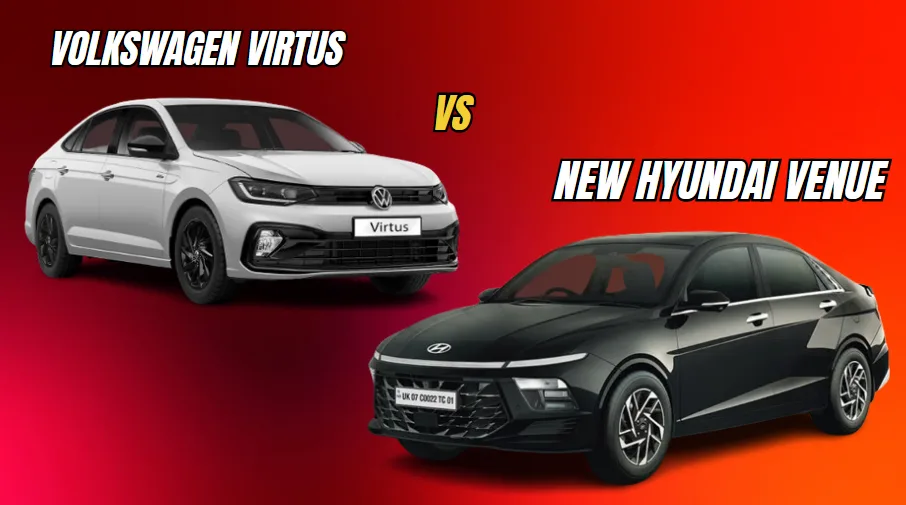
2026 Hyundai Verna Vs Volkswagen Virtus: Hyundai has launched the all-new 2026 Hyundai Verna in the Indian market, featuring significant updates. The updated model is priced starting at Rs 10.98 lakh (ex-showroom). This latest version comes with over 25 enhancements in design, technology, safety, and comfort, aiming to strengthen its position in the highly competitive mid-size car segment.
In the Indian market, the latest Verna will compete with the Volkswagen Virtus, which is one of the top choices for young buyers.
If you are considering purchasing a sedan between these two models, we’ve prepared a detailed comparison of both.
2026 Hyundai Verna Vs Volkswagen Virtus: Dimension
When it comes to dimensions, both the 2026 Hyundai Verna and the Volkswagen Virtus are among the largest sedans in the mid-size segment. The Hyundai Verna measures 4,535 mm in length, 1,765 mm in width, and 1,475 mm in height, with a wheelbase of 2,670 mm, providing generous cabin space.
In comparison, the Volkswagen Virtus is slightly longer at 4,561 mm and taller at 1,507 mm, giving it a more robust road presence. However, the Verna is marginally wider and offers a longer wheelbase, which can result in better rear-seat legroom. Additionally, the Verna provides 528 liters of boot space, slightly more than the Virtus, which offers 521 liters.
2026 Hyundai Verna Vs Volkswagen Virtus: Design
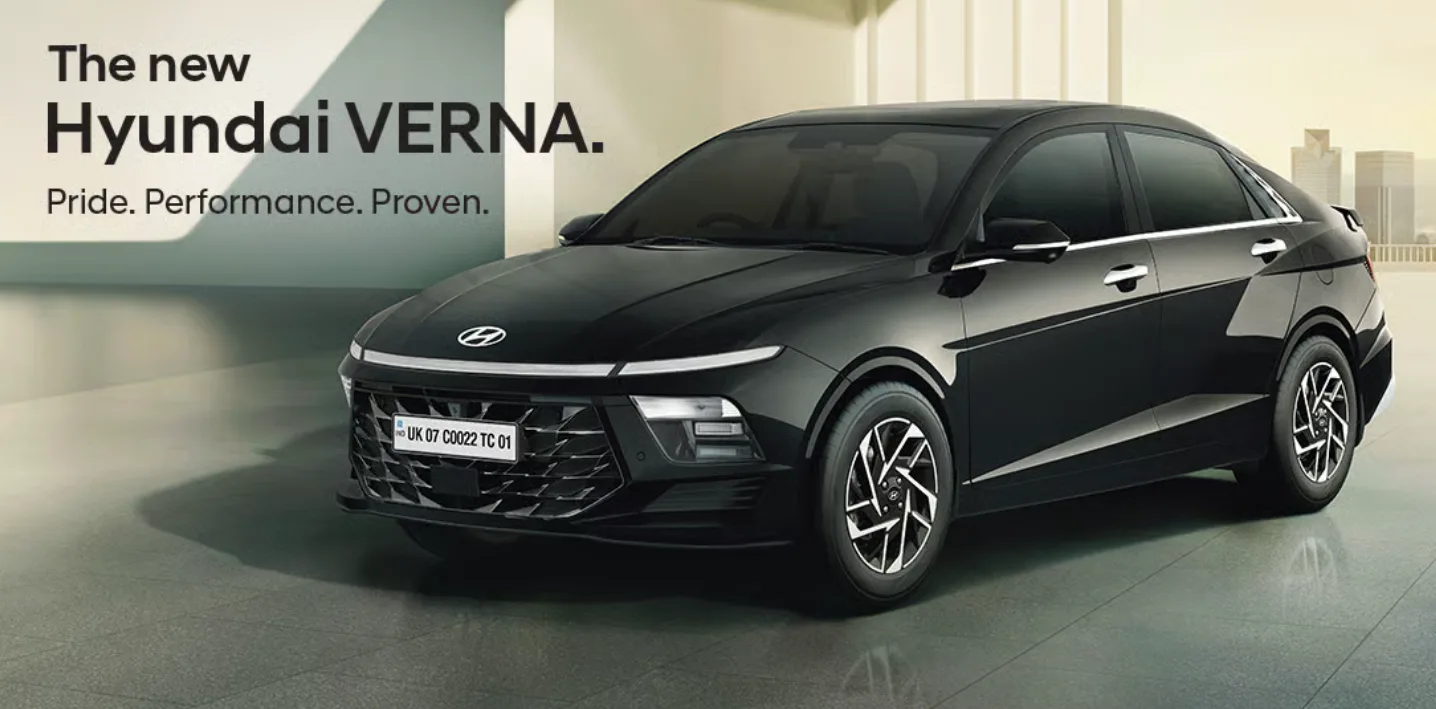
When it comes to design, the 2026 Hyundai Verna and Volkswagen Virtus follow two very different styling philosophies. The Hyundai Verna features a bold and futuristic design with a wide front grille, sleek LED headlamps, and a connected DRL light bar that gives the sedan a modern appearance. Its coupe-like roofline and sharp character lines further enhance its sporty look.
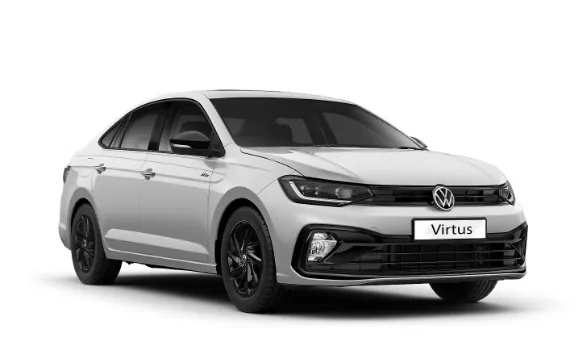
In contrast, the Volkswagen Virtus adopts a more classic and elegant design approach. It gets a clean front fascia with slim LED headlights, a sculpted bonnet, and balanced proportions that highlight its German styling. Overall, the Verna appears more aggressive, while the Virtus offers a timeless and sophisticated look.
2026 Hyundai Verna Vs Volkswagen Virtus: Powertrain and Mileage
The 2026 Hyundai Verna is available with two petrol engine options: a 1.5-litre naturally aspirated engine that produces approximately 115 PS and 144 Nm of torque, and a more powerful 1.5-litre turbo-petrol engine that delivers 160 PS and 253 Nm. For transmission, customers can choose from a 6-speed manual, an IVT automatic, or a 7-speed DCT gearbox. The Verna also boasts impressive fuel efficiency, with a claimed mileage ranging from 18.6 km/l to 20.6 km/l, depending on the variant.
In comparison, the Volkswagen Virtus features a 1.0-litre TSI petrol engine generating 115 PS and 178 Nm of torque, as well as a 1.5-litre TSI EVO engine that produces 150 PS and 250 Nm. It offers a variety of transmission options, including manual, automatic, and DSG gearboxes, with a claimed mileage of around 18.4 km/l to 19.6 km/l.
2026 Hyundai Verna Vs Volkswagen Virtus: Cabin
Inside the cabin, the 2026 Hyundai Verna emphasizes technology and comfort, featuring a modern dual-screen setup with two 10.25-inch displays—one for the digital instrument cluster and the other for the infotainment system. The sedan also includes 64-color ambient lighting, ventilated and heated front seats, a powered driver’s seat, a Bose premium sound system, and Level-2 Advanced Driver Assistance Systems (ADAS), all contributing to a feature-rich and futuristic interior.
In contrast, the Volkswagen Virtus adopts a more minimalist German design philosophy. It offers a 10.1-inch touchscreen infotainment system, a digital driver display, wireless smartphone connectivity, ventilated seats, wireless charging, and an electric sunroof. The Virtus focuses on solid build quality and driver-centric ergonomics rather than an excessively tech-heavy layout.
2026 Hyundai Verna Vs Volkswagen Virtus: Safety Features
Safety is a crucial aspect of the mid-size sedan segment, and both the 2026 Hyundai Verna and Volkswagen Virtus come equipped with a robust array of protective technologies.
The Hyundai Verna is notable for offering seven airbags (six of which are standard), electronic stability control, hill-start assist, all-disc brakes, and Hyundai SmartSense Level-2 Advanced Driver Assistance Systems (ADAS). This includes features such as forward collision warning, lane-keeping assist, blind-spot monitoring, and adaptive cruise control.
On the other hand, the Volkswagen Virtus also provides strong safety features, boasting six airbags, electronic stability control, anti-lock braking system with electronic brake-force distribution, a tire-pressure monitoring system, rear parking sensors, and ISOFIX child-seat mounts. Additionally, it benefits from a robust body structure and high crash safety ratings, ensuring excellent occupant protection.
In summary, the Verna offers more advanced driver-assistance technologies, while the Virtus emphasizes strong structural safety and fundamental protective features.
2026 Hyundai Verna Vs Volkswagen Virtus: Price and which car is best for you?
In India, the 2026 Hyundai Verna is priced between Rs 10.98 lakh and Rs 18.25 lakh (ex-showroom), depending on the engine and variant.
In comparison, the Volkswagen Virtus ranges from approximately Rs 10.5 lakh to Rs 19 lakh (ex-showroom) across its various variants. These prices position both sedans as direct competitors in the crowded mid-size sedan segment.
If you prioritize modern design, advanced features, and cutting-edge technologies such as ADAS, the Hyundai Verna is the better choice. Conversely, if strong build quality, refined turbo performance, and engaging driving dynamics are more important to you, the Volkswagen Virtus may be the better option. Ultimately, the Verna caters to feature-focused buyers, while the Virtus is ideal for driving enthusiasts.
Also Read: Audi SQ8 SUV Bookings Open In India: High-Performance Luxury SUV Arriving Soon