Second-Generation Kia Sonet Spotted Testing In India – 5 Big Features Expected On The Upcoming SUV
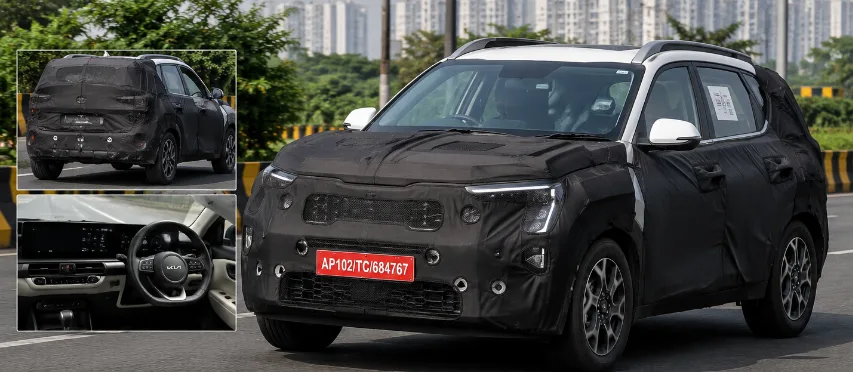
The Indian automotive landscape has just witnessed a major stir as the next-generation Kia Sonet has been spotted testing on Indian roads for the first time.
This sighting hints at a comprehensive overhaul for one of the brand’s most vital volume drivers. Since its debut, the Sonet has carved a niche as a premium, sporty, and tech-heavy compact SUV, consistently ranking among India’s best-sellers.
However, with the competition intensifying from rivals like the Tata Nexon, Mahindra XUV 3XO, Maruti Brezza, and the upcoming Skoda Kylaq, Kia is readying a generational update.
Codenamed QY2E and moving to the advanced K1 platform, the heavily camouflaged test mule suggests substantial upgrades in design, technology, and safety.
While a global debut is being prepared, an official India launch is expected sometime in 2027.
Kia Sonet: Completely Redesigned Exterior Styling
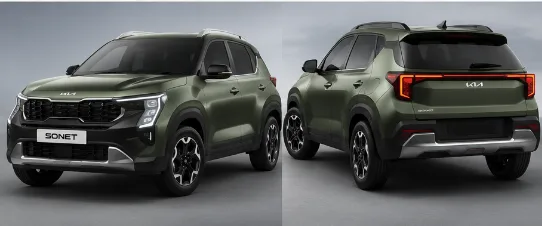
The second-generation Kia Sonet is set to undergo a dramatic visual transformation, shifting toward a sharper and more futuristic design language seen in Kia’s global flagships like the EV5. Spy shots reveal a more muscular road presence with a wider “Tiger Nose” grille that seamlessly integrates with new LED DRL signatures.
We expect the production model to feature connected LED tail lamps, flush-fitting door handles, and aerodynamically optimized sporty alloy wheels.
These changes, along with revised front and rear bumpers, are designed to give the Sonet a more “Big SUV” look, directly appealing to younger, style-conscious Indian buyers who demand premium aesthetics in the sub-4-meter segment.
Kia Sonet: Bigger And More Premium Cabin
One of the most anticipated updates is a significantly more spacious and upscale interior. By moving to the K1 platform, the new Sonet is expected to address its predecessor’s biggest critique: rear-seat legroom.
The cabin will likely house a massive dual-screen setup—comprising a 12.3-inch fully digital instrument cluster and an equally large infotainment touchscreen.
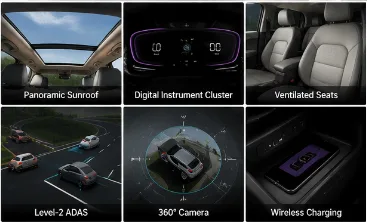
Beyond the screens, expect premium soft-touch materials across the dashboard, ventilated front seats, and potentially a panoramic sunroof to rival the Syros.
With ambient lighting, wireless Android Auto/Apple CarPlay, and improved seat cushioning, Kia is positioning the Sonet’s cabin as the most practical and luxurious workspace in its class.
Kia Sonet: Major Safety And ADAS Upgrades
Safety is no longer an afterthought in the Indian market, and Kia is preparing to respond with a robust suite of technologies. The biggest highlight will be the transition to Level-2 ADAS (Advanced Driver Assistance Systems), featuring radar-based technology.
This package is expected to include adaptive cruise control, lane keep assist, blind-spot monitoring, and automatic emergency braking. To ensure a 5-star Bharat NCAP rating—matching its platform sibling, the Syros—the next-gen Sonet will likely offer six airbags, electronic stability control (ESC), and a 360-degree camera as standard or across higher variants.
This move will significantly elevate its competitive standing against safety-focused rivals like the Tata Nexon.
Kia Sonet: Updated Petrol, Diesel & Hybrid Powertrain Options
Under the hood, the next-gen Sonet will continue to offer its versatile trio: the 1.2L naturally aspirated petrol, the punchy 1.0L turbo-petrol, and the reliable 1.5L diesel engine.
However, the real excitement lies in the rumored introduction of strong hybrid technology by 2028-2029. This new powertrain strategy aims to deliver class-leading fuel efficiency and smoother urban drivability, catering to the evolving BS7 emission norms.
Drivers can also expect updated tuning for the turbo-petrol engines and more refined automatic gearbox options, including the 7-speed DCT and 6-speed torque converter, ensuring that the Sonet remains the enthusiast’s choice in the compact SUV category.
Kia Sonet: More Connected Technology And Premium Features
Kia has always been a pioneer in connected car tech, and the 2027 Sonet will take this further with Kia Connect 2.0. This suite will likely support over-the-air (OTA) software updates, remote diagnostics, and a sophisticated AI-based voice assistant capable of controlling cabin functions.
Premium features like a Bose sound system, a built-in dashcam, and digital key support—allowing you to unlock the car via smartphone—will be high on the list.
Young urban buyers will also appreciate the addition of remote parking assist and faster wireless charging. By integrating these high-end features, Kia ensures the Sonet remains a “gadget on wheels” that stands out in a crowded marketplace.
Expected Pricing and Rivals
The second-generation Kia Sonet is expected to be priced between Rs 8 lakh and Rs 16 lakh (ex-showroom), reflecting its move toward a more premium positioning.
Upon its arrival in 2027, it will rekindle its fierce rivalry with the Hyundai Venue, Tata Nexon, Mahindra XUV 3XO, Maruti Brezza, Skoda Kylaq, and Renault Kiger, promising a high-stakes battle for segment leadership.