Why PM Modi Urged Indians To Reduce Petrol And Diesel Usage – Should Car Owners Be Worried?
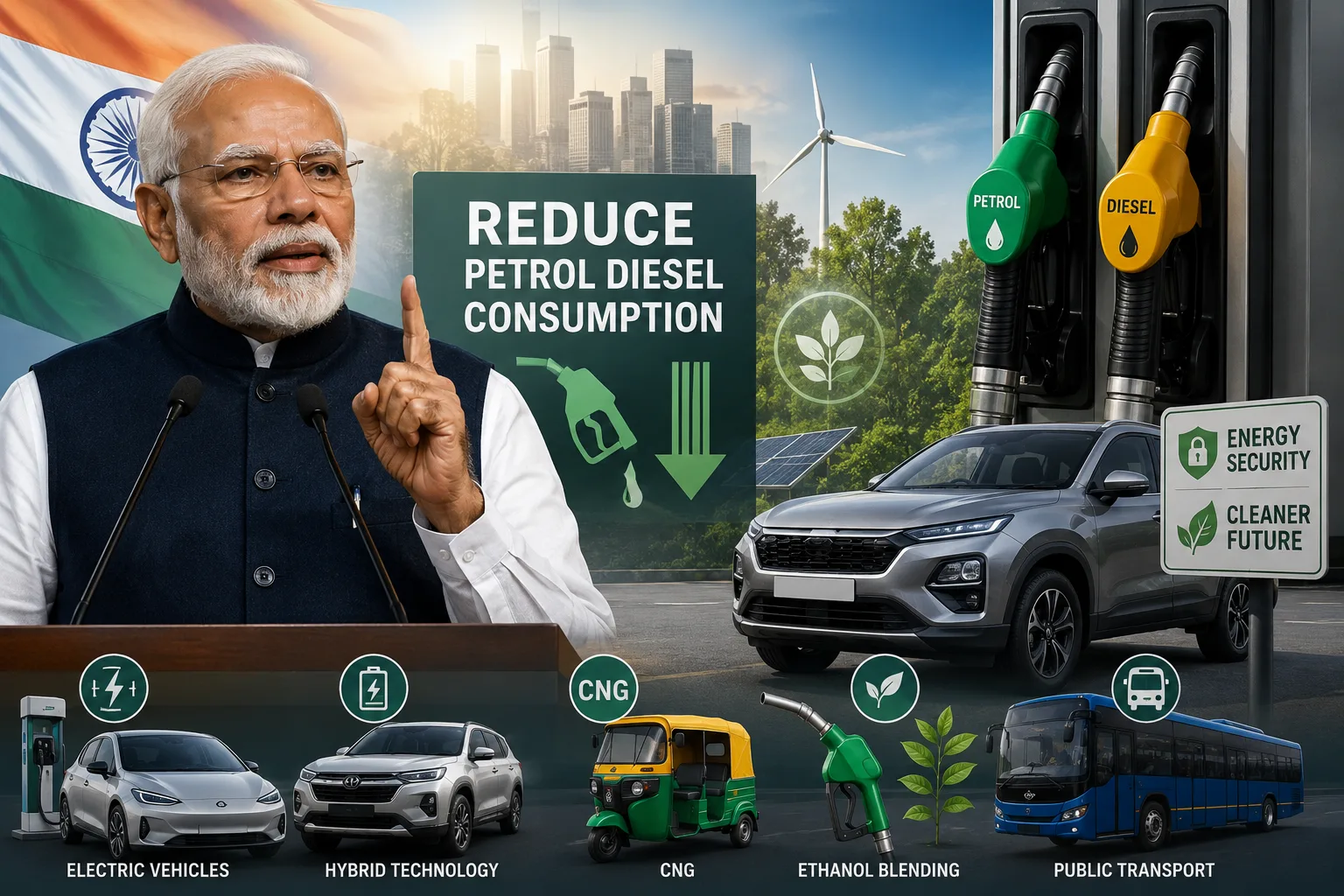
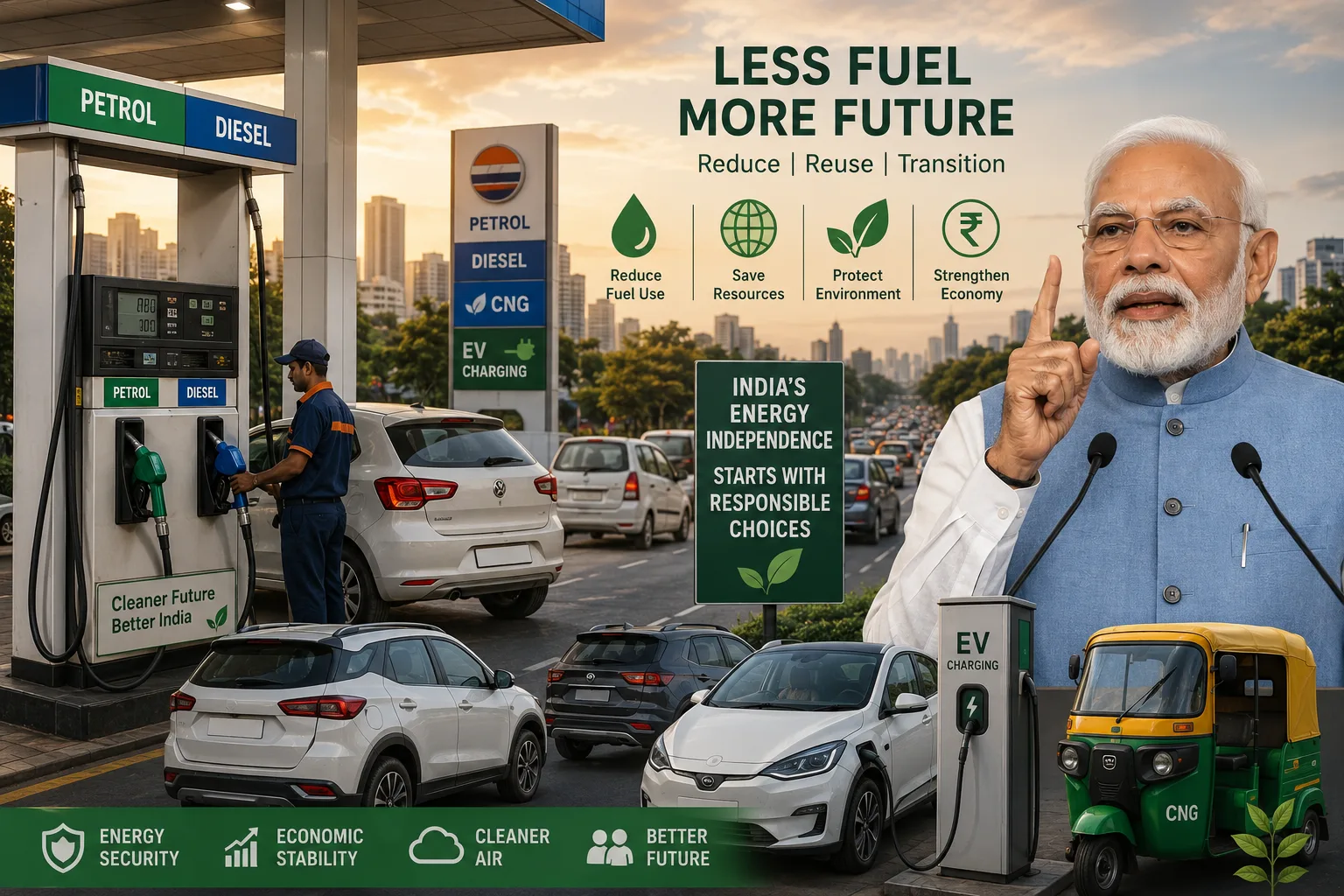
In a recent landmark address regarding India’s energy roadmap and sustainability targets, Prime Minister Narendra Modi sent ripples through the automotive sector by emphasizing a strategic reduction in petrol and diesel dependence.
His remarks have sparked intense debate among car owners, SUV enthusiasts, and industry stakeholders, many of whom are questioning the longevity of internal combustion engine (ICE) vehicles.
While the Prime Minister’s call for action is a powerful nudge toward a greener future, it does not signal an immediate ban on conventional vehicles. Instead, it underscores a pivot toward energy security, ethanol blending, hybrid technology, and electric mobility as India prepares for a more self-reliant and ecologically responsible 2030.
The Quest for Energy Independence and Economic Stability
The primary driver behind the government’s push to curb fuel consumption is rooted in economic sovereignty.
India currently imports nearly 85% of its crude oil requirements, leaving the domestic economy highly vulnerable to volatile global price fluctuations and geopolitical instabilities.
Every spike in international oil prices leads to a massive outflow of foreign exchange and inflates the fiscal deficit. By reducing fuel dependency, the government aims to stabilize the economy and insulate it from external oil crises.
The roadmap to self-reliance involves a multi-pronged approach: aggressive ethanol blending in petrol, the expansion of green hydrogen, and a massive scale-up of compressed natural gas (CNG) and biofuel infrastructure to power the nation’s transport backbone.
Addressing the Environmental Imperative
Beyond the balance sheet, the environmental cost of petrol and diesel remains a critical concern for policymakers. Fossil-fuel vehicles are significant contributors to urban air pollution and carbon emissions, particularly in high-density hubs like Delhi, Mumbai, Bengaluru, and Kolkata.
As India faces mounting global pressure to meet its climate commitments under international environmental agreements, the transition to cleaner mobility is no longer optional.
The promotion of Electric Vehicles (EVs) and hybrid technology is designed to drastically improve urban air quality, reducing the respiratory health burden on citizens while aligning India with global net-zero targets.
Should Car Owners Panic? The Reality Check
For the millions who currently own or are planning to buy a petrol or diesel vehicle, there is no reason for immediate panic. There is currently no nationwide mandate to ban existing ICE vehicles overnight.
Petrol and diesel cars, motorcycles, and SUVs will continue to be a common sight on Indian roads for at least the next decade, especially in rural sectors and for long-distance logistics where charging infrastructure is still evolving. However, owners should anticipate a landscape of “controlled friction.”
Future regulations are expected to include stricter emission norms, potential “green taxes” on older polluting vehicles, and the expansion of low-emission zones in metro centers. The shift will be a gradual migration toward cleaner tech rather than a sudden displacement.
The Industry Response: A Multi-Fuel Future
Automakers are not waiting for the dust to settle; they are actively re-engineering their portfolios. Legacy manufacturers like Tata Motors and Mahindra are leading the charge in the EV space, while giants like Maruti Suzuki and Toyota are betting heavily on “strong hybrid” technology as the most practical bridge for Indian consumers.
We are also seeing a rapid surge in the development of flex-fuel engines and ethanol-compatible powertrains.
As the industry prepares for the looming BS7 emission norms, the focus has shifted toward high-efficiency engines that can coexist with electric drivetrains, ensuring that the consumer has a buffet of powertrain choices depending on their specific needs.
The Future of Diesel SUVs and Enthusiast Machines
The conversation becomes particularly nuanced when discussing heavy-duty diesel SUVs. Icons like the Toyota Fortuner, Mahindra Scorpio N, Thar, and Tata Safari remain immensely popular due to their high torque, highway cruising capability, and towing prowess.
While diesel remains the fuel of choice for long-distance travelers and enthusiasts, it faces the toughest regulatory headwinds. Stricter BS7 compliance could make diesel engines significantly more expensive to manufacture, potentially turning diesel into a niche luxury or commercial-only option.
While diesel is not dead, its era of mass-market dominance is likely nearing its sunset, giving way to high-torque hybrids and powerful electric drivetrains.
Are EVs Truly Ready for the Masses?
While the EV growth curve is impressive, significant hurdles remain for total mass adoption. Challenges such as charging infrastructure gaps in Tier-2 and Tier-3 cities, high initial purchase costs, and concerns regarding battery replacement and long-distance travel continue to weigh on the average buyer’s mind.
Until a robust, nationwide fast-charging network is established, many experts believe that “Strong Hybrids” will emerge as the primary transition technology. Hybrids offer the “best of both worlds”—eliminating range anxiety while significantly reducing petrol consumption through electric assistance.
Consumer Strategy: Making the Right Choice
In this transitional phase, Indian consumers should make informed decisions based on their specific use cases rather than reacting to headlines.
Daily City Commute: If your running is primarily within the city and you have home charging, an EV is highly cost-effective.
Mixed Usage: For those who need a mix of city efficiency and highway capability without charging hassles, a Strong Hybrid is the ideal middle ground.
High Highway Mileage: For long-distance touring and heavy loads, Diesel still offers unmatched efficiency, though one should be mindful of future resale value in metro cities.
Budget-Conscious: CNG and Petrol remain the most accessible entry points with the widest service networks.
Conclusion
Prime Minister Modi’s remarks are a visionary call for long-term energy independence rather than a direct threat to current vehicle owners.
ndia is entering a historic transition where conventional engines and futuristic electric motors will coexist for years to come. While the shift toward cleaner mobility is inevitable and accelerating, the internal combustion engine remains a vital part of India’s mobility fabric for now.
The goal is clear: a cleaner, more secure India—one kilometer at a time.