Tata Motors Expands Green Portfolio: Flex-Fuel Launch Confirmed for 2026
Tata Motors is aggressively diversifying its clean energy roadmap, moving beyond its dominant position in the Electric Vehicle (EV) and CNG markets to embrace flex-fuel technology.
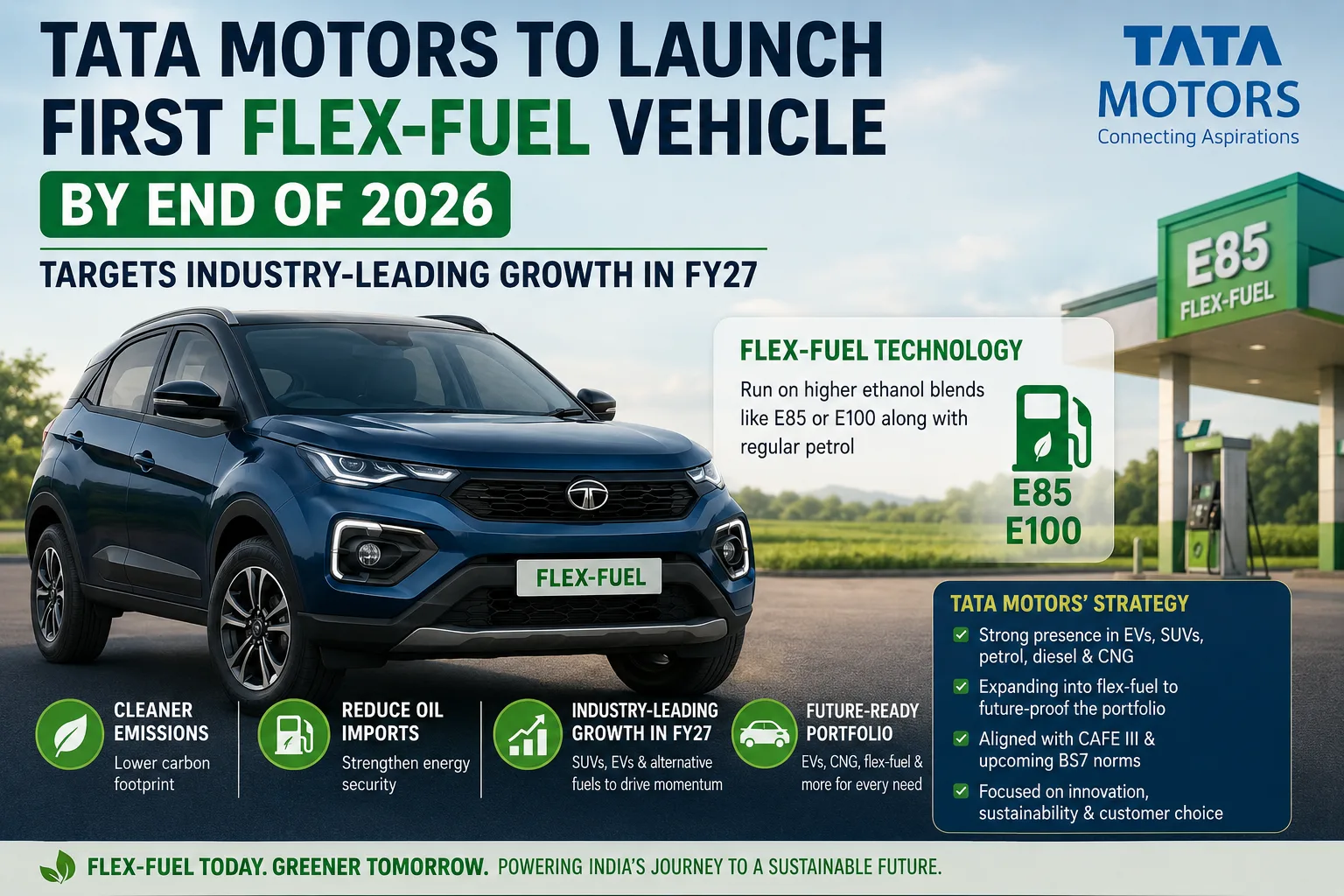
The homegrown automaker has announced plans to launch its first flex-fuel-powered passenger vehicle by the end of 2026, a move aimed at future-proofing its portfolio against evolving energy trends.
Despite global economic volatility and the pressure of rising commodity costs, Tata Motors is setting its sights on industry-beating growth for the 2026-27 financial year (FY27).
By integrating ethanol-compatible powertrains, the company intends to offer a versatile range of “green” options, ensuring it remains at the forefront of India’s transition toward sustainable mobility while maintaining its competitive edge in the domestic market.

Understanding Flex-Fuel Technology and India’s Ethanol Push
A Flex-Fuel Vehicle (FFV) is equipped with an internal combustion engine capable of running on a blend of petrol and ethanol, ranging from the standard E20 (20% ethanol) up to higher concentrations like E85 or even pure E100.
Unlike traditional engines, FFVs utilize specialized sensors and modified fuel systems to adjust to varying alcohol levels dynamically. This technology is a cornerstone of the Indian government’s strategy to slash crude oil imports and bolster energy security.
By promoting domestic biofuel production from agricultural surplus, India aims to lower tailpipe emissions and provide a boost to the local farming economy. Consequently, several automakers are now fast-tracking ethanol-compatible engines to align with these national sustainability goals.
Tata Motors’ Future-Ready Fuel Strategy
Tata Motors has built a formidable presence across petrol, diesel, CNG, and EV segments, particularly within the booming SUV space. The move into flex-fuel technology is a strategic maneuver to navigate upcoming regulatory hurdles, such as the stricter Corporate Average Fuel Economy (CAFE III) standards and the anticipated BS7 emission norms.
By offering a “multi-powertrain” choice, Tata ensures that its portfolio remains resilient regardless of how infrastructure or fuel pricing shifts.
The company anticipates that its dominance in the SUV category, combined with a diversified alternative fuel lineup, will be the primary engine of its sales momentum through the end of the decade.
Which Tata Model Will Get Flex-Fuel First?
While Tata Motors has yet to officially name the debut model for this technology, industry speculation points toward its highly popular mass-market platforms.
Given that vehicles like the Tata Nexon, Punch, and Altroz are already engineered to accommodate multiple fuel types—including petrol, diesel, CNG, and electric—they are the most logical candidates for a flex-fuel powertrain.
Introducing this technology in a high-volume SUV like the Nexon would allow Tata to achieve the scale necessary to make ethanol-powered mobility viable for the average Indian consumer.
Growth Outlook for FY27: Ambition Amidst Challenges
As the brand looks toward FY27, it remains optimistic about the Indian passenger vehicle market’s resilience. Driven by a seemingly insatiable appetite for SUVs and improved consumer affordability, Tata Motors expects to outpace general industry growth rates.
However, this path is not without its obstacles. Geopolitical tensions continue to strain global supply chains, and fluctuating raw material prices pose a constant threat to profit margins.
To counter these risks, the company is focusing on high-margin models and operational efficiencies to ensure that its aggressive expansion into cleaner technologies does not compromise financial stability.
Conclusion: A New Milestone in Green Mobility
Tata Motors’ entry into the flex-fuel segment represents a critical milestone in India’s journey toward a diversified energy ecosystem.
While EVs remain the long-term goal, the practical benefits of flex-fuel—such as utilizing existing fuel station infrastructure and reducing carbon footprints today—cannot be ignored.
Alongside hybrids and CNG, ethanol-powered vehicles offer a realistic, scalable solution to reduce India’s fuel dependency.
As Tata prepares for its 2026 debut, it reinforces its status as a pioneer, proving that the future of Indian roads will be powered by a diverse mix of innovative and sustainable fuels.
Also Read: Beyond Ertiga: Maruti Suzuki Prepares Two All-New Family MPVs for India
Frequently Asked Questions (FAQs)
1. When will Tata Motors launch its first flex-fuel car?
Tata Motors is expected to launch its first flex-fuel passenger vehicle by the end of 2026.
2. What is the benefit of a flex-fuel car in India?
Flex-fuel cars can run on higher blends of ethanol, which is cheaper than petrol and helps reduce carbon emissions. It also helps the country reduce its reliance on expensive crude oil imports.
3. Which Tata car is likely to get the flex-fuel engine?
While not confirmed, popular models like the Tata Nexon, Punch, or Altroz are the top contenders due to their versatile platforms.
4. Can I run a normal petrol car on E100 fuel?
No. Standard petrol engines are currently tuned for E10 or E20 blends. Running them on E85 or E100 without specific modifications can damage the fuel lines and the engine.
Also Read: Beyond Ertiga: Maruti Suzuki Prepares Two All-New Family MPVs for India