India May Soon Mandate Isobutanol Blending With Diesel: What It Means For Vehicle Owners
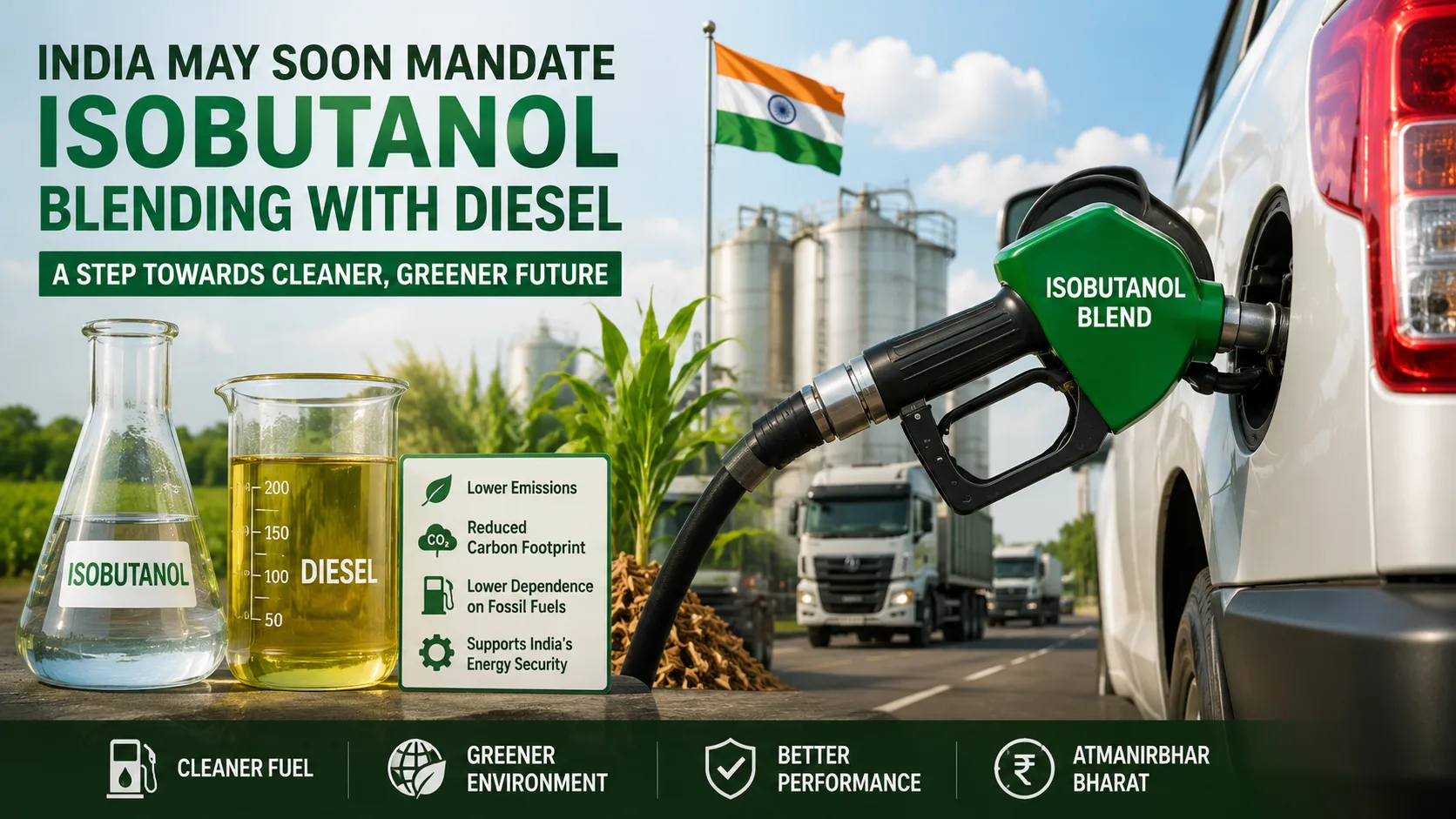
India may soon take another major step toward cleaner transportation by introducing mandatory isobutanol blending in diesel fuel.
The government has already successfully promoted ethanol blending in petrol and is now actively exploring alternative biofuels for diesel-powered vehicles to expand its green mobility goals.
This upcoming move is heavily aimed at reducing expensive crude oil imports, lowering tailpipe emissions, and backing India’s long-term environmental targets.
Despite the rapid rise of electric vehicles, diesel engines continue to play a foundational role in commercial transportation, heavy logistics, agriculture, and long-distance travel across the country.
What Is Isobutanol Fuel?
Isobutanol is a high-quality, renewable biofuel produced primarily from agricultural feedstock, molasses, and biomass-based materials through biological fermentation.
Unlike conventional ethanol, which faces structural issues when mixed with diesel, isobutanol features a much higher energy density and is significantly less corrosive.
This allows it to form a highly stable, homogeneous mixture when blended with diesel or petrol. Because it contains a high oxygen content, isobutanol burns cleaner than traditional fossil fuels, drastically reducing the chemical byproducts of internal combustion engines.
Why India Wants Isobutanol Blending In Diesel
The primary drivers behind the Indian government’s keen interest in isobutanol are skyrocketing fuel import bills, critical urban air pollution, and a national push toward total energy independence.
Because national diesel consumption is nearly double that of petrol, even a small blending mandate will save millions of tonnes of crude imports while providing massive economic opportunities for local agricultural and biofuel industries.
This policy fits tightly into India’s diverse alternative energy strategy, which champions multiple green technologies including EVs, CNG, hydrogen, and ethanol alongside one another.
Impact On Diesel Vehicles And Performance
For vehicle owners, isobutanol-blended diesel is expected to act as a “drop-in” fuel, working smoothly with existing diesel engines with minimal to no mechanical modifications at lower blend ratios.
Thanks to its molecular structure, it offers clean burning characteristics and improved combustion efficiency. Government-backed bodies like the Automotive Research Association of India (ARAI) and Bharat Petroleum are currently running extensive tests to thoroughly map its long-term impact on engine durability, fuel system compatibility, and any marginal variations in mileage before rolling it out to public fuel stations.
Environmental Benefits Of Isobutanol
Switching to an isobutanol-diesel blend brings substantial environmental upgrades, notably a sharp reduction in greenhouse gases, black smoke, and dangerous particulate matter ($PM_{2.5}$ and $PM_{10}$).
By maximizing oxygen during the combustion stroke, the fuel significantly limits the release of unburnt hydrocarbons. These clean-burning properties will immediately improve air quality across major freight corridors.
Furthermore, relying on renewable, farm-grown fuel sources directly shrinks India’s carbon footprint, serving as a vital bridge technology while heavy commercial electrification matures over the coming decade.
Challenges And Industry Concerns
Despite its clear advantages, implementing a nationwide rollout introduces real commercial challenges. Setting up a reliable supply chain, matching large-scale availability, and managing higher initial production costs compared to untaxed fossil diesel remain steep hurdles.
Automakers and fuel retail companies will require rigorous validation timelines to ensure older fuel pumps and injector systems handle the blend without premature wear. Robust policy incentives and close industry collaboration will be vital to smoothly scale up domestic production.
Also Read: 2026 Tata Tiago Facelift Launched In India: Price, Features, And What’s New
Conclusion
A mandatory transition to diesel-isobutanol blending marks a defining milestone in India’s clean mobility roadmap. By targeting the nation’s heavy-duty diesel sector, the government is successfully diversifying its sustainable transportation goals far beyond traditional electric vehicles and standard petrol tech.
Also Read: 2026 Tata Tiago EV Launched In India, Know What’s New