
Tata Motors Unveils Massive FY31 Product Pipeline: 15 ICE Cars And 10 EVs Planned For India
Tata Motors Passenger Vehicles has announced a comprehensive product-led expansion strategy during its recent Investor Day meet.
The Indian automotive giant has laid down an aggressive roadmap up to the financial year 2031 (FY31), aiming to expand its passenger vehicle portfolio from the current nine models to 15 models.
This expansion plan includes over 20 distinct product interventions, backed by six completely new nameplates alongside multiple mid-lifecycle facelifts, powertrain additions, and alternative fuel derivatives.
With a heavy multi-powertrain focus, Tata Motors plans to capture over an 18–20% share of the overall Indian passenger vehicle market, targeting annual domestic sales of over 1.2 million units by the end of the decade.
Also Read: Skoda Unveils Flagship Skoda Peaq EV With Up To 647 KM Range: Could It Come To India?
Expanding the ICE and CNG Lineup: From 9 to 15 Models
While electrification remains a central talking point, internal combustion engine (ICE) and Compressed Natural Gas (CNG) platforms continue to form the baseline volume drivers for Tata Motors. The manufacturer plans to grow its traditional ICE-derived portfolio to 15 models by introducing six all-new nameplates to capture both high-growth segments and untapped “white spaces” in the market.
Tata Motors is aiming for a 25%+ market share in every single product segment it operates in by FY31. Alternative fuel powertrains will spearhead this push. Following the success of its twin-cylinder technology, Tata Motors expects CNG vehicles to grow rapidly, projecting that CNG and electric vehicles combined will make up roughly 45% of its total sales volume by the end of the decade.
The EV Roadmap: Reaching 10 Electric Nameplates
As the current frontrunner in India’s personal electric mobility space, Tata Motors is looking to solidify its defensive moat by scaling its EV line from six models to 10 distinct nameplates by FY31. The brand is targeting an aggressive 30% EV penetration within its own internal portfolio over the next five years.
Key Upcoming Tata EV Launches
Tata Sierra EV: Scheduled for an official debut on June 30, the resurrected iconic badge will return as a premium electric SUV, positioned strategically between the Curvv.ev and the Harrier.ev.
Tata Safari EV: Spotted testing extensively on Indian roads, this three-row all-electric SUV is slated to arrive around the upcoming festive season to challenge the Mahindra XEV 9e.
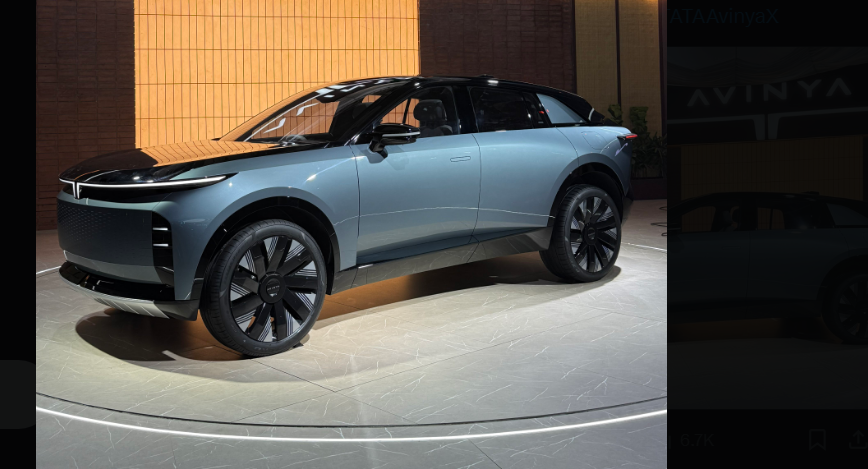
Tata Avinya Range: Representing Tata’s premium, born-electric skateboard architecture, the first production-ready Avinya models are expected to debut within the next year, targeting luxury-class specifications.
Speculated EV MPV: To address gaps in its portfolio, structural rumors point toward an all-electric multi-purpose vehicle (MPV) down the line to compete directly with upcoming rivals like the Kia Carens EV.
Production Capacity and Financial Outlay
To support this aggressive multi-powertrain model offensive, Tata Motors is executing a massive manufacturing scale-up across its multi-location facilities, including plants in Pune, Sanand, Ranjangaon, and Panapakkam.
| Manufacturing Metric | Current Framework | FY31 Target Framework |
| Annual Production Capacity | ~900,000 units | 1.3 million units |
| Annual Sales Target | ~640,000 units | Over 1.2 million units |
| Projected PV Revenue | — | Over Rs 1.4 lakh crore |
| Total Capital Expenditure | — | ~Rs 40,000 crore (7% of revenue) |
The capital expenditure will be heavily front-loaded in the initial years to fast-track production line flexibility, supplier capacity matching, and core skateboard architecture development.
Upgrades Across the Existing Range
In tandem with the headline-grabbing new nameplates, the next few years will see continuous feature updates and cosmetic lifecycle refreshes for current high-performing models. Both the petrol-powered and electric versions of popular models like the Tata Tiago, Tigor, Nexon, and Punch are scheduled to receive comprehensive generational adjustments.
Future facelifts are slated to gain advanced features including high-definition 360-degree camera systems, updated infotainment displays, Level 2 Advanced Driver Assistance Systems (ADAS) packages, and optimized battery management systems for enhanced real-world range capabilities.
The Execution Challenge: While Tata’s product pipeline is incredibly robust, industry analysts note that the company’s ultimate success will depend tightly on its ability to scale its after-sales service infrastructure (ASC) and handle complex supply-chain logistics alongside its exploding vehicle portfolio.
Also Read: Tata Sierra EV Revealed In New Video: Exterior Design Fully Uncovered Ahead Of Launch