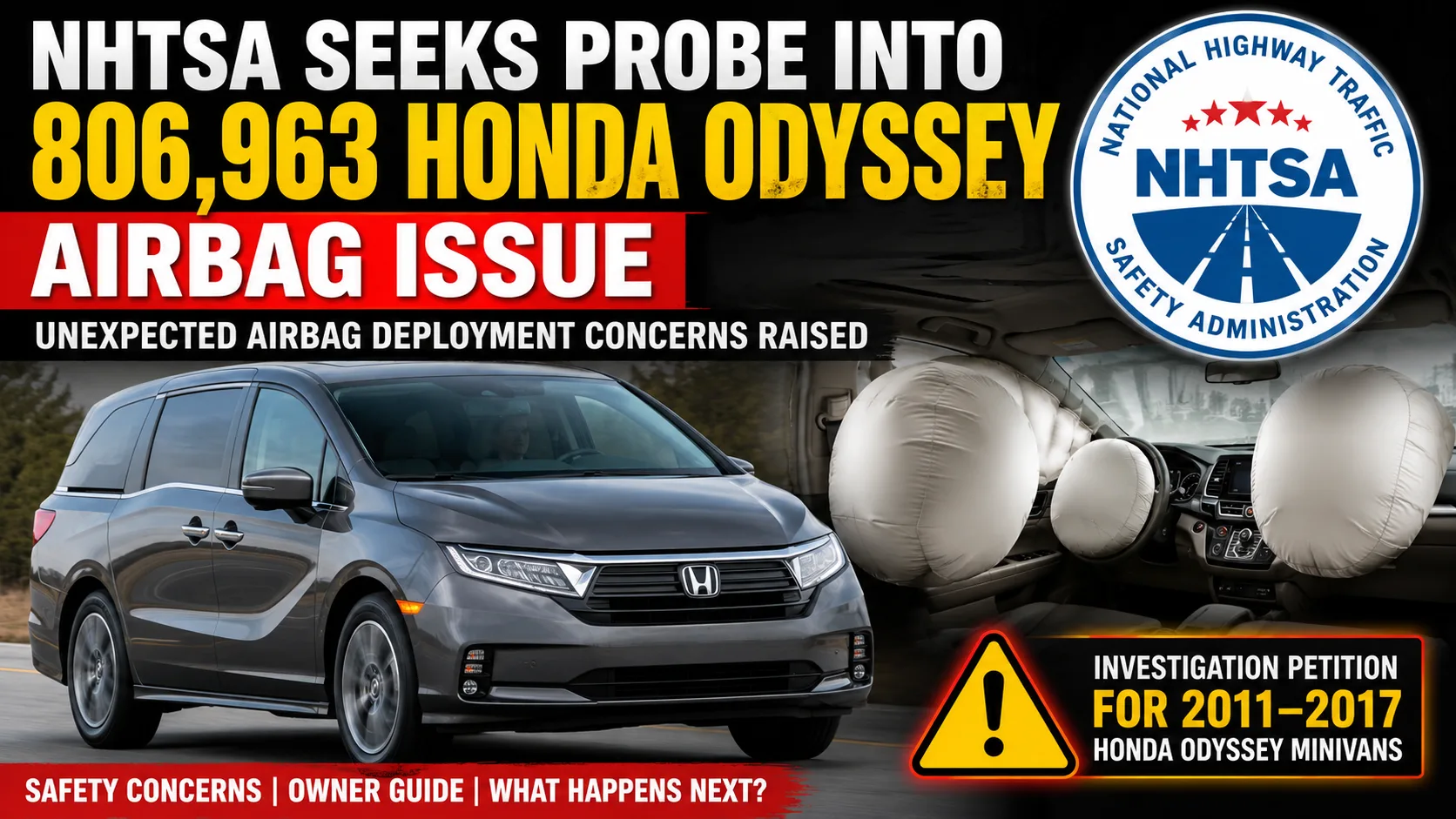
Honda Odyssey Airbag Investigation: NHTSA Evaluates Petition Over Unexpected In-Motion Deployments
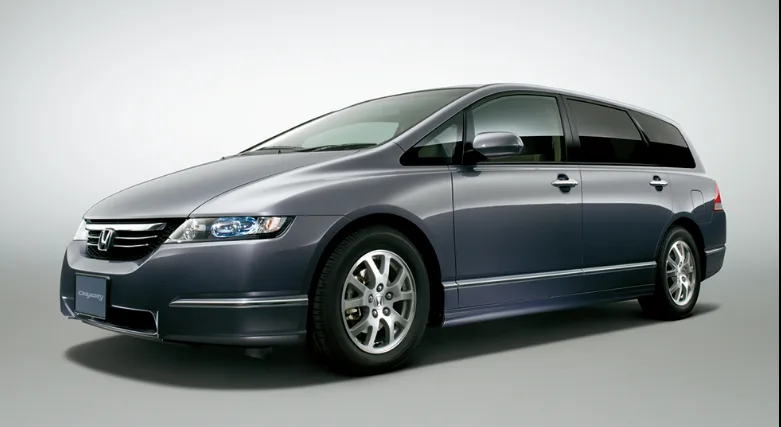
The U.S. National Highway Traffic Safety Administration (NHTSA) has received a formal petition requesting a safety investigation into approximately 806,963 Honda Odyssey minivans from the 2011 to 2017 model years.
The petition raised serious concerns following reports of inadvertent airbag deployments while the vehicles were in active motion. Because the Honda Odyssey is one of the most popular family haulers in North America, this potential safety hazard has drawn significant scrutiny from consumer advocates and regulatory watchdogs alike.
At this stage, the federal regulator is evaluating the petition to determine whether a formal safety defect investigation is warranted.
What Is the New Honda Odyssey Airbag Issue?
The core of this issue centers on allegations that the airbags inside certain 2011–2017 Honda Odyssey minivans can deploy spontaneously.
This occurs without any preceding collision, crash, or minor bumper impact. Drivers have reported instances of side-curtain or frontal airbags suddenly inflating while they were cruising on open roads, idling, or navigating normal traffic conditions.
It is crucial for vehicle owners to understand that this is currently a petition for an investigation, rather than an active factory recall. The federal agency is reviewing the submitted consumer complaints to decide if there is a systemic mechanical or electronic defect in these specific model years.
Also Read:
Why Unexpected Airbag Deployment Is Dangerous
Airbags are highly pressurized, explosive safety systems designed to cushion occupants during violent collisions. When they deploy unexpectedly, they present severe physical and operational dangers:
Instant Driver Distraction: The sudden, deafening bang of an airbag inflating without warning can cause a driver to lose temporary control of the vehicle.
Direct Physical Injury: The sheer force of an inflating airbag can cause burns, abrasions, facial contusions, and even permanent hearing damage.
Loss of Visibility: Deployed side-curtain or steering wheel airbags can block the driver’s view of the road, mirrors, and surroundings.
Crash Hazards: The combination of shock, noise, and restricted vision dramatically increases the likelihood of a secondary collision with other vehicles or roadside obstacles.
Proper airbag calibration is essential to ensure these systems deploy only when the onboard sensors register a real, high-impact collision.
Has Honda Issued a Recall?
As of today, Honda has not announced a voluntary safety recall addressing this specific petition for the 2011–2017 model years. The Japanese automaker has also not issued a public comment regarding the newly submitted NHTSA petition.
Historically, manufacturers thoroughly analyze real-world diagnostic data, sensor logs, and physical components before initiating a formal recall in coordination with federal regulators.
Previous Honda Odyssey Airbag Investigations
This new petition is distinct from previous safety actions involving the Odyssey brand. In June 2026, the NHTSA closed a separate preliminary safety evaluation into roughly 441,000 units of the 2018–2022 Honda Odyssey.
That probe was closed only after Honda issued a voluntary safety recall in April 2026 to resolve an issue where side airbags deployed unexpectedly after harsh underbody impacts, such as hitting deep potholes or tall speed bumps.
The new petition shifts focus back to older, previous-generation Odyssey models (2011–2017), which utilize a different electronic architecture and sensor setup.
What Should Honda Odyssey Owners Do?
If you own a 2011–2017 Honda Odyssey, there is no immediate reason to panic, but staying proactive is key:
Monitor Official Channels: Keep an eye on the NHTSA recalls portal and Honda’s official safety recall website for updates.
Watch for Warning Signs: If your vehicle’s Supplemental Restraint System (SRS) warning light illuminates on the dashboard, have it diagnosed by an authorized dealership immediately.
Verify Your VIN: Keep your 17-digit Vehicle Identification Number (VIN) handy to quickly check for any open campaigns if the regulator upgrades this petition to an official recall.