
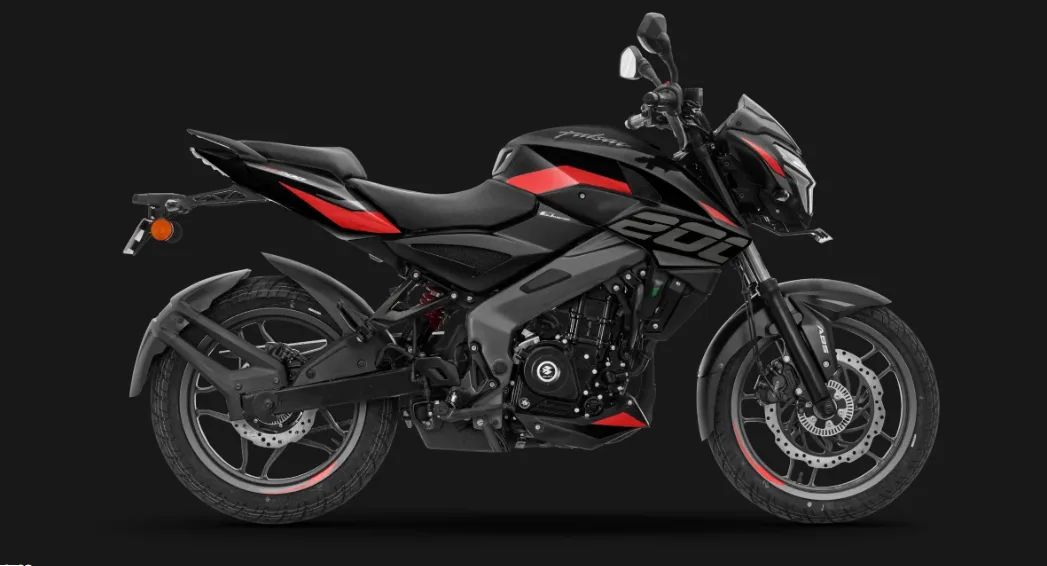
2026 Bajaj Pulsar NS200 Vs TVS Apache RTR 200 4V: Price, Mileage, Top Speed and Specs Compared
The 200cc street bike segment remains one of the most popular choices for Indian riders who want a mix of performance, daily usability and sporty styling. The 2026 Bajaj Pulsar NS200 has now received a major update with more electronics and additional rider aids.
It now gets a 5-inch TFT display, ride-by-wire, ride modes, traction control and a bi-directional quickshifter. The TVS Apache RTR 200 4V, meanwhile, offers a 20.82 PS engine, three ride modes, dual-channel ABS, traction control, a TFT display and adjustable suspension on the top variant.
This makes the Bajaj Pulsar NS200 vs TVS Apache RTR 200 4V comparison more interesting than before. Both motorcycles use engines close to 200cc, but they follow different approaches.
The NS200 focuses more on outright performance and a 6-speed gearbox, while the Apache combines sporty performance with a wider range of electronic and convenience features.
2026 Bajaj Pulsar NS200 Vs TVS Apache RTR 200 4V: Price
The updated 2026 Bajaj Pulsar NS200 costs Rs. 1.60 lakh ex-showroom in Delhi. The updated motorcycle sits above the existing NS200 USD variant, which costs Rs. 1.49 lakh. The TVS Apache RTR 200 4V is more affordable, with the top-spec TFT-equipped version priced at around Rs. 1.49 lakh ex-showroom Delhi.
This gives the Apache an advantage on the initial purchase price. The difference becomes important for buyers who want maximum features within a budget of around Rs. 1.5 lakh.
Design and Styling
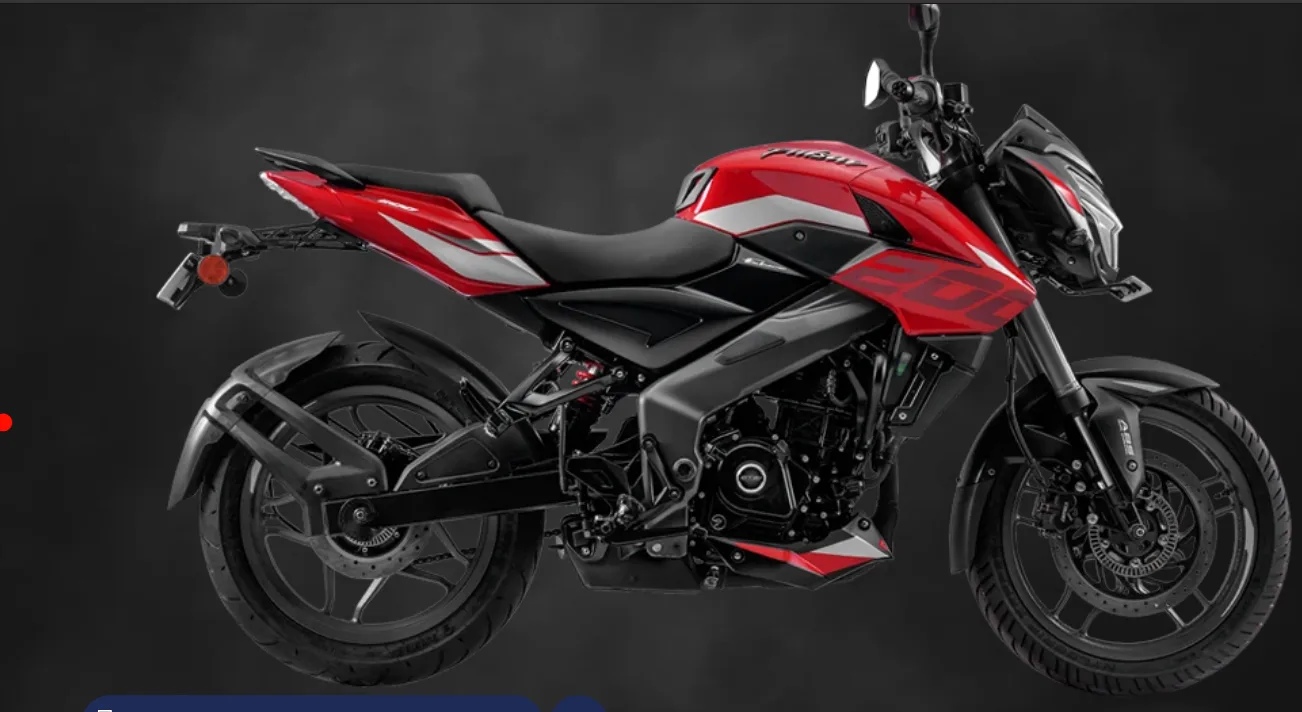
The Bajaj Pulsar NS200 continues with its muscular streetfighter design. Its large sculpted fuel tank, sharp tank extensions, exposed perimeter frame and compact rear section give it an aggressive appearance. The bike also gets full-LED lighting and a sporty riding stance. The latest update retains the basic design while adding new colour options and updated equipment.
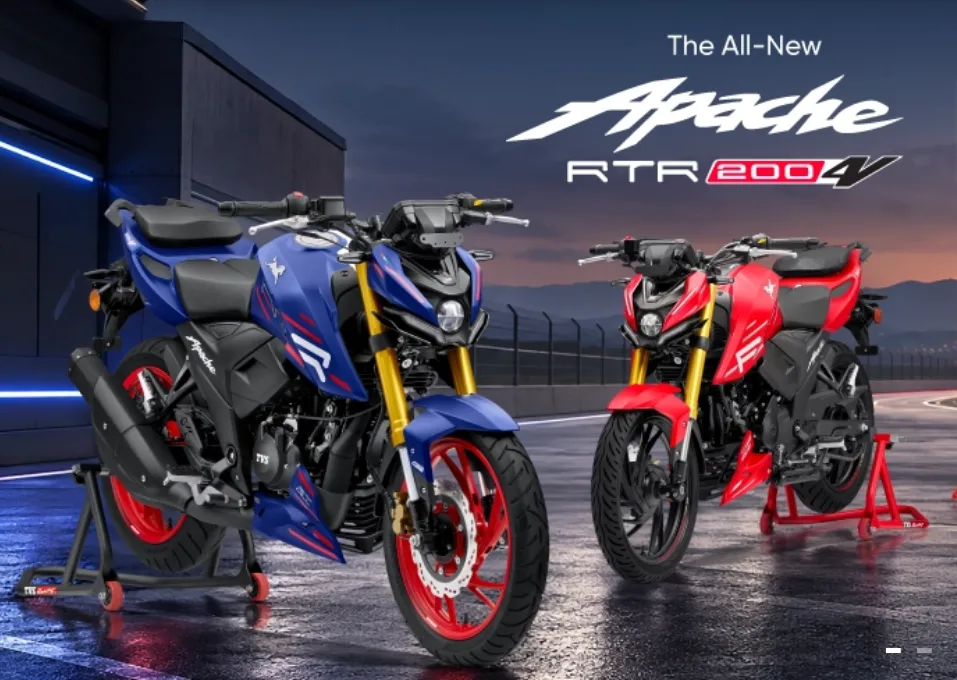
The TVS Apache RTR 200 4V also follows a sharp streetfighter design. Its muscular tank, compact tail section, signature LED lighting and twin-barrel exhaust give it a distinctive appearance. TVS has also added race-inspired graphics and fresh colours to the 2026 model. The Apache has a more compact visual profile, while the NS200 looks larger and more muscular.
Fuel Tank Capacity
Both motorcycles get a 12-litre fuel tank. This means there is no major difference in fuel-carrying capacity. The Apache’s slightly better claimed mileage can help it deliver a marginally longer theoretical range, while the NS200’s stronger engine focuses more on performance.
Weight and Dimensions
The 2026 Pulsar NS200 has a kerb weight of around 158kg in its existing specification. It measures 2,017mm in length, 804mm in width and 1,075mm in height. It also gets a 1,363mm wheelbase, 168mm ground clearance and an 805mm seat height.
The Apache RTR 200 4V weighs around 151kg in the latest TVS specification. It has an 800mm seat height, 1,353mm wheelbase and 180mm ground clearance. Its fuel tank also holds 12 litres.
The Apache is therefore around 7kg lighter and offers a lower seat height. This can make it easier to handle in city traffic and for shorter riders. The NS200 has a slightly longer wheelbase and a heavier body.
Frame and Chassis
Bajaj uses a pressed-steel perimeter frame for the Pulsar NS200. This frame layout contributes to the motorcycle’s sporty riding position and stable handling. The bike also gets a box-section swingarm and a rear monoshock.
The Apache RTR 200 4V uses TVS’ Double Cradle Split Synchro Stiff Frame. It works with a monoshock at the rear and a 37mm front fork on the top-spec version.
Both motorcycles use proven chassis layouts, but the NS200’s perimeter frame gives it a more performance-oriented character.
Suspension Comparison
The updated Pulsar NS200 gets a 37mm USD front fork and a Nitrox monoshock at the rear. Bajaj has increased the front fork diameter from the earlier 33mm unit as part of the 2026 update.
The Apache RTR 200 4V also gets a 37mm USD front fork on the top variant, while lower versions use telescopic forks. The top variant offers front preload adjustment, allowing riders to change the setup according to riding conditions. The rear uses a monoshock.
The Apache has an advantage in suspension adjustability, particularly for riders who want to fine-tune the front setup.
Brakes and Safety Features
The Pulsar NS200 uses a 300mm front disc and 230mm rear disc with dual-channel ABS. The updated motorcycle also adds traction control and panic brake alert. Its new ride-by-wire system enables selectable riding modes, while the bi-directional quickshifter adds another performance-focused feature.
The Apache RTR 200 4V uses a 270mm front petal disc and 240mm rear petal disc with dual-channel ABS and rear-wheel lift-off protection. It also gets traction control and three riding modes. TVS offers Sport, Urban and Rain modes, which adjust the engine response and ABS behaviour.
Both bikes offer strong safety equipment. The NS200 gets the larger front disc, while the Apache offers a comprehensive ABS and riding-mode package.
Tyres and Wheels
The Pulsar NS200 uses a 100/80-17 front tyre and 130/70-17 rear tyre. Both tyres are tubeless, and the latest model gets a radial rear tyre.
The Apache RTR 200 4V uses a 90/90-17 front tyre and 130/70 R17 rear radial tyre. TVS specifies tubeless tyres for both wheels.
The NS200 has a wider front tyre, while both motorcycles use similarly sized rear tyres.
Features and Technology
This is one area where the 2026 Pulsar NS200 has made a major jump. The motorcycle now gets a 5-inch colour TFT display, Google Maps mirroring, ride-by-wire, traction control, ride modes, a bi-directional quickshifter, adjustable levers, panic brake alert and a USB Type-C charging port.
The Apache RTR 200 4V also offers a 5-inch TFT cluster with SmartXonnect connectivity, race telemetry, turn-by-turn navigation and smartphone connectivity. It gets three riding modes, traction control, dual-channel ABS with RLP control, adjustable levers and a Type-C charger.
The feature gap between the two is now much smaller. However, the NS200’s bi-directional quickshifter gives it a notable advantage for enthusiasts.
Engine and Performance
The Pulsar NS200 gets a 199.5cc, single-cylinder, liquid-cooled, four-valve engine. The updated version now produces 25.5hp and 18.7Nm, with power going to the rear wheel through a six-speed gearbox. The engine also gets ride-by-wire technology, which allows Bajaj to offer ride modes and traction control. A bi-directional quickshifter further improves the sporty character.
The Apache RTR 200 4V uses a 197.75cc, single-cylinder, oil-cooled, four-valve engine. It produces 20.82 PS and 17.25Nm in Sport mode. The motorcycle uses a five-speed gearbox and gets a race-tuned slipper clutch. TVS also offers Sport, Urban and Rain riding modes, which change engine and ABS behaviour.
On paper, the NS200 has the clear performance advantage. It produces around 4.7hp more power and uses a six-speed gearbox.
Mileage Comparison
Mileage remains an important factor for Indian buyers in this segment. The TVS Apache RTR 200 4V has an official fuel-economy figure of around 41.9kmpl, while user-reported mileage sits around the high-30kmpl range.
The Pulsar NS200 has an ARAI-rated mileage figure of around 40.36kmpl, while real-world mileage can vary depending on traffic, riding style and road conditions.
Therefore, the Apache has a slight advantage on claimed fuel efficiency. However, actual mileage will depend heavily on how aggressively the rider uses either motorcycle.
Top Speed
The Bajaj Pulsar NS200 has a claimed top speed of around 130kmph according to current specification listings.
The TVS Apache RTR 200 4V has a claimed top speed of 127kmph in Sport mode. Its top speed drops to 105kmph in Urban and Rain modes.
The NS200 therefore has a small advantage in top-speed capability. Its stronger engine and six-speed gearbox also make it the more performance-focused motorcycle of the two.
2026 Bajaj Pulsar NS200 Vs TVS Apache RTR 200 4V: Specification Comparison
| Specification | Bajaj Pulsar NS200 | TVS Apache RTR 200 4V |
|---|---|---|
| Engine | 199.5cc, 4-valve | 197.75cc, 4-valve |
| Cooling | Liquid-cooled | Oil-cooled |
| Power | 25.5hp | 20.82 PS |
| Torque | 18.7Nm | 17.25Nm |
| Gearbox | 6-speed | 5-speed |
| Claimed top speed | Around 130kmph | 127kmph |
| Claimed mileage | Around 40.36kmpl | Around 41.9kmpl |
| Fuel tank | 12 litres | 12 litres |
| Kerb weight | Around 158kg | Around 151kg |
| Seat height | 805mm | 800mm |
| Wheelbase | 1,363mm | 1,353mm |
| Ground clearance | 168mm | 180mm |
| Frame | Perimeter frame | Double Cradle Split Synchro Stiff Frame |
| Front suspension | 37mm USD | 37mm USD on top variant |
| Rear suspension | Nitrox monoshock | Monoshock |
| Front brake | 300mm disc | 270mm petal disc |
| Rear brake | 230mm disc | 240mm petal disc |
| ABS | Dual-channel | Dual-channel with RLP |
| Front tyre | 100/80-17 | 90/90-17 |
| Rear tyre | 130/70-17 radial | 130/70 R17 radial |
| Ride modes | Yes | Sport, Urban, Rain |
| Traction control | Yes | Yes |
| Quickshifter | Bi-directional | No |
| TFT display | 5-inch | 5-inch |
| Navigation | Google Maps mirroring | Turn-by-turn/Google Maps features |
| USB charging | Type-C | Type-C |
| Price | Rs. 1.60 lakh | Around Rs. 1.49 lakh |
Prices are ex-showroom Delhi. Specifications can vary by variant.
2026 Bajaj Pulsar NS200 Vs TVS Apache RTR 200 4V: Which One is Value for Money?
The TVS Apache RTR 200 4V makes a strong value-for-money case because it costs less, weighs less and offers a long list of features. Its three riding modes, traction control, dual-channel ABS, TFT display, adjustable suspension and good claimed mileage make it a well-rounded motorcycle for daily use and weekend riding.
The 2026 Bajaj Pulsar NS200, however, targets buyers who want stronger performance. Its 199.5cc liquid-cooled engine produces more power, the six-speed gearbox gives it an advantage for highway riding, and the new bi-directional quickshifter, ride-by-wire and traction control make the updated motorcycle significantly more advanced than the previous model.
At Rs. 1.60 lakh, the NS200 costs more than the Apache RTR 200 4V. Therefore, the Apache is the better choice for buyers who want maximum features and everyday practicality at a lower price. The Pulsar NS200 is the better pick for buyers who prioritise performance, acceleration and enthusiast-focused hardware.


