How E20 Petrol Affects Your Bike: Mileage, Engine & Maintenance Explained
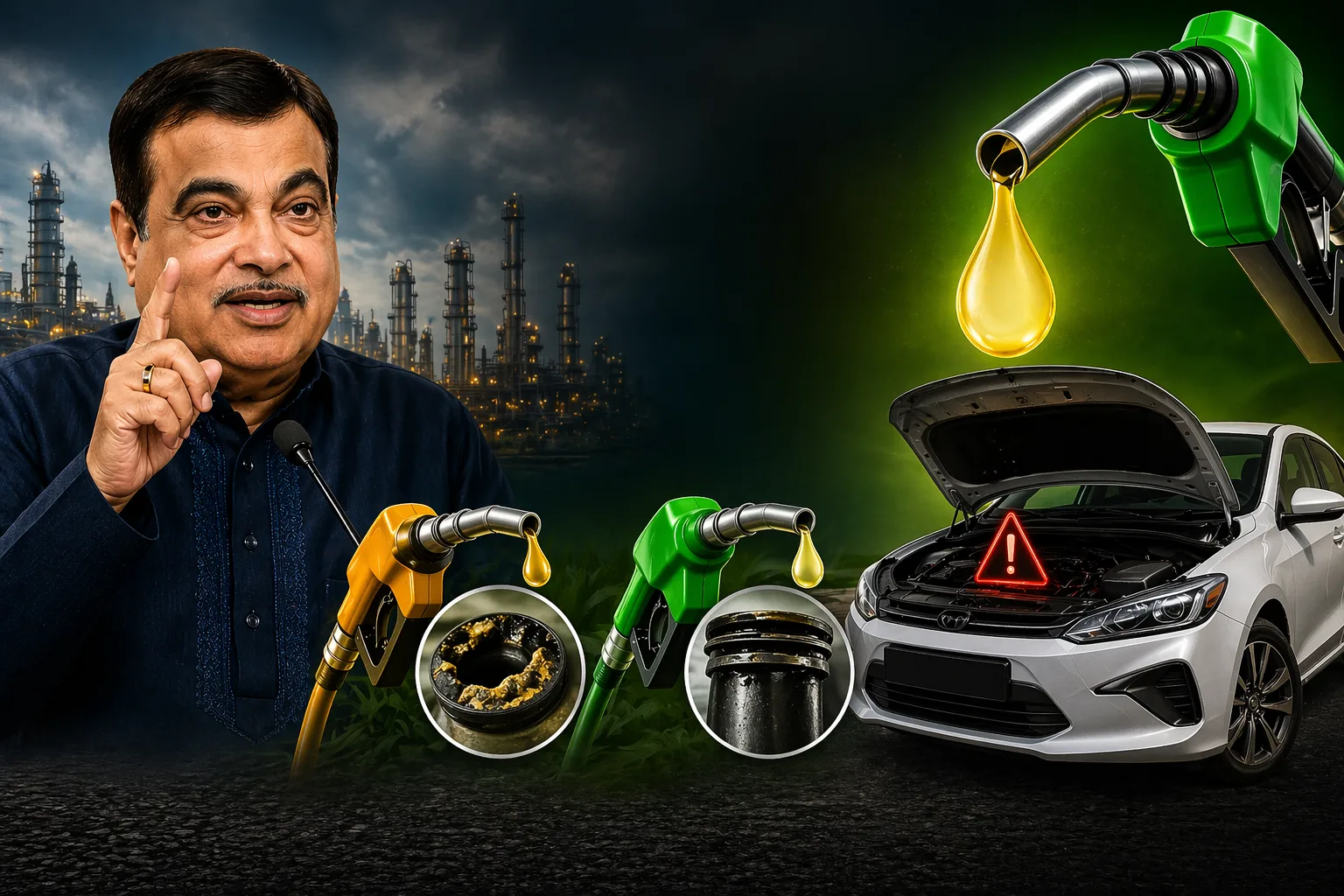
If you have filled up your motorcycle or scooter at any fuel station in India recently, you have likely been using E20 fuel without even realizing it.
E20 fuel—a blend of 20% ethanol and 80% petrol—is becoming increasingly common across India as part of the government’s strategy to reduce crude oil imports and carbon emissions.
While E20 fuel offers undeniable environmental benefits, many bike owners are concerned about its long-term impact on engine health, mileage, performance, fuel system components, and overall maintenance costs.
India is aggressively adopting ethanol-blended petrol to achieve critical economic and environmental goals. The government’s ethanol blending targets aimed for a nationwide 20% blend rollout, which has scaled rapidly across fuel bunks over the last few years.
The environmental and economic benefits of ethanol blending are substantial: it slashes greenhouse gas emissions, promotes cleaner combustion, and saves thousands of crores in foreign exchange by cutting down expensive raw crude imports.
Since our daily commutes rely heavily on two-wheelers, understanding how E20 affects motorcycles and scooters is important for every rider looking to protect their machine and their wallet.
Why E20 Fuel Can Be Harmful for Older Bikes
The rise of ethanol-blended petrol in India introduces major technical challenges for older two-wheelers. Older motorcycles were engineered solely for pure petrol or low E10 blends, meaning their engines and fuel systems were not designed for higher ethanol content.
The primary problem is that ethanol is a powerful solvent and highly hygroscopic, meaning it acts like a sponge for water. When an older bike sits idle, the ethanol in the fuel tank pulls moisture out of the air. This triggers phase separation, where water and ethanol mix and sink to the bottom of the tank.
This water-heavy layer causes severe corrosion risks in metal fuel system components like steel tanks and lines. Furthermore, ethanol attacks rubber and plastic. In older engines, prolonged exposure to E20 causes severe compatibility issues, causing fuel lines to dry out, crack, and turn brittle, while rubber seals become swollen and fail completely.
How E20 Fuel Affects Bike Mileage
When switching to E20 fuel, engine damage is not the only concern—your monthly fuel bill will likely shift as well. Ethanol has a lower energy density than petrol, containing roughly 33% less energy per gallon than pure gasoline. Because the fuel contains less thermal energy, your engine has to burn more of it to produce the same amount of power.
Consequently, riders will notice a direct E20 petrol mileage impact, typically translating to a 3% to 6% drop in fuel efficiency. The real-world mileage impact varies depending on where you ride:
City Riding: Frequent stop-and-go city traffic worsens this drop because the engine operates under fluctuating loads, requiring richer fuel mixtures.
Highway Riding: Steady highway cruising allows the engine to optimize combustion, minimizing the efficiency loss.
Your personal riding habits also heavily influence fuel consumption; aggressive throttle twisting on E20 fuel will deplete your tank significantly faster than smooth, linear acceleration.
Engine Performance and Starting Issues
Because ethanol alters how fuel vaporizes, running E20 can lead to noticeable engine performance drops and starting issues, especially in non-compatible two-wheelers.
Cold Start Difficulties & Rough Idling
Ethanol requires a higher temperature to vaporize cleanly compared to pure petrol. On chilly mornings, you might face severe cold start difficulties, requiring multiple crank attempts. Once started, the bike may suffer from rough idling, sputtering, or stalling until the engine reaches its optimal operating temperature.
Reduced Throttle Response & Knocking
Because of the lower energy density, you might experience a softer throttle response or hesitation during quick overtakes. In some older motorcycles with high compression ratios, the wrong air-fuel mixture can trigger engine knocking, which sounds like metallic pinging and can physically damage pistons over time.
Carburetor vs. Fuel-Injected (FI) Bikes
The fuel delivery system makes a massive difference in how a bike responds to ethanol:
Carburetor-equipped Motorcycles: These older setups are highly vulnerable. They cannot adjust their air-fuel ratios automatically, meaning they naturally run “lean” (too much air, too little fuel) on E20, accelerating overheating and performance drops.
Fuel-Injected (FI) Bikes: Modern FI systems utilize an Electronic Control Unit (ECU) and an oxygen sensor to detect changes in the exhaust gas and inject more fuel to compensate. While they run smoother, they are still prone to fuel injector clogging if the fuel begins to degrade.
Components Most Affected by E20 Petrol
To understand the long-term impact of E20 fuel engine damage, we have to look at the specific components hidden inside your vehicle’s fuel delivery pipeline:
Fuel Hoses & Lines: Standard rubber hoses rapidly degrade when exposed to 20% ethanol. They weaken from the inside out, leading to dangerous fuel leaks.
Rubber Gaskets & O-Rings: These critical components maintain tight seals inside the fuel pump or carburetor. Ethanol causes them to swell, warp, or crack, destroying fuel pressure.
Fuel Pumps: Modern fuel pumps rely on the fuel flowing through them to act as a lubricant. Ethanol provides less lubrication, increasing internal friction, which can burn out the pump motor prematurely.
Fuel Injectors: The microscopic nozzles on injectors can easily become blocked by gum deposits left behind by stale ethanol or tiny rust flakes traveling from the tank.
Carburetor Components: Ethanol forms a varnish-like crust inside tiny carburetor jets when left sitting, choking off the fuel supply entirely.
Fuel Tank Corrosion: The water pulled in by ethanol sits at the floor of raw steel tanks, creating localized rust patches that eventually rust completely through the metal.
Which Bikes Are E20 Compatible?
The good news is that Indian automobile manufacturers anticipated this fuel transition. Most new motorcycles and scooters launched after April 2023 are fully designed for E20 fuel compatibility, matching India’s strict BS6 Phase 2 (OBD2B) emission mandates.
Major manufacturers like Honda, Hero MotoCorp, Bajaj Auto, TVS Motor, Yamaha, Suzuki, and Royal Enfield have updated their manufacturing lines. These modern machines use ethanol-resistant fluoropolymer hoses, coated fuel tanks, and specifically re-mapped fuel injection systems. However, owners should always check their owner’s manual or look for an “E20” sticker near the fuel tank cap before using E20 regularly to prevent accidental damage.
Signs Your Bike May Be Struggling with E20 Fuel
If your machine is reacting poorly to ethanol blends, it will throw clear warning signs. Catching these early can save you from an expensive engine rebuild:
Sudden Drop in Mileage: A sudden, steep drop in fuel efficiency beyond the expected 5% indicates improper combustion or leaking seals.
Hard Starting & Hesitation: If your engine takes multiple prolonged cranks to start, or bogs down when you twist the throttle quickly.
Pungent Fuel Smell: A strong smell of petrol around your parked bike points to weeping fuel lines or degraded carburetor gaskets.
Check-Engine Light (FI Bikes): Modern instrument clusters will illuminate a yellow warning light if sensors register a dangerously lean air-fuel mixture.
Rust Trapped in Filters: A orange or brown residue inside an inline fuel filter confirms that the interior of your metal fuel tank is beginning to corrode.
How to Reduce the Impact of E20 Petrol on Your Bike
While you cannot change the fuel flowing out of the dispenser, you can change your maintenance habits. Use these practical, actionable tips to protect your bike and ensure optimal bike maintenance with E20 fuel:
Avoid Storing Fuel for Long Periods: Do not let fuel sit in your tank if you plan to leave your bike idle for more than two weeks. If storing, add a high-quality fuel stabilizer additive to prevent phase separation.
Keep the Fuel Tank Adequately Filled: Keeping your tank nearly full minimizes the empty air space inside, significantly reducing the amount of atmospheric moisture the ethanol can absorb.
Replace Fuel Filters Regularly: Swap out your fuel filters slightly ahead of the manufacturer-recommended service schedule to catch debris and rust particles before they reach the engine.
Monitor Rubber Hoses and Seals: Inspect fuel lines during every periodic service. Look for signs of surface cracking, stiffness, or dampness, and replace old lines with modern, ethanol-rated hoses.
Use High-Quality Fuel Stations: Buy your fuel from high-volume, reputable fuel bunks. Stagnant tanks at low-tier stations run a much higher risk of containing water contamination.
Follow Service Schedules Strictly: Adhering to your standard maintenance intervals ensures your engine oil is fresh and spark plugs are clean, which helps offset potential efficiency drops.
Can E20 Damage Your Bike Permanently?
The million-dollar question remains: will E20 permanently destroy your two-wheeler? The answer depends entirely on your bike’s manufacturing year and your maintenance routine.
For E20-compatible machines, occasional or regular usage will not cause permanent damage, as their internals are chemically treated to withstand ethanol exposure. For older, non-compatible motorcycles, an occasional tank of E20 fuel will not break the engine overnight. However, prolonged, unmonitored use can lead to permanent damage.
The catastrophic risks include rusted-through fuel tanks that leak raw fuel, deeply scarred cylinder walls from running dangerously hot and lean, or catastrophic fuel pump failures. This makes preventive maintenance and regular inspection absolutely non-negotiable for anyone riding an older BS3 or BS4 vehicle in India today.