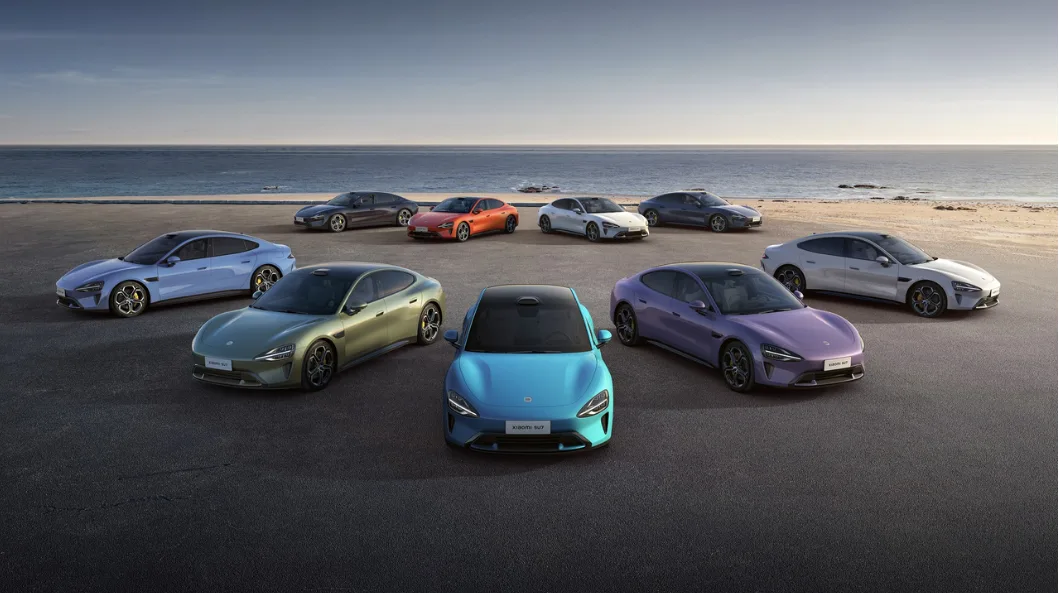
The global electric vehicle (EV) landscape has just witnessed a seismic shift. Xiaomi, the tech giant that once only dominated our pockets with smartphones, has officially unleashed its new-gen Xiaomi SU7 900km range variant, sending shockwaves through the industry.
By breaching the elusive 900km barrier, Xiaomi hasn’t just updated a car; it has effectively rewritten the rules of the long-range EV segment.
For the first time, a tech-first company has produced a machine that arguably leaves the veteran Tesla Model 3 trailing in its rearview mirror.
A Design That Defines the Premium EV Segment
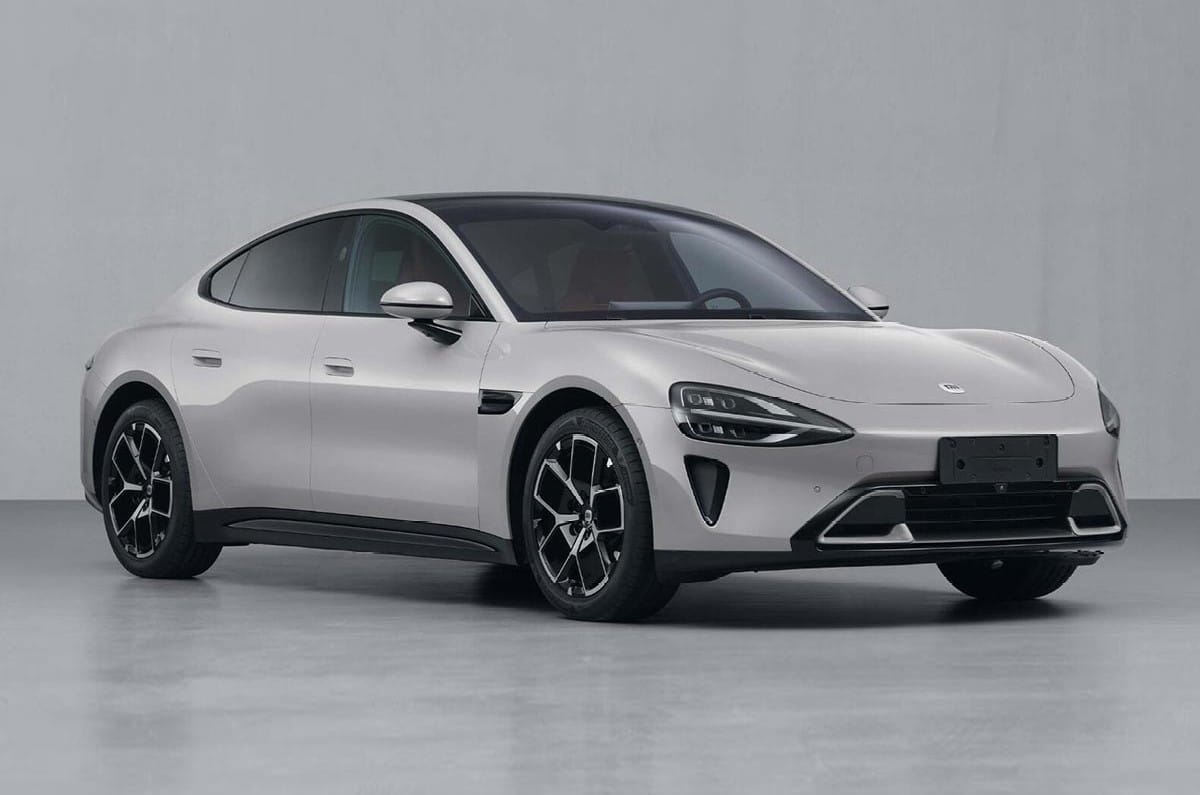
The new-generation Xiaomi SU7 isn’t just a facelift; it’s a masterclass in aerodynamic styling. Sporting a drag coefficient of just 0.195 Cd—one of the lowest in the world—the SU7 maintains its “driver-focused” silhouette while adding aggressive new touches.
The premium sedan stance is further enhanced by its waterdrop-style LED headlamps and a revamped front grille featuring larger cooling ducts. Every curve on this electric sedan is functional, designed to slice through the air and maximize efficiency.
When compared to the minimalist, almost clinical look of the Tesla Model 3, the SU7 feels more emotive, borrowing design cues from European performance legends while staying rooted in futuristic tech.
Performance & Range: The 900km Game-Changer
The headline act is undoubtedly the Xiaomi SU7 900km range (specifically 902km on the CLTC cycle) found in the Pro variant. This isn’t just a marginal gain; it is a direct challenge to “range anxiety,” the biggest hurdle for EV adoption.
Under the hood, or rather the chassis, lies the upgraded HyperEngine V6s Plus motor. This powerhouse allows the SU7 to achieve a blistering 0–100 km/h sprint in just 3.08 seconds for the Max variant, with a top speed capped at 265 km/h.
Battery Tech: Utilizing Cell-to-Body (CTB) integration, Xiaomi has packed a 94.3 kWh CATL Qilin battery into the Pro model.
Charging Speed: Thanks to its new 800V-ready architecture, the car can add 670km of range in just 15 minutes of ultra-fast charging.
Efficiency: The SU7 consumes as little as 11.7 kWh per 100km, proving that high performance doesn’t have to mean high energy waste.
Smart Cockpit: Where Smartphones Meet Supercars
Xiaomi’s “Human x Car x Home” philosophy reaches its zenith with the SU7’s smart cockpit. Centered around a massive 16.1-inch 3K touchscreen and powered by the Snapdragon 8 Gen 3 chip, the interface is as fluid as a flagship smartphone.
The Xiaomi electric car specs include standard LiDAR across all trims, supported by the NVIDIA DRIVE AGX Thor platform for advanced ADAS.
Unlike competitors that rely solely on cameras, Xiaomi uses a fusion of 4D millimeter-wave radar and HD cameras to provide a 360-degree safety net.
The deep integration with Xiaomi HyperOS means your car, phone, and smart home devices function as a single ecosystem—a level of connectivity Tesla is still striving to match.
| Feature | Xiaomi SU7 (Pro/Max) | Tesla Model 3 (Long Range) |
| Max Range | 902 km (CLTC) | 713 km (CLTC) |
| Acceleration (0-100) | ~3.08 Seconds | ~4.4 Seconds |
| Tech Hub | HyperOS / Snapdragon 8 Gen 3 | Tesla OS / Custom Chip |
| Safety Sensors | LiDAR + Radar + Cameras | Vision Only (Cameras) |
Xiaomi is disrupting Tesla by offering more hardware for less money. By including LiDAR as standard and providing a more luxurious interior with Nappa leather and zero-gravity seats, Xiaomi is positioning itself as the “premium for the masses” alternative.
Price and India Availability: What We Know
In China, the new-gen Xiaomi SU7 remains aggressively priced, starting at approximately RMB 219,900 (approx. Rs 25.5 Lakhs). While this price is highly competitive, an Indian launch remains speculative for 2026.
If Xiaomi decides to bring the SU7 to Indian shores, it would likely arrive via the CBU (Completely Built Unit) route initially, pushing the price closer to the Rs 50–60 Lakh bracket due to import duties.
However, with the Indian government’s new EV policy favoring manufacturers who commit to local production, a localized Xiaomi EV could be the ultimate disruptor for the Indian luxury car market.
Expert Insight: Why Tesla Should Be Worried?
“The Xiaomi SU7 isn’t just a car; it’s a mobile computing platform. By hitting the 900km range mark, Xiaomi has removed the last ‘logical’ reason to choose a traditional ICE vehicle or even a Tesla. This is the first time we are seeing a tech company out-engineer a specialized car manufacturer at scale. If Xiaomi mirrors its smartphone ‘value-king’ strategy in the global auto market, the incumbent players are in for a very rough decade.” — Senior Automobile Analyst
Conclusion: The Future is Here
The Xiaomi SU7 900km range update is a landmark moment in automotive history. It proves that the “New-Gen” label isn’t just marketing fluff—it’s a tangible leap in range, charging speed, and AI integration.
As the electric sedan market heats up, Xiaomi has moved from being a curious newcomer to a dominant force that even the biggest names in the industry can no longer ignore.
1. What is the range of Xiaomi SU7?
The new-generation Xiaomi SU7 offers three range options: 720km (Standard), 902km (Pro), and 835km (Max), all based on the CLTC cycle.
2. Is Xiaomi SU7 better than Tesla Model 3?
On paper, the Xiaomi SU7 offers superior range (902km vs 713km), faster charging (800V architecture), and more advanced sensor hardware (standard LiDAR) compared to the Tesla Model 3.
3. Will Xiaomi SU7 launch in India?
Xiaomi has not officially confirmed an India launch date yet. However, given the growing premium EV market in India and Xiaomi’s massive brand presence, industry experts anticipate a potential entry by late 2026 or 2027.
Also Read: Mahindra Thar Facelift Spied Testing on the Indian Roads- What are We expecting?