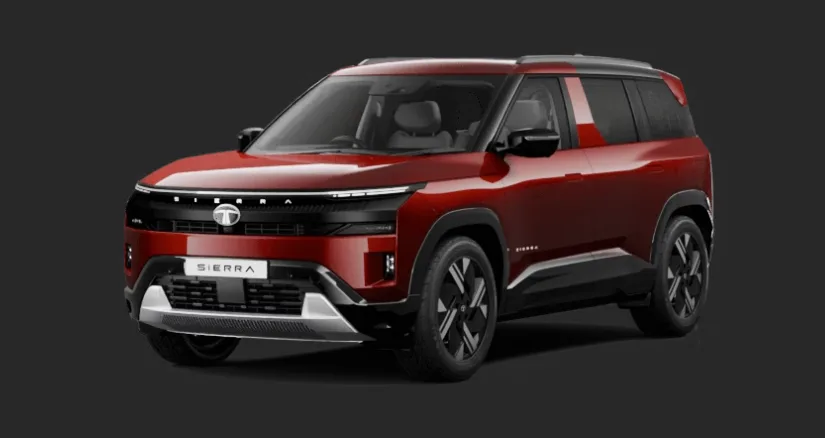
India’s electric SUV battleground is set to heat up in 2026 as Tata Motors prepares to roll out the highly anticipated Tata Sierra EV in the April–June 2026 window, reviving one of its most iconic nameplates in a zero-emission form after decades.
Seen as a key player in Tata’s expanding EV lineup, the Sierra EV blends heritage design cues with cutting-edge electric vehicle technology and a feature-rich cabin to appeal to tech-savvy buyers and adventure seekers alike.
Positioned between the Curvv EV and Harrier EV in the brand’s portfolio, it aims to challenge rivals in the midsize electric SUV segment.
Tata Sierra EV: Design
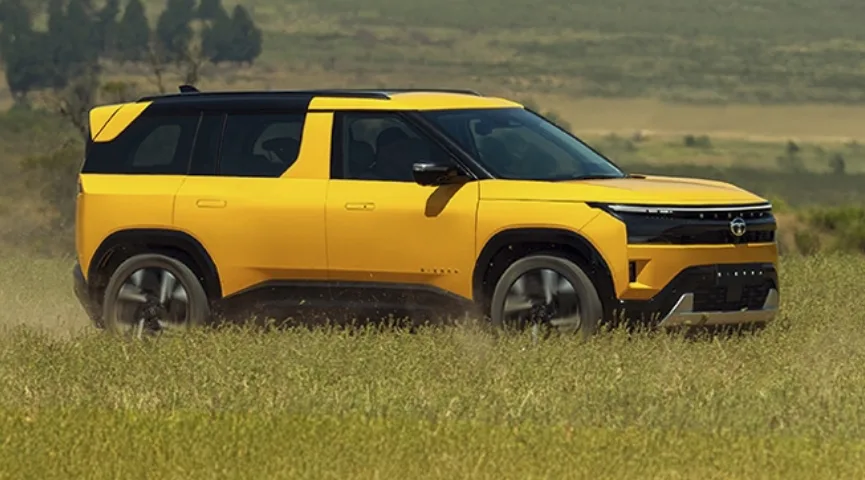
The Tata Sierra EV carries forward the boxy and upright silhouette that made the original Sierra a cult classic, while integrating modern electric SUV styling elements like a sealed front fascia, full-width LED daytime running lights, and flush door handles for a futuristic touch.
Built on Tata’s dedicated Acti.ev+ electric skateboard platform, the SUV promises optimized packaging efficiency and a spacious cabin layout.
The production model is expected to retain the Alpine Glass wraparound rear window trait from recent concepts, giving it a distinct profile in traffic. Despite exact dimensions not yet disclosed, its footprint will sit neatly in the midsize SUV bracket.
Tata Sierra EV: Powertrain
While Tata Motors is yet to reveal complete powertrain specifics, the Sierra EV is expected to offer multiple battery pack options to suit varied customer needs.
Lower trims could feature a standard pack that balances daily usability with range, while higher variants may adopt a larger battery capable of delivering real-world driving ranges around or above 450 km on a full charge.
Tata is also likely to offer both rear-wheel-drive (single-motor) and all-wheel-drive (dual-motor) configurations, enhancing performance and traction for different driving conditions.
Tata Sierra EV: Cabin and Safety
Expect the Sierra EV’s ride and handling package to mirror its ICE-sibling’s confident road manners, with suspension tuned to balance comfort and poise across Indian road conditions.
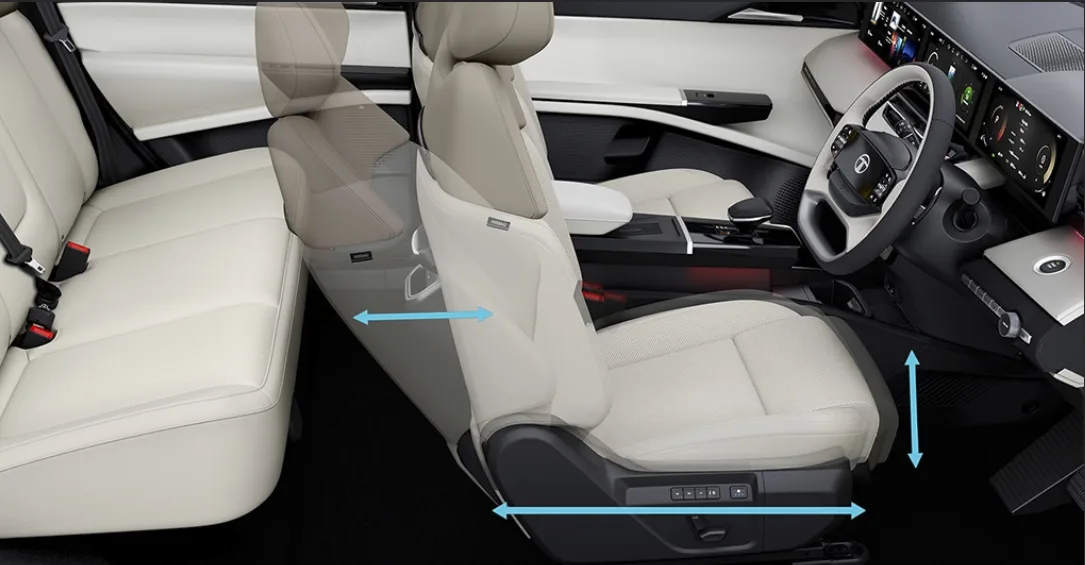
Inside, Tata is promising a digital-first cabin approach with a triple-screen setup comprising a digital driver display, a large central infotainment touchscreen, and a dedicated front-passenger screen.
Higher trims should bring Level-2 ADAS, a 360-degree camera system, connected car tech, and comfort features like powered front seats and dual-zone climate control, making it a tech flagship in its class. Tata may also incorporate V2L (vehicle-to-load) functionality and OTA software updates to heighten the EV experience.
Also Read: Discount on Hyundai Cars in February 2026