Tesla’s New Climate Management Patent Could Make Future EVs Cooler And More Efficient
Tesla has revealed a futuristic climate management patent that could completely change how electric vehicles stay cool during hot weather. Modern EVs with panoramic glass roofs often face severe cabin heating issues under direct sunlight, creating a rolling greenhouse effect.
This intense thermal load forces passengers to crank up the air conditioning, which rapidly drains battery power and reduces real-world driving range. Tesla’s latest patent focuses on improving cabin cooling efficiency directly at the source while simultaneously minimizing battery consumption.
The automaker is continuously innovating its thermal management systems to elevate passenger comfort and optimize EV range in extreme weather conditions.
What Is Tesla’s New Climate Management Patent?
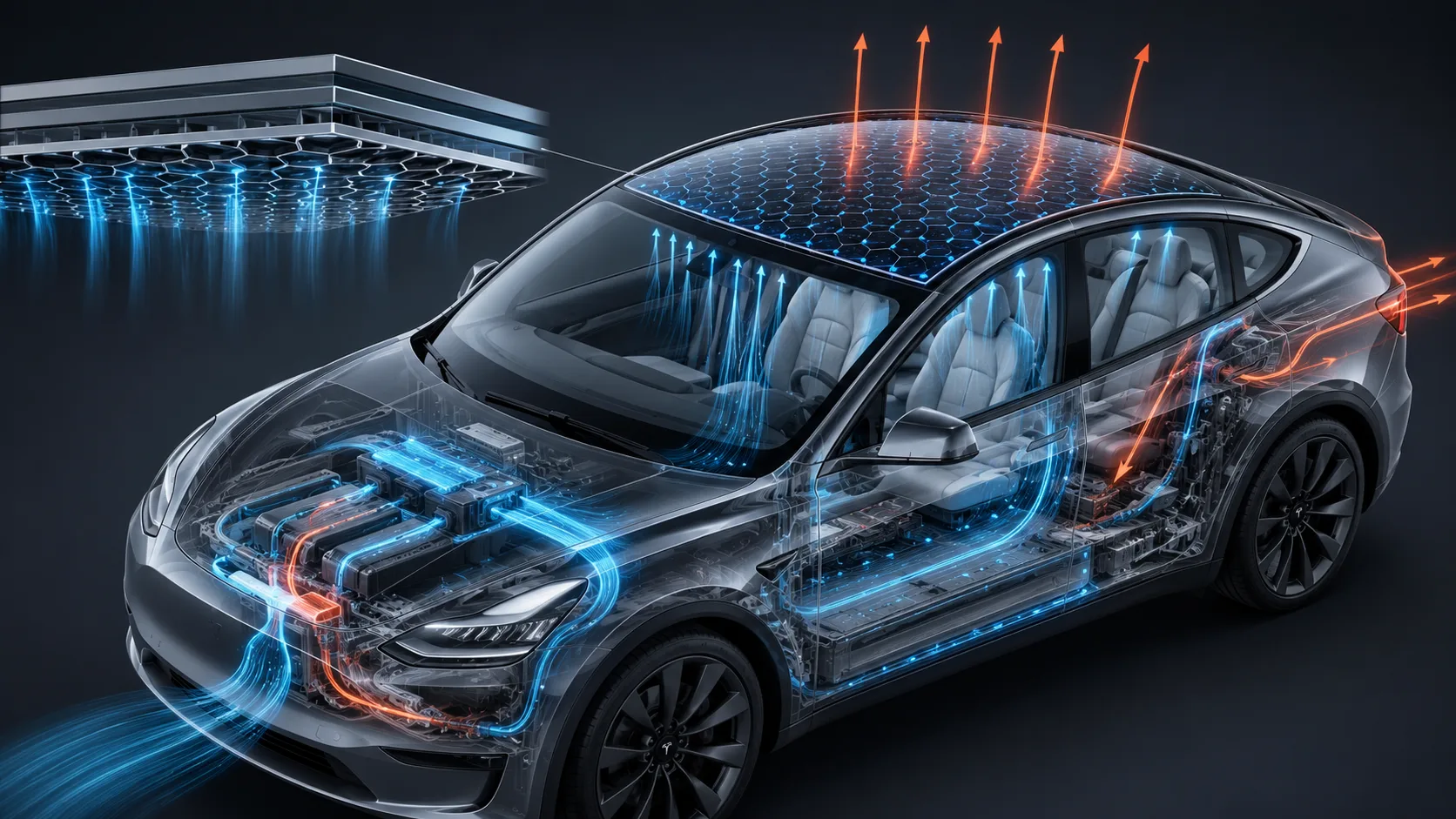
The newly published patent, titled “Automotive perforated glass structure,” details a sophisticated dual-layer panoramic roof system designed to actively regulate cabin temperatures.
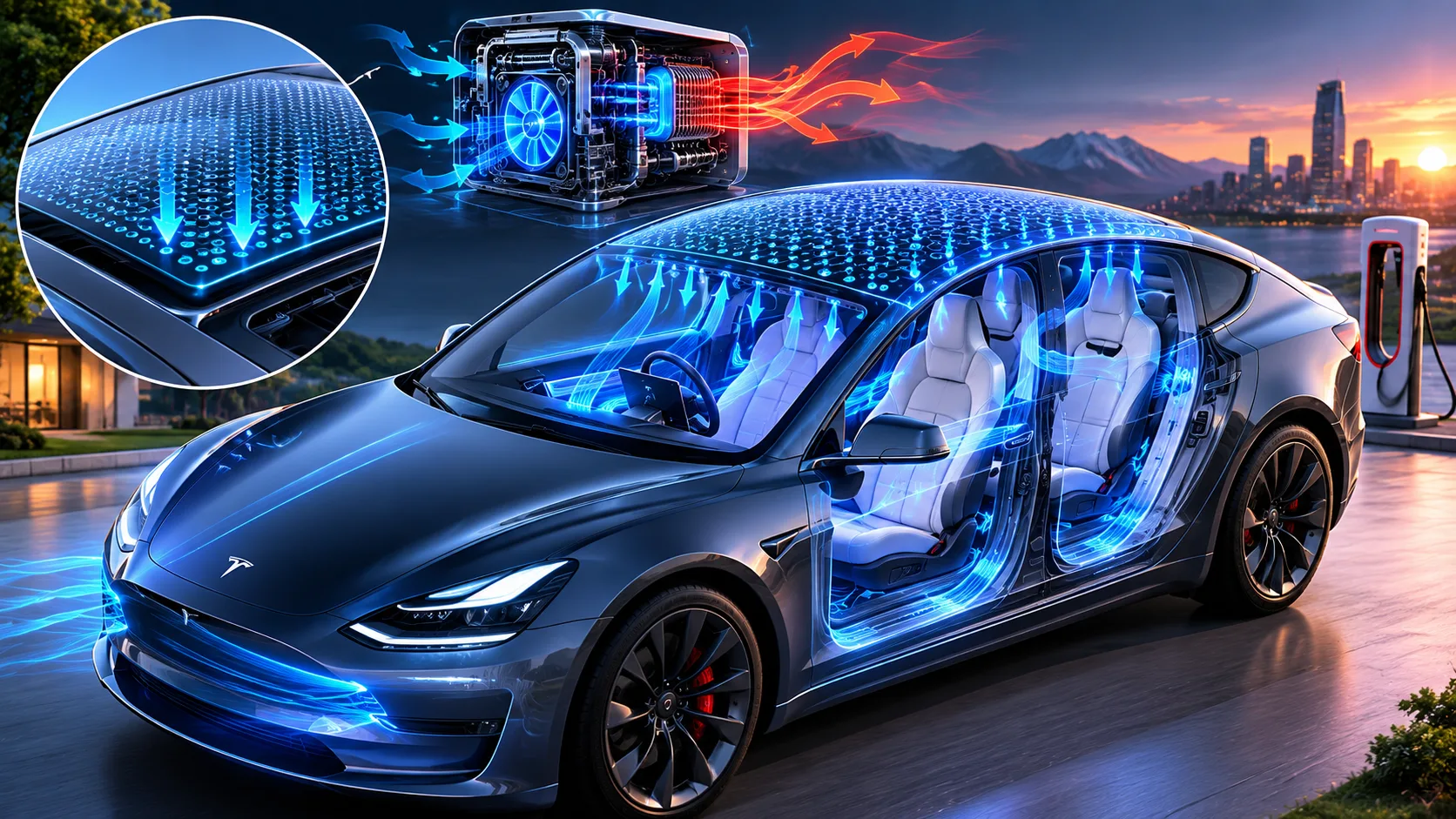
Instead of a standard single-pane glass roof, Tesla proposes a multi-layer assembly. The interior-facing glass layer features thousands of microscopic perforations separated from the solid outer pane by a rigid honeycomb or hexagonal structure. This creates an insulated internal air gap that distributes conditioned air directly through the ceiling.
Additionally, Tesla has filed a complementary patent for an advanced suction-based HVAC setup. Rather than just blowing cold air forward, this secondary system acts like a vacuum, utilizing negative pressure to draw trapped hot air away from the windshield and roof area before it mixes with the rest of the cabin.
How This Technology Could Improve EV Efficiency?
In the EV world, heavy reliance on the air conditioning system during scorching summer days can penalize an electric vehicle’s total driving range by up to 18 percent.
Because traditional cooling systems pull massive amounts of energy straight from the main battery pack, reducing the HVAC load is paramount.
Tesla’s targeted airflow and vacuum-assisted heat extraction technology neutralize solar heat gain right where it is strongest. By gently bleeding cool air downward from the ceiling, the system works in harmony with natural physics—as cool air is denser and naturally falls.
According to Tesla’s internal testing data, this optimized approach can slash continuous climate control energy draw by up to 7.4 percent, effectively saving valuable kilowatt-hours and extending driving range on long trips.
Design And Engineering Innovation
The engineering brilliance behind this design lies in its seamless structural integration. By embedding hidden air channels and a honeycomb acoustic-thermal insulation structure directly into the glass roof, Tesla is eliminating the need for bulky, visible dashboard vents.
This creates a highly uniform comfort bubble over passengers’ heads, replacing the unpleasant experience typical of traditional high-velocity blowers.
This dual-pane layout would drastically benefit models with massive expanses of overhead glass, such as the Tesla Model 3, Model Y, Cybertruck, and next-generation autonomous robotaxis.
Could This Technology Arrive In Future Tesla Cars?
As with all automotive filings, Tesla has not officially confirmed a production timeline or guaranteed that this exact architecture will hit assembly lines anytime soon.
Scaling a complex, perforated honeycomb glass roof comes with obvious mass-manufacturing hurdles and potential safety replacement costs if struck by road debris.
However, given Tesla’s relentless history of hunting down incremental efficiency gains, these thermal innovations remain highly relevant for next-generation platforms.
Furthermore, as global EV competition intensifies, rival automakers will likely be forced to adopt similar, highly advanced climate management solutions to stay competitive.
Why Thermal Management Is Important For EVs?
In an electric car, thermal management is everything. Unlike internal combustion engine vehicles that repurpose vast amounts of wasted engine heat, an EV must actively create and manage every bit of thermal energy it uses.
Efficient climate and heat pump innovations directly dictate real-world battery health, fast-charging performance, and cabin comfort. Ultimately, minimizing the energy required to stabilize the cabin translates directly into more miles on the road.
Also Read:
Conclusion
Tesla’s latest climate management patent highlights how future EVs may become smarter, more energy-efficient, and far more comfortable. As the industry pushes past simple battery capacity increases, advanced structural thermal management is cementing itself as a critical frontier for next-generation electric vehicles.
Also Read: Can We Use NOS In Under 200cc Bikes? Here’s Everything You Need To Know