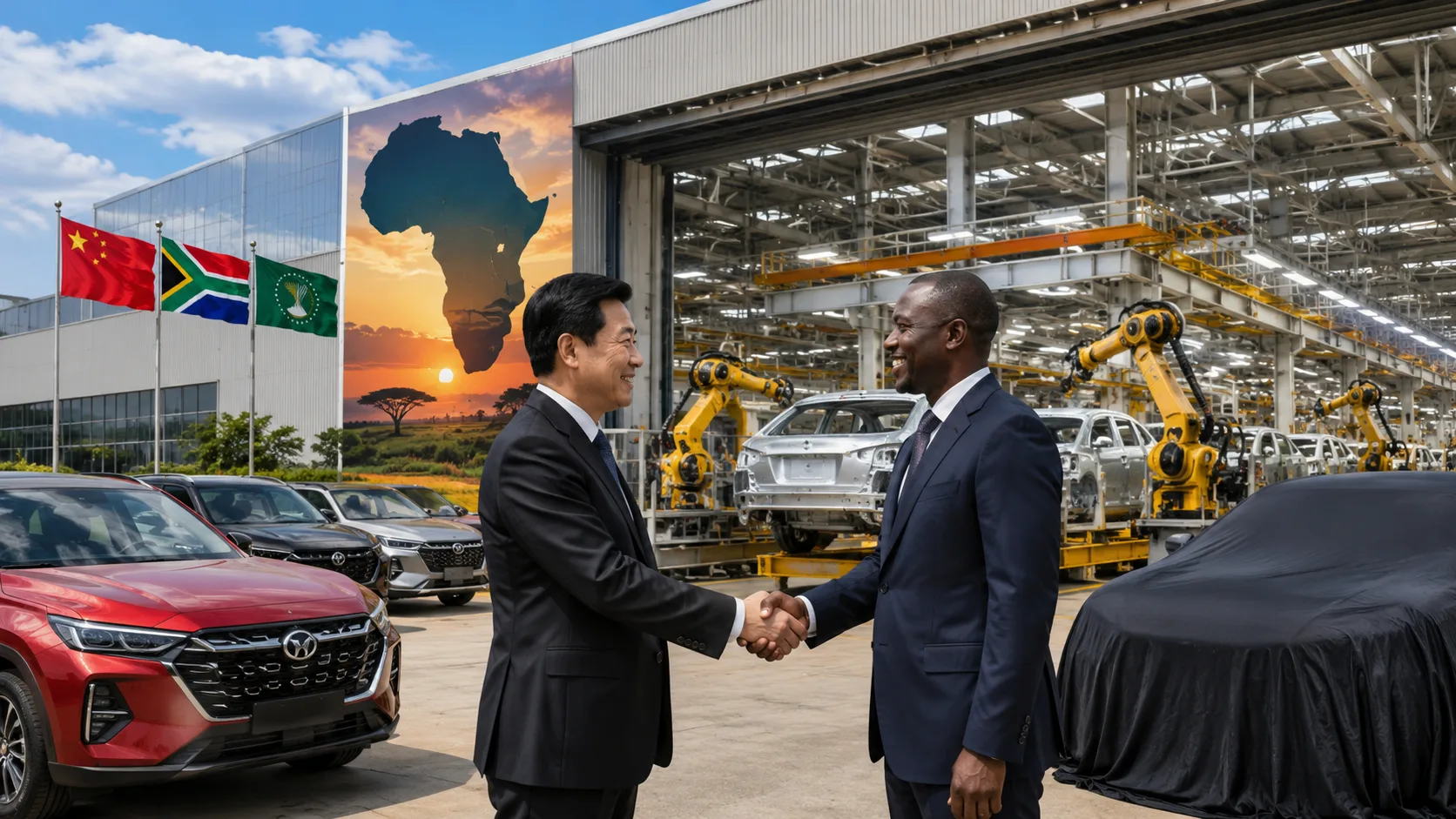
Chinese Giant Chery Takes Over Nissan’s Rosslyn Factory to Build African Automotive Hub
The African automotive landscape has experienced a major shakeup. China’s leading vehicle exporter, Chery Automobile, has officially taken full operational control of the historic Rosslyn manufacturing facility in Pretoria, South Africa.
This takeover marks the end of nearly six decades of Nissan-branded vehicle assembly at the plant, transitioning the prime industrial site into a modern production base for a massive onslaught of high-tech Chinese SUVs.
By establishing local manufacturing, Chery is transitioning from a traditional vehicle importer into a long-term economic partner within the region. The move comes at a crucial time when global trade boundaries are shifting, forcing automakers to build closer to their core consumer groups.
Inside Chery’s Multimillion-Dollar Investment Plan
Chery will deploy a massive investment campaign to completely overhaul the existing infrastructure at Rosslyn. The comprehensive injection will upgrade existing assembly utilities and establish an advanced stamping plant for body panels.
The factory upgrades will run over the next year to prepare the lines for commercial assembly, with the initial batch of customer vehicles scheduled to roll off the lines in mid-2027.
During the primary production ramp-up phase across the third and fourth quarters of 2027, the factory aims to produce 15,000 units. Moving forward, the facility is being engineered to support an annual volume capacity of 50,000 vehicles, keeping Chery on track to surpass 100,000 retail sales in South Africa.
Retaining Local Talent and Creating 3,000 New Jobs
One of the most significant aspects of the deal is its focus on protecting the local workforce. Chery has committed to absorbing all 692 current employees working at the plant, ensuring clear employment continuity on equal operational terms.
Furthermore, as assembly lines scale up to maximum output capacity, the project is projected to generate nearly 3,000 direct and indirect jobs across manufacturing sub-sectors, parts logistics, and ancillary engineering services.
The company is also pushing a localization program that targets 40% local component sourcing right from the initial phase. Chery is already auditing tier-1 domestic parts suppliers while paving the way for international intelligent component manufacturers to set up local operations.
Which SUVs Will Be Built at the New Pretoria Plant?
The upgraded assembly lines will initially cater to three highly popular sport utility vehicles under the parent company’s diverse brand portfolio:
Jetour T-Series: Production for the rugged off-road family (including the T1) is slated to start locally by 2027.
Jaecoo J5: The hot-selling urban crossover will be built here in both traditional Internal Combustion Engine (ICE) and advanced New Energy Vehicle (NEV) options.
Chery Tiggo 4: The highly successful compact SUV will also join the localized production mix.
Why the Move Matters for Global Automotive Trade
The decision to establish a full manufacturing hub in Pretoria is a direct response to changing global dynamics. Faced with increasing competition and manufacturing overcapacity back home, Chinese carmakers are aggressively building out global footprints.
By setting up an integrated auto center featuring local engineering, training hubs, and raw supply chains, Chery is turning South Africa into its central base for continent-wide distribution and exports.
Concurrently, this sale allows Nissan to step away from regional manufacturing after experiencing a tough 20% drop in local sales volume, freeing up its balance sheet to focus on its restructuring plans across North America, China, and Europe. Nissan will still continue to operate as a sales and distribution brand in the country, keeping its product pipeline alive via fully imported vehicles.