
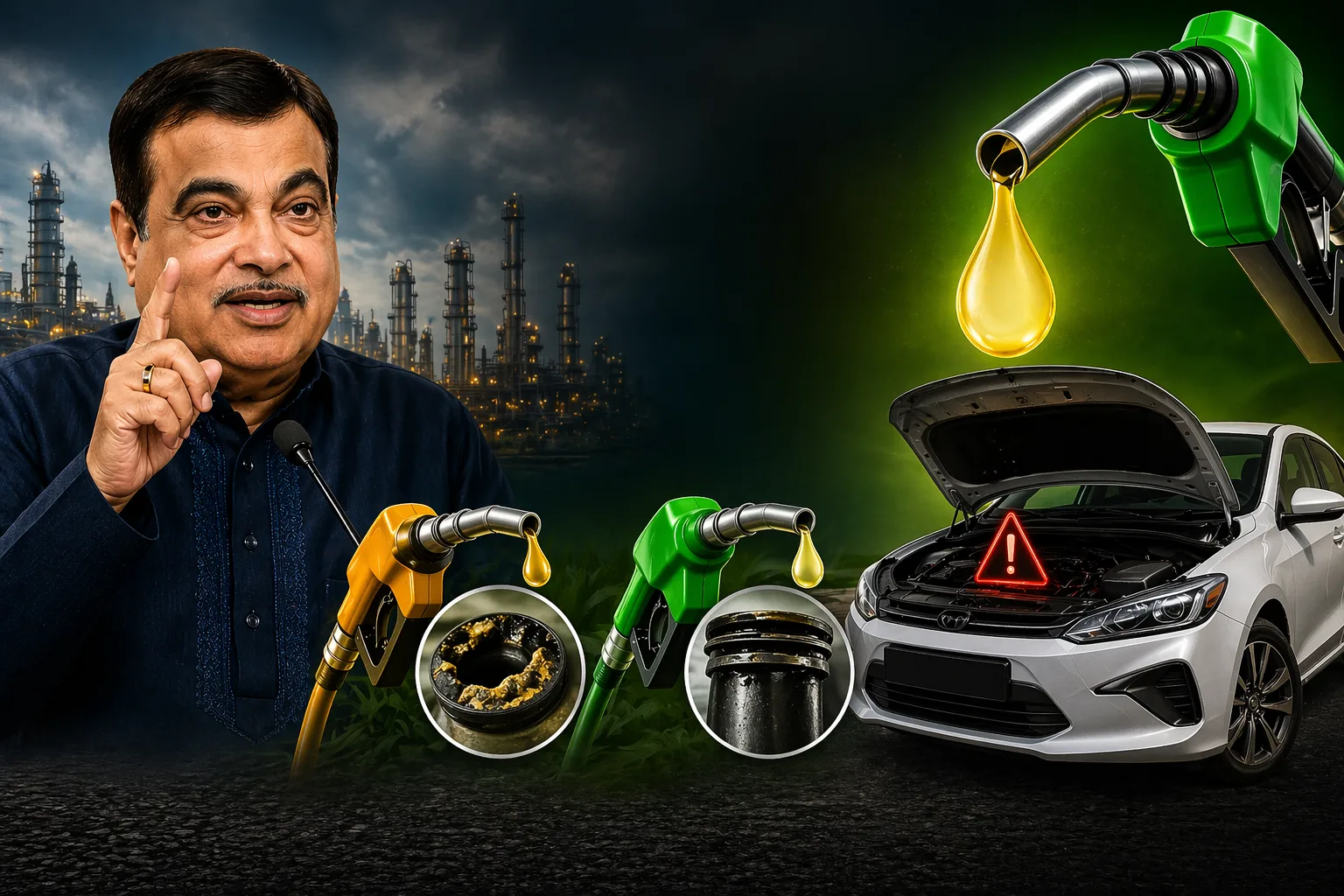
Expert Opinion: Can E20 Fuel Cause Vehicle Breakdowns During Monsoon?
The rollout of E20 petrol across India has sparked a fresh debate during the ongoing monsoon season. Some petrol pump owners have raised concerns that E20 fuel may become contaminated with water, potentially leading to starting issues or even vehicle breakdowns.
However, the Federation of Automobile Dealers Associations (FADA) and the government have dismissed claims that E20 poses any unique risk when handled correctly.
So, can E20 fuel really damage your vehicle during the rainy season? Here’s everything you need to know.
Why Are Petrol Pump Owners Worried About E20 During Monsoon?
According to industry experts, the concern is linked to ethanol, which is blended with petrol to create E20 fuel. Ethanol is hygroscopic, meaning it naturally absorbs moisture from the surrounding environment.
During the monsoon, underground fuel storage tanks at petrol pumps can accumulate small amounts of water due to rainwater seepage, humidity, condensation, or even during fuel deliveries. While this has always been a possibility, higher ethanol content has renewed concerns among some fuel retailers.
What Is Phase Separation in E20 Fuel?
Experts explain that if the water content in stored E20 fuel exceeds around 0.5 percent, ethanol begins to absorb the excess water. This can trigger a process known as phase separation.
In this situation, the ethanol and water combine and settle at the bottom of the underground storage tank, while petrol remains above. Since fuel dispensing systems typically draw fuel from the lower section of the tank, there is a possibility that some vehicles could receive a water-rich fuel mixture instead of properly blended E20 petrol.
Can This Lead to Vehicle Breakdowns?
If a vehicle receives a fuel mixture containing excessive water, it may experience hard starting, engine hesitation, misfiring, or even a breakdown after driving some distance.
Experts say the risk is considered higher in coastal regions, where groundwater levels are higher and underground fuel tanks may be more vulnerable if their seals are damaged or not maintained properly.
However, they also note that such issues are generally related to fuel storage conditions rather than the E20 fuel itself.
Can E20 Fuel Cause Corrosion?
Some petrol pump operators have also expressed concerns that mild steel underground storage tanks and pipelines could be more susceptible to corrosion because ethanol absorbs moisture.
At the same time, industry sources point out that Oil Marketing Companies (OMCs) have already upgraded many dispensing systems by replacing older seals and washers with neoprene rubber components, which are designed to be compatible with E20 fuel.
FADA Rejects Claims of Unique E20 Risk
The Federation of Automobile Dealers Associations (FADA) has rejected claims that E20 petrol creates a new or unique water contamination problem.
According to FADA, ethanol’s ability to absorb moisture is already well understood and has been considered while developing fuel standards, storage systems, and modern vehicle designs. The association described suggestions that E20 itself is responsible for unusual contamination as misleading.
Government’s Clarification
The Ministry of Information and Broadcasting has also clarified that modern vehicles are engineered with safeguards to prevent water from entering the fuel system. Authorities maintain that when fuel is stored and handled according to prescribed standards, E20 petrol remains safe for compatible vehicles.
Also Read: Volvo EX90 India Debut on August 19: What to Expect?
Should Vehicle Owners Be Concerned?
For most motorists, there is no immediate reason to worry. Experts advise refueling only at reputed petrol pumps that follow proper fuel storage and maintenance practices.
If your vehicle is E20-compatible, using E20 petrol as recommended by the manufacturer should not cause problems. Any issues arising from water contamination are generally linked to improper fuel storage or maintenance at fuel stations, rather than the fuel blend itself.
As India continues its transition toward ethanol-blended fuels, proper infrastructure maintenance and fuel quality monitoring will remain essential, especially during the monsoon season.
Also Read: Ferrari Amalfi Spider Launched with twin-turbo V8 Engine, Price Starts at Rs 4.6 Crore