India-Made Toyota Starlet Gets Shocking 0-Star GNCAP Rating – What Went Wrong?
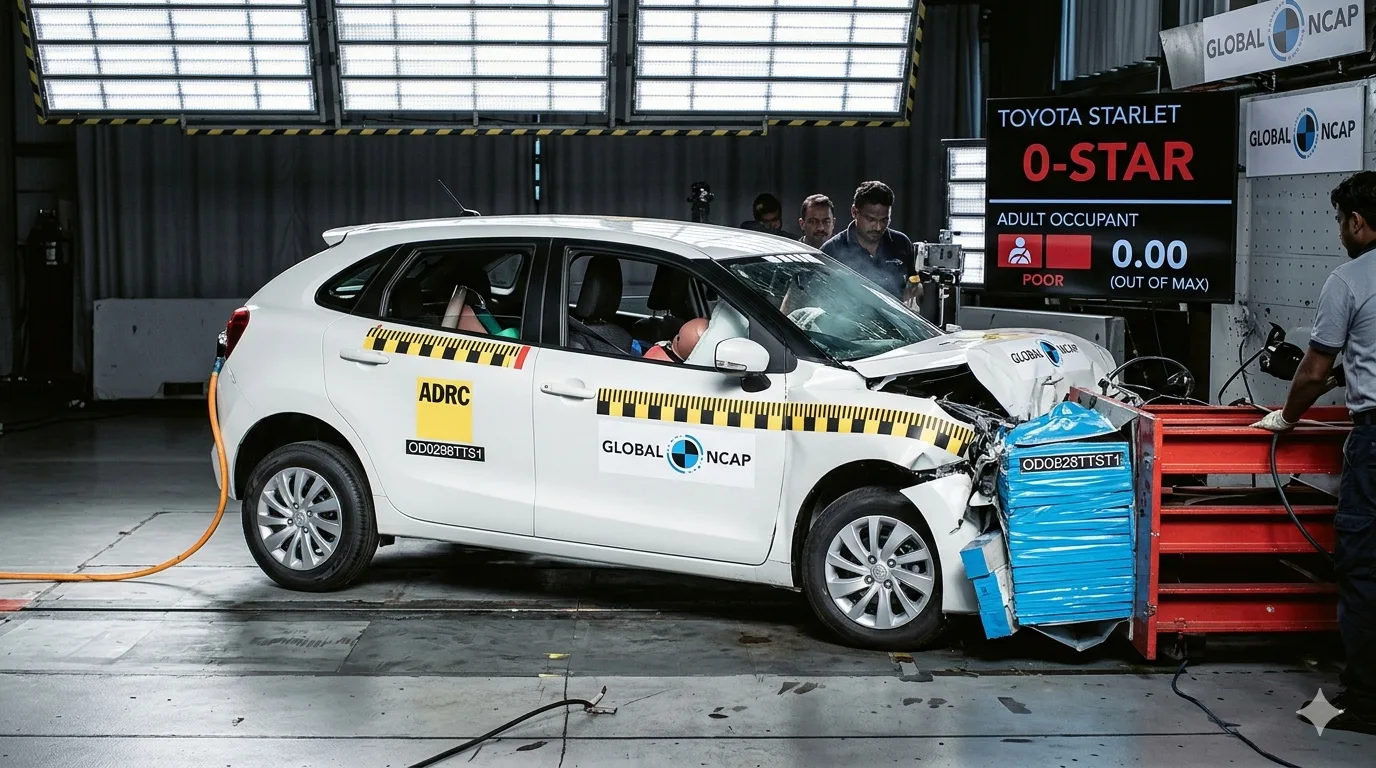
The India-manufactured Toyota Starlet has received a disappointing 0-star safety rating in the latest Global NCAP crash tests, raising fresh concerns about the safety standards of some entry-level export vehicles built in India.
While India has significantly improved automotive safety standards in recent years, this latest result once again highlights the gap between cost-focused manufacturing and global crash safety expectations.
The Toyota Starlet is primarily produced for export markets and is sold in several international regions as an affordable hatchback focused on fuel efficiency and low ownership costs.
This result is expected to trigger intense discussions around structural safety, standard safety equipment, and export-quality regulations.
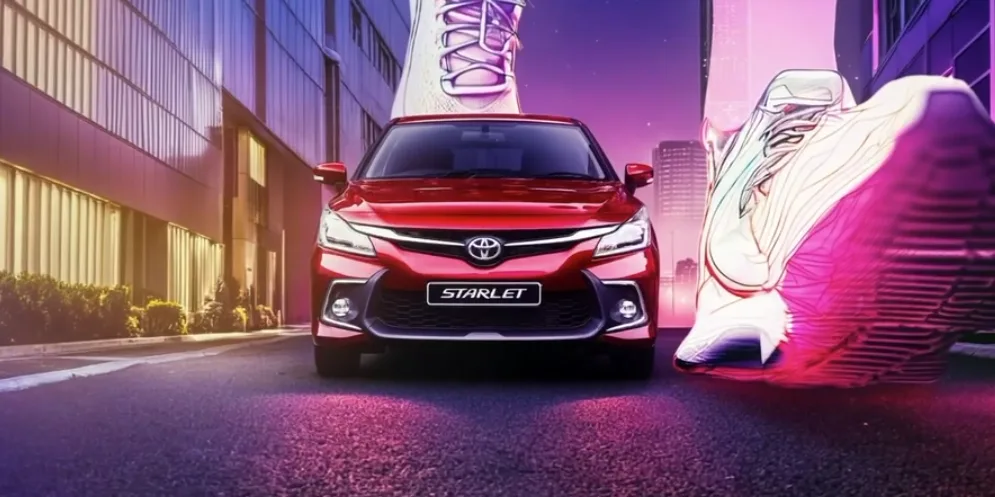
The Toyota Starlet is essentially a rebadged version of the Maruti Suzuki Baleno platform, a product of the Toyota-Suzuki global partnership. Tailored for international markets, the car features Toyota-specific styling updates and branding but retains the core mechanicals and architecture of its Suzuki counterpart.
It competes in the highly competitive affordable hatchback segments across developing and emerging markets, where buyers typically look for a balance between brand reliability and economical running costs.
Where Is The Toyota Starlet Manufactured?
The Starlet is manufactured in India at Suzuki Motor Gujarat’s manufacturing facility in Gujarat. This plant is a critical hub in India’s automotive export ecosystem, producing multiple Maruti Suzuki and Toyota rebadged vehicles for both domestic and international consumption.
Because of its large-scale production capacity, localization advantages, and integration into the global supply chain, the Gujarat facility serves as the primary source for the Starlet sold in various right-hand-drive and emerging markets.
Which Countries Import The India-Made Toyota Starlet?
As a value-for-money family car, the India-made Toyota Starlet is exported to several key regions where affordability and fuel efficiency are major priorities. These include South Africa, Latin American markets, Middle Eastern countries, African nations, and Select Asian markets.
In these developing economies, the Starlet is positioned as an accessible entry point into the Toyota brand, often serving as a primary vehicle for young families and rental fleets.
Why Did The Toyota Starlet Score 0 Stars?
The shocking 0-star result for the Starlet stems from several critical failures during testing. Global NCAP reported that the vehicle’s performance lacked the necessary protection levels required for a passing grade under modern protocols. Key reasons behind the poor result include:
Weak body shell integrity: The structure was rated as unstable.
Limited crash protection: Insufficient energy absorption during impacts.
Lack of advanced safety systems: Absence of life-saving electronic aids as standard.
Poor adult occupant protection: High risk of injury to vital body parts.
Minimal side-impact protection: The cabin did not sufficiently shield passengers from side collisions.
Absence of ADAS technology: No automated systems to help avoid accidents.
Cost-focused engineering compromises: Prioritizing price over premium safety materials.
Global NCAP has increasingly tightened its protocols, meaning older or cost-optimized platforms now struggle to achieve scores that might have been higher under previous, less stringent testing regimes.
Why Are Some India-Made Cars Still Scoring Low In Crash Tests?
Despite the introduction of Bharat NCAP and stricter domestic regulations, some export-oriented budget cars continue to score poorly due to aggressive cost optimization. Many models are developed with:
Lower safety specifications specifically for markets with laxer safety legislation.
Limited standard safety equipment compared to higher-end models.
Price sensitivity in emerging markets that often forces a compromise.
Reliance on older platform architectures.
In these segments, manufacturers often balance the need for affordability with safety investments, sometimes resulting in lower-rated products for specific regions.
What Improvements Are Needed?
To salvage the safety reputation of budget hatchbacks, several critical improvements are necessary. Industry experts suggest:
Stronger body structures using high-tensile materials.
More airbags as standard to provide comprehensive cabin coverage.
Better side-impact protection through reinforced pillars and doors.
Advanced Driver Assistance Systems (ADAS) to assist the driver in emergencies.
Improved crash energy absorption through better-designed crumple zones.
Stricter global safety compliance across all manufacturing batches.
Better pedestrian protection features on the exterior.
As Indian consumers become more safety-conscious, the demand for vehicles that exceed minimum regulatory requirements is growing rapidly.
The Evolving Image of Indian Manufacturing
India’s automotive safety image has been on a positive trajectory recently, with brands like Tata Motors and Mahindra consistently achieving impressive crash-test scores globally.
This shift has helped improve India’s image as a manufacturing hub for safer vehicles. However, this progress makes low-rated cars like the Starlet stand out even more in today’s market, as they appear to lag behind the safety revolution currently sweeping the Indian automotive landscape.
Conclusion
The Toyota Starlet’s disappointing 0-star Global NCAP result serves as another reminder that affordability should not come at the cost of passenger safety.
As India continues growing as a global automotive manufacturing hub, maintaining strong safety standards across all domestic and export vehicles will become increasingly important for consumer trust and global reputation.
Ensuring that every passenger is protected, regardless of the vehicle’s price point, remains the ultimate goal for the future of the industry.
Also Read: Lamborghini Revuelto NA63 Unveiled: Exclusive 1963-Inspired Supercar Limited to Just 63 Units