Renault-Geely Partnership Explained: What It Means for Indian Car Buyers
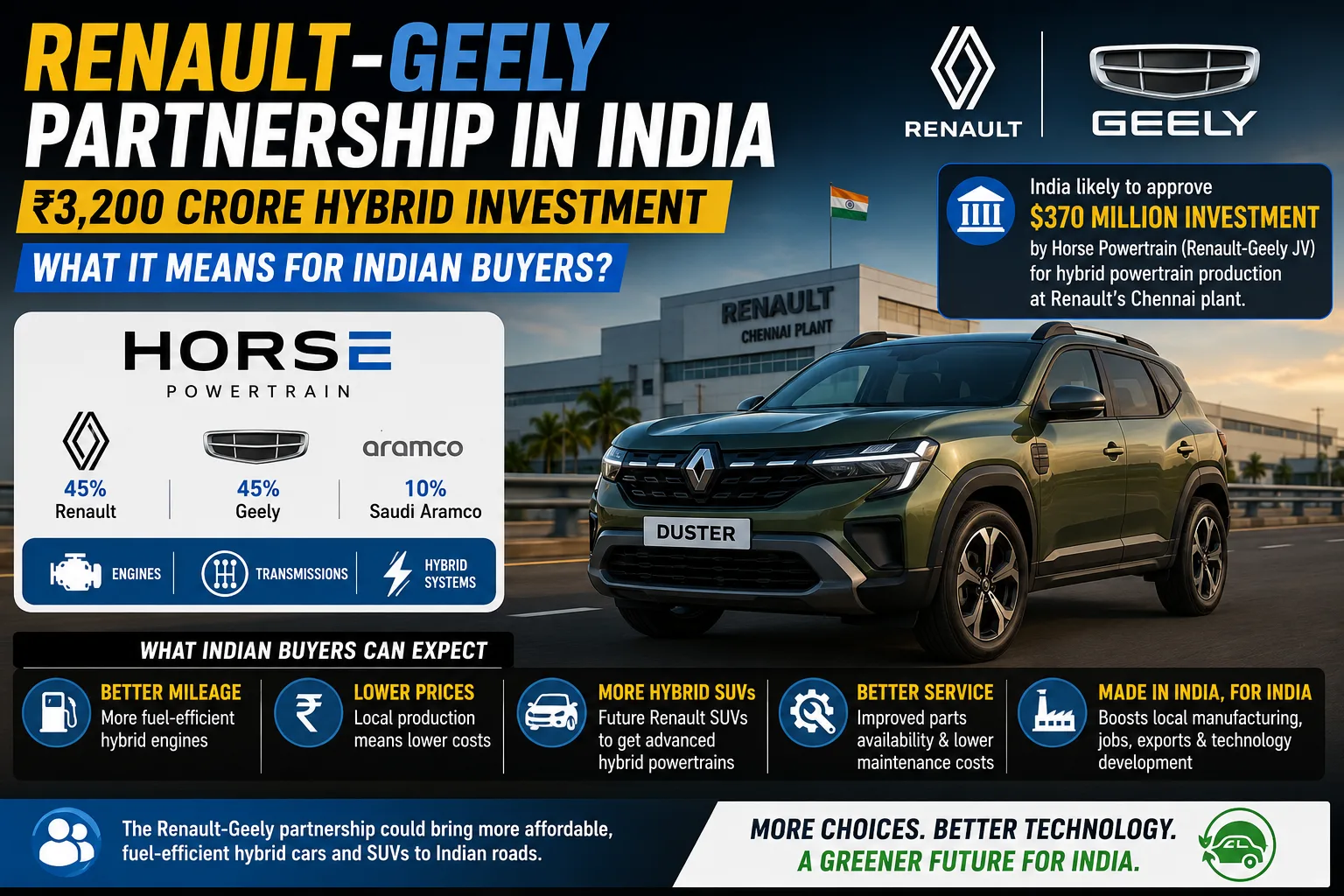
The Indian automotive landscape is standing on the precipice of a massive technological shift. India is expected to approve a major $370 million (approximately Rs 3,200 crore) manufacturing investment from Horse Powertrain Ltd.
For the uninitiated, Horse Powertrain is a global combustion and hybrid engine powerhouse built on a high-stakes joint venture between France’s Renault Group and China’s automotive giant, Zhejiang Geely Holding Group.
This phased rollout is slated to begin operations right out of Renault’s existing manufacturing facility in Chennai. Beyond the sheer scale of the financial injection, this development holds immense geopolitical weight; it marks one of the most substantial Chinese-linked automotive manufacturing approvals since New Delhi tightened its foreign direct investment (FDI) frameworks for neighboring nations in 2020.
But stripped of the corporate jargon and policy layers, a critical question emerges for everyday consumers: What does the Renault-Geely partnership mean for Indian car buyers? The answer stretches far beyond factory floors, promising to completely reshape product value, choice, and ownership costs.
What Is Horse Powertrain?
Formed as an industry-disrupting alliance in 2024, Horse Powertrain represents a specialized carve-out of modular engineering. The organizational layout splits ownership smoothly across global industrial giants:
Renault Group: 45% ownership stake
Geely Holding Group: 45% ownership stake
Saudi Aramco: 10% strategic investment stake
Headquartered in London, the independent entity operates 18 advanced manufacturing facilities worldwide. Its primary objective is simple yet expansive: research, develop, and manufacture highly optimized internal combustion engines (ICE), cutting-edge transmissions, and state-of-the-art hybrid systems that meet ultra-strict global emissions targets.
Also Read: Hero Passion Plus Disc Launched At Rs 84,000; Gets Full Digital Instrument Cluster And New Features
Why Is Renault Partnering With Geely?
Developing modern strong-hybrid powertrains independently is an incredibly capital-intensive and slow process. By establishing a shared engineering asset, Renault can bypass massive development bottlenecks. Geely brings a mature, globally proven portfolio of highly efficient hybrid architectures, while Renault contributes decades of localized manufacturing discipline.
This model allows Renault to split multi-billion-dollar R&D liabilities and bring advanced vehicles to market twice as fast. Rather than stressing over engine block thermodynamics, Renault can channel its capital directly into vehicle design, safety features, digital software interfaces, and improving the localized customer service experience.
What Does It Mean for Indian Buyers?
The structural impacts of the Renault-Geely initiative will filter straight down to local showrooms in very practical ways.
Affordable, High-Tier Hybrid SUVs
Historically, Indian car buyers looking for a strong-hybrid system had to pay a massive premium or choose from a very limited pool of options. Thanks to hybrid powertrain manufacturing localizing at the Chennai plant, upcoming vehicles will offer advanced dual-motor petrol-electric tech natively, delivering a smooth driving experience across all price tiers.
Competitive Product Pricing
When automotive brands rely on fully built imported engine assemblies, the cost is inflated by heavy customs duties and volatile shipping logistics. Deep local integration driven by Geely’s investment pipelines means a dramatic drop in component production costs. This cost protection can be passed on directly to the end buyer, lowering the barrier to entering the strong-hybrid lifestyle.
Spectacular Fuel Efficiency
As everyday fuel prices continue to hover near historic highs, the efficiency gains of a strong-hybrid cannot be understated. Vehicles backed by Horse Powertrain systems will capture energy during braking to charge their on-board battery packs, allowing cars to drive exclusively on electric power during crawling bumper-to-bumper city commutes. This translated real-world mileage cushion significantly deflates monthly fuel outlays.
Dependable Spare Parts Availability
When powertrain components are cast, machined, and assembled locally within Indian borders, long-term service dynamics improve rapidly. Dealerships don’t have to wait weeks for back-ordered parts to clear customs, which reduces turnaround times during routine maintenance or unforeseen mechanical repairs.
Which Renault Cars Could Benefit?
While precise production roadmaps are subject to market conditions, industry intelligence highlights a clear path forward for the Renault-Nissan alliance portfolio:
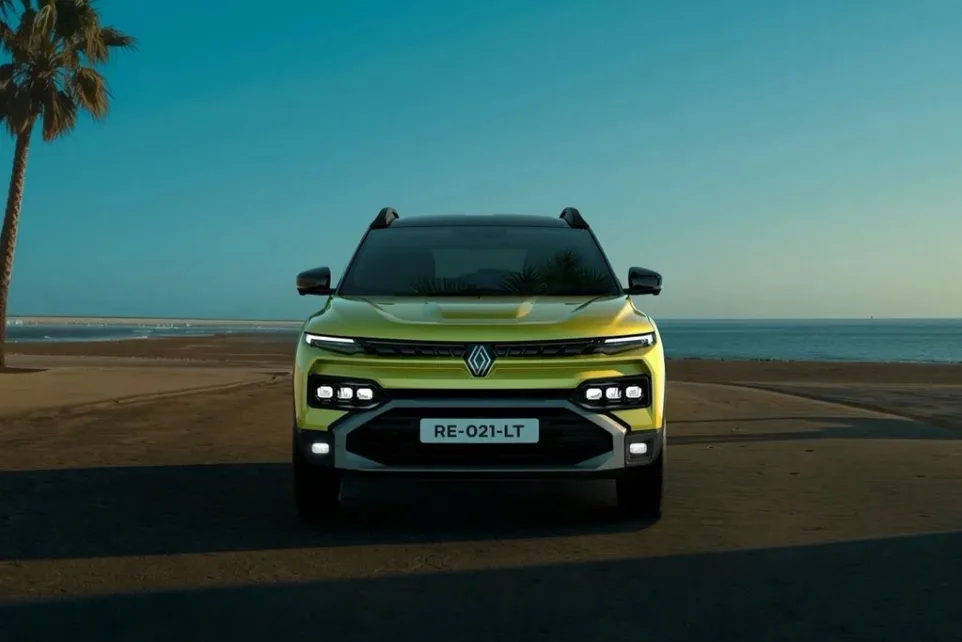
Next-Generation Renault Duster: The highly anticipated return of the Duster badge is expected to serve as the launch vehicle for this tech, likely utilizing a robust, Horse-developed 1.8-litre strong-hybrid engine block.
Renault Boreal: A premium mid-size companion SUV designed to target urban families.
Nissan C-SUVs: Sister vehicles engineered on shared platform architectures, guaranteeing that Nissan buyers get direct access to identical localized hybrid refinement.
Could This Challenge Toyota and Maruti’s Hybrid Dominance?
Currently, the sub-20 lakh strong-hybrid segment is dominated by the Toyota Urban Cruiser Hyryder and the Maruti Suzuki Grand Vitara. This lack of diverse competition gives consumers limited leverage.
By introducing an alternative, highly localized hybrid SUV ecosystem, Renault and Nissan can break this duopoly. This influx of fresh competition will inevitably ignite feature wars, aggressive pricing strategies, and faster technology rollouts across competing brands—giving Indian consumers unprecedented choice.
Why This Investment Is Important for India
The broader economic implications are equally profound. The approval of a major China-linked manufacturing asset signals a pragmatic easing of investment rules, positioning India as a flexible hub for global supply chains. The Rs 3,200 crore layout generates skilled manufacturing jobs, accelerates tech transfer in clean-energy fields, and creates a solid foundation for exporting high-tech hybrid engines from Chennai to global right-hand-drive markets.
Conclusion
The impending approval of the Renault-Geely investment via Horse Powertrain is far more than a routine industrial update. It represents a coordinated effort to democratize sustainable, high-mileage transport for the average Indian household.
If executed correctly, this partnership will strip the luxury premium away from green mobility, offering buyers an array of advanced, ultra-efficient vehicles without the historic sticker shock.
Also Read: McMurtry Reveals Production-Ready Spéirling PURE EV Hypercar: Everything You Need To Know