Why Modi Government Is Offering More Subsidy To Electric Two-Wheeler Buyers?
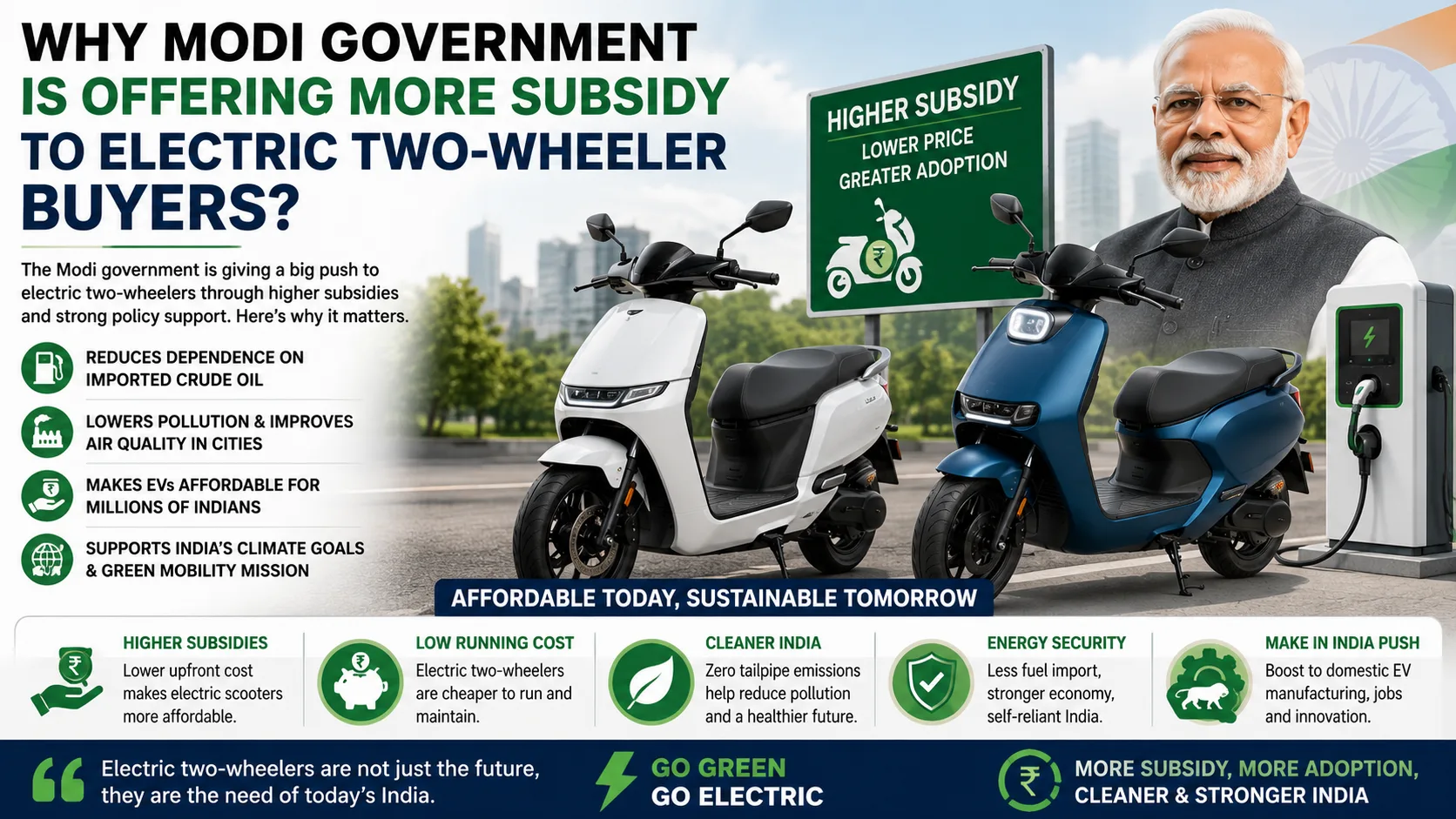
The Modi government is aggressively promoting electric two-wheelers across India through strategically planned subsidies, financial incentives, and solid policy support.
Electric scooters and motorcycles are fast becoming mainstream across Indian cities, driven heavily by fluctuating petrol prices, incredibly low daily running costs, and a rapidly expanding charging infrastructure.
India stands as one of the world’s largest two-wheeler markets, making widespread EV adoption absolutely critical for reducing urban pollution and curbing the nation’s massive fuel import bill.
Ultimately, the central government aims to make clean, electric mobility highly affordable and practical for middle-class commuters and daily riders nationwide.
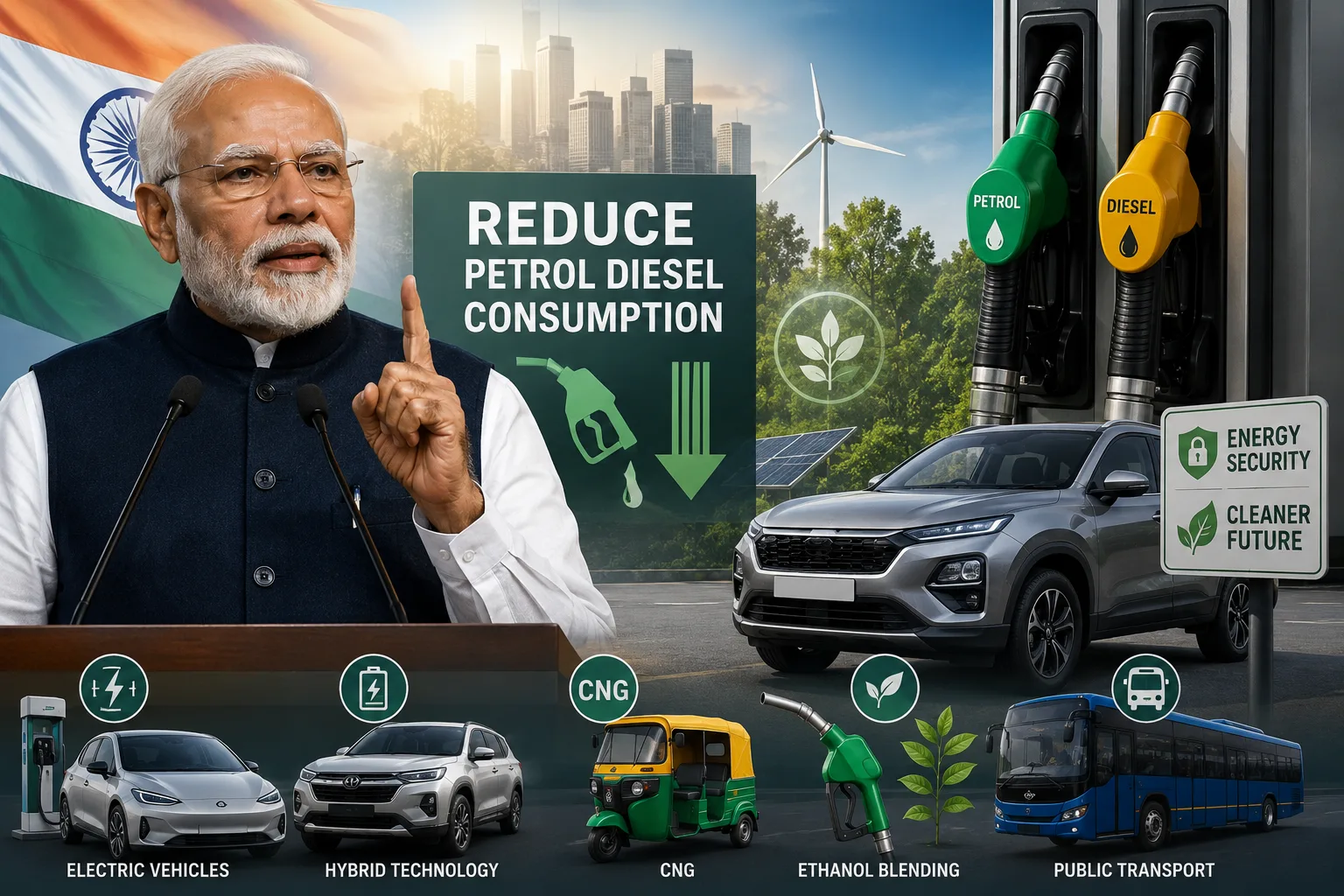
Why The Government Is Supporting Electric Two-Wheelers?
The massive push for demand incentives is deeply linked to economic and environmental sustainability. India currently imports an astronomical amount of crude oil every year, which places a heavy fiscal burden on the country’s economy.
Because scooters and motorcycles constitute nearly two-thirds of the country’s total petrol consumption and form the majority of daily urban traffic, shifting them to electric powertrains will drastically cut fossil fuel dependency. Furthermore, the government is intensely focused on curbing toxic urban air pollution and improving national energy security.
Key union ministers have consistently emphasized that alternative fuel tech and cleaner mobility solutions are vital for India’s future.
How Subsidies Help EV Buyers?
Government intervention directly lowers the upfront purchase price of electric two-wheelers through targeted schemes like the current PM E-DRIVE initiative, alongside direct state-level subsidies.
Buyers also benefit from substantial road tax exemptions, nominal registration fees, and reduced GST rates. This combined fiscal cushion bridges the price gap with conventional petrol variants, making EVs instantly accessible to students, office goers, delivery fleets, and middle-class families.
Over time, the significantly lower charging and servicing costs compared to petrol internal combustion engines (ICE) allow everyday riders to accumulate massive long-term savings.
Why Electric Scooters Are Important For India
Electric scooters fit seamlessly into the Indian commuting ecosystem, where a vast majority of daily riders cover short to medium distances within congested city limits. Offering zero tailpipe emissions and completely silent operations, these vehicles serve as a potent tool to fight alarming air pollution in major metropolitan hubs like Delhi, Mumbai, Bengaluru, and Pune.
Accelerating the transition to electric two-wheelers is the fastest way for India to realize its global climate commitments and reshape urban transport into an eco-friendly network.
Challenges Facing Electric Two-Wheelers
While adoption is on the rise, certain structural bottlenecks continue to affect the EV market in India. A primary concern is the limited public charging setup in smaller tier-2 and tier-3 cities.
Additionally, buyers frequently grapple with long-term battery replacement costs, a higher upfront price tag on performance-oriented premium models, and persistent range anxiety.
Despite these concerns, rapid advancements in indigenous battery technology and ongoing ecosystem support ensure the sector continues its upward growth trajectory.
Also Read: Maruti Suzuki To Hike Car Prices From June, But Why?
Future Of EV Subsidies In India
The government’s long-term roadmap involves transitioning the EV landscape from direct financial hand-holding to a self-sufficient ecosystem.
Future central policies are geared toward bolstering local battery manufacturing, expanding dense charging corridors, and enforcing strict component localization.
To capture this surging consumer demand, top manufacturers like Ola Electric, Ather Energy, TVS, Bajaj Auto, Hero MotoCorp, and Honda are scaling up their production capacities and investing heavily in next-generation electric platforms.
Also Read: New Tata Tiago Interior Revealed Ahead Of Launch
Conclusion
The Modi government’s calculated subsidy mechanism is fundamentally structured to bring green mobility to the masses, safeguard the economy against global oil shocks, and secure a cleaner environment.
As manufacturing localized components becomes cheaper, electric scooters will undoubtedly solidify their position as the definitive daily ride for millions of Indians.
Also Read: Flex-Fuel Vehicles To Be Showcased On World Environment Day: Gadkari