
Flex-Fuel Vehicles To Be Showcased On World Environment Day: Gadkari
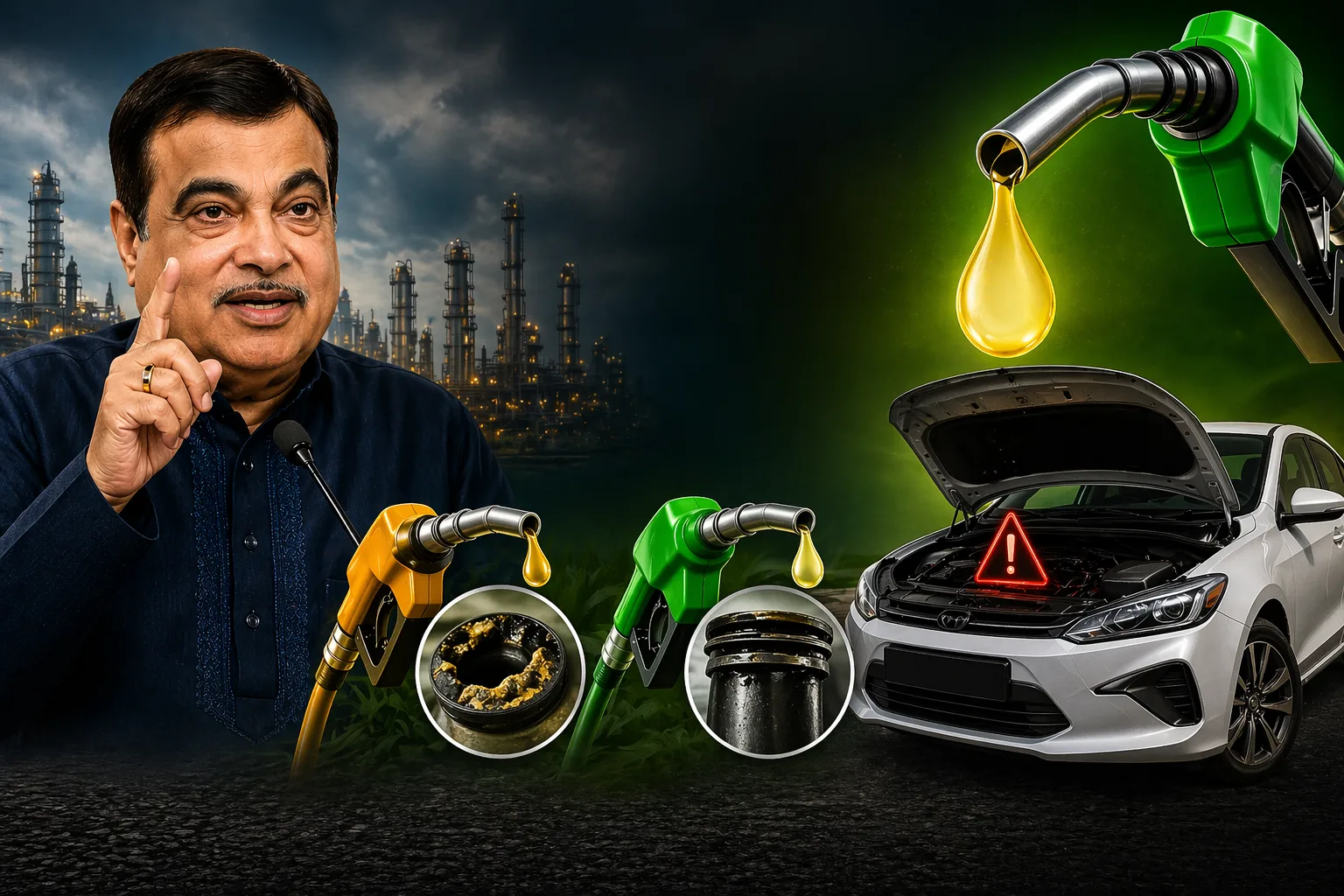
Union Minister for Road Transport and Highways Nitin Gadkari has announced that several flex-fuel vehicles will be showcased at a special programme in Delhi on World Environment Day, June 5, 2026.
India is aggressively pushing alternative fuel technologies to reduce its heavy dependence on imported crude oil and significantly lower harmful vehicle emissions.
Flex-fuel vehicles are designed to run efficiently on much higher ethanol blends, including E85 and pure E100, making them highly environmentally friendly compared to traditional petrol-powered cars.
Leading manufacturers like Maruti Suzuki, Toyota, Tata Motors, and Mahindra & Mahindra are actively working on flex-fuel technology.
What Are Flex-Fuel Vehicles?
Flex-fuel vehicles (FFVs) are specially engineered to run on a flexible mix of petrol and ethanol blends, ranging from the standard E20 up to E85 and pure E100 fuel.
Because ethanol retains more moisture and burns differently than gasoline, flex-fuel engines require extensively modified fuel systems, specialized fuel delivery pipelines, updated ignition setups, and unique engine calibration to handle high ethanol content safely. Ethanol is domestically produced from agricultural products like sugarcane, broken rice, and corn.
This helps India slash its massive fossil fuel import bill while directly boosting the domestic agricultural sector and rural economy growth.
Which Flex-Fuel Vehicles Could Be Revealed?
During the June 5 event, Maruti Suzuki is expected to unveil India’s very first E100-compatible passenger vehicle.
While the company has kept the exact model under wraps, prototypes like the WagonR Flex Fuel and the Fronx Flex Fuel have already been showcased at previous domestic and global motor shows. Reports indicate that the final production model could likely be based on one of these two popular cars.
Alongside Maruti, auto giants including Toyota, Mahindra & Mahindra, and Tata Motors are also developing flex-fuel-ready products. The government wants more manufacturers to adopt cleaner fuel technologies in the coming years.
Why India Is Pushing Ethanol And Flex-Fuel Technology
The government’s larger strategy behind flex-fuel adoption is deeply tied to economic and environmental sustainability.
India currently imports nearly 87% of its crude oil requirements, which drains foreign exchange and makes fuel prices vulnerable to global shocks.
Widespread adoption of flex-fuel vehicles will dramatically reduce pollution in major cities, improve long-term energy security, and create vast additional income opportunities for Indian farmers through structured ethanol production.
The government is planning future regulations and fuel policies that support flex-fuel, hybrid vehicles, and hydrogen fuel cells alongside electric mobility solutions.
Challenges And Future Scope
Despite the optimism, massive challenges remain for commercial flex-fuel adoption in India. Chief among them is the limited ethanol fuel infrastructure and the complete absence of dedicated E85 or E100 dispensing stations across the country.
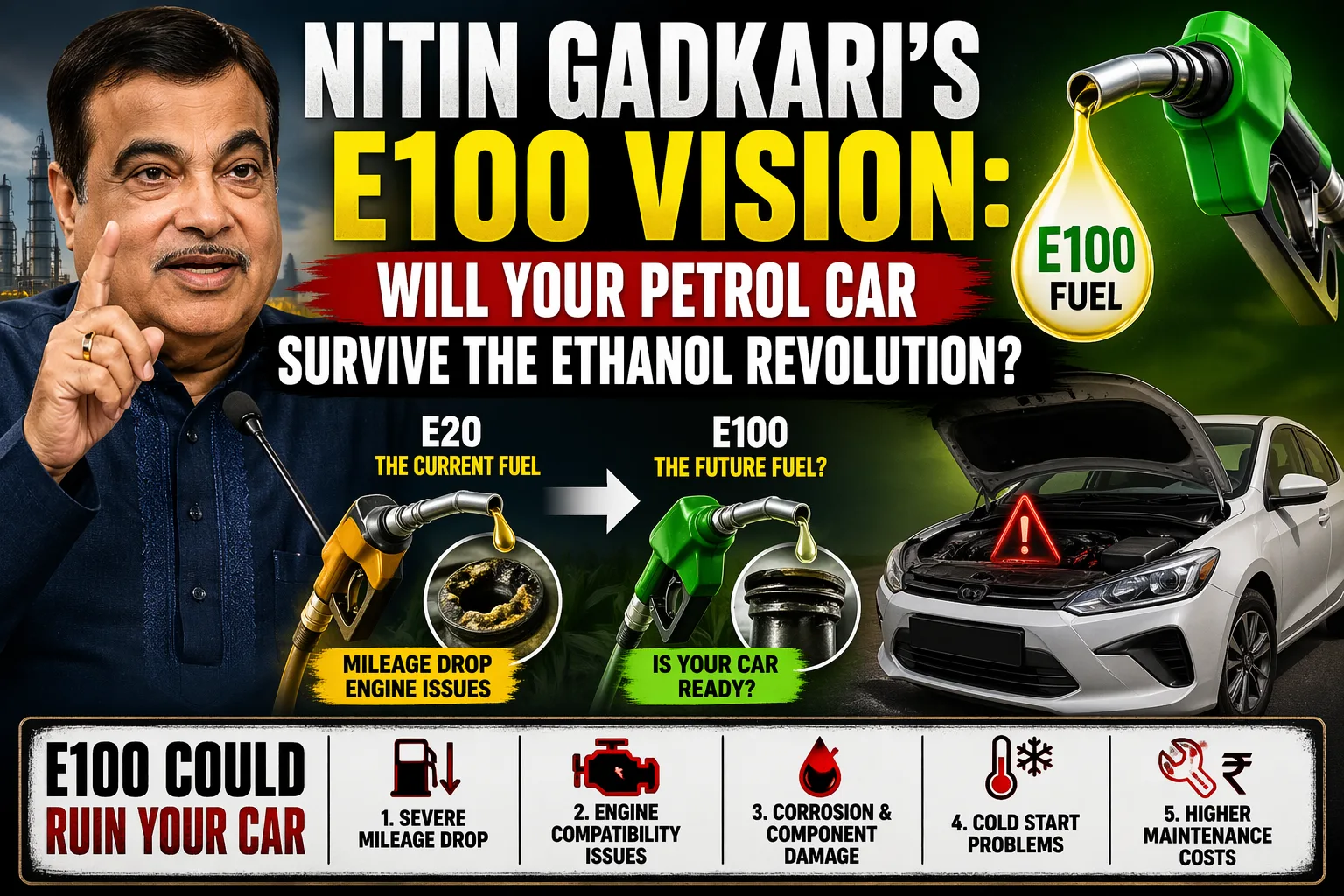
Concerns also exist regarding engine durability, real-world fuel efficiency drops, and increased initial manufacturing costs.
However, as the government plans to fast-track 5,000 E100 stations, flex-fuel technology is bound to become a critical pillar of India’s clean mobility strategy alongside rapid EV transition.
Conclusion
The upcoming World Environment Day showcase marks a historic and definitive milestone for India’s alternative fuel future.
Backed by solid government mandates and proactive engineering by automakers, flex-fuel vehicles may soon emerge as a highly practical, accessible, and affordable green mobility solution alongside EVs and hybrids.
Also Read: