Polestar To Exit U.S. Market Over Connected-Car Rules; Swedish EV Brand Faces Major Setback
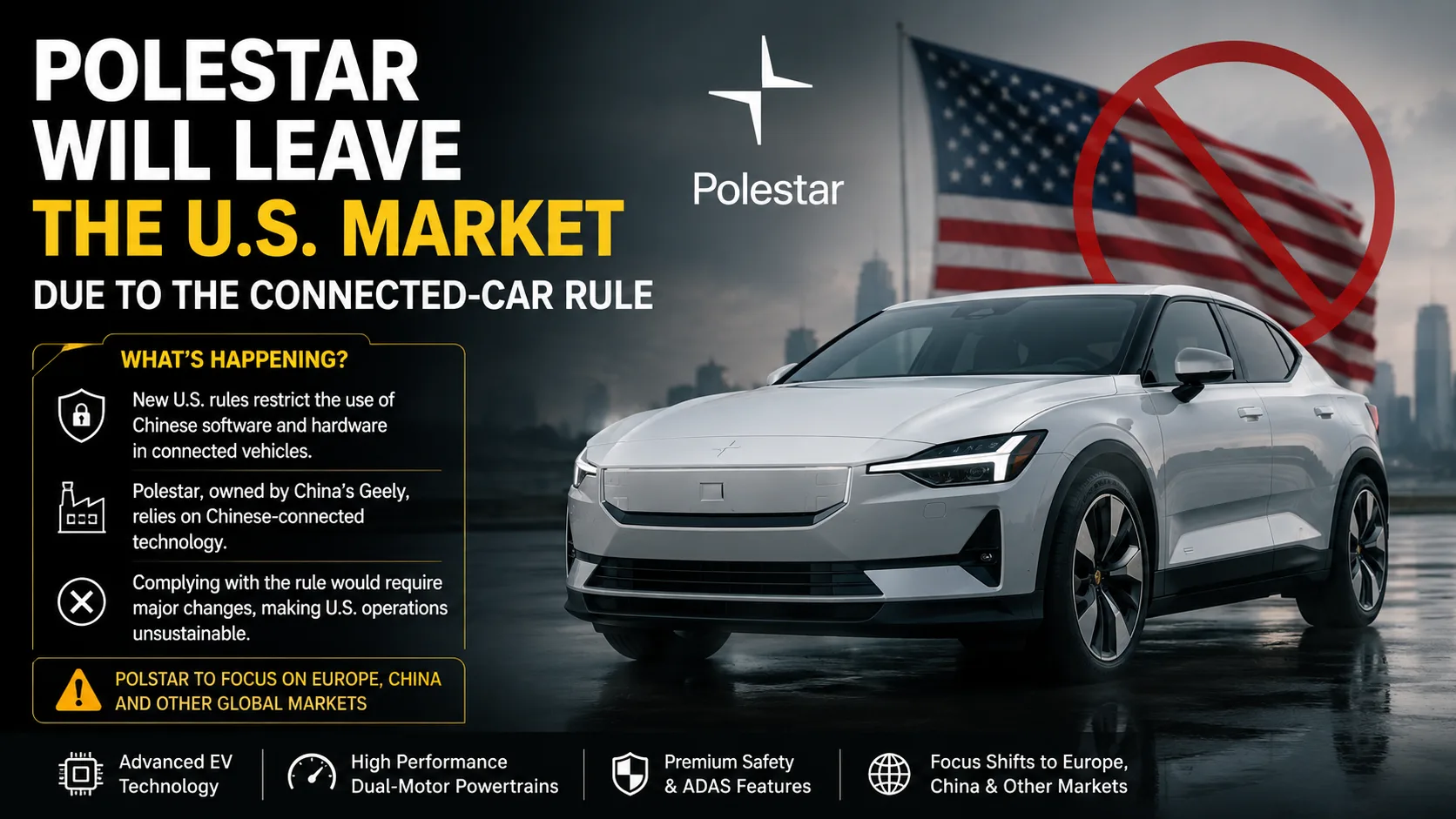
Polestar is reportedly preparing to withdraw from the United States market following new connected-car regulations that are set to take effect in the country.
The move comes after the U.S. government introduced stricter rules restricting connected vehicle technologies linked to Chinese software and hardware due to national security concerns.
Since Polestar relies heavily on technology developed by its Chinese parent company Geely, the brand is expected to be directly affected by the new policy. If implemented, the decision would mark one of the biggest challenges for the premium electric vehicle manufacturer since its global expansion.
The development could also impact future vehicle launches and sales strategies in one of the world’s largest EV markets.
Why Polestar Is Leaving The U.S. Market?
The primary reason behind Polestar’s reported exit is the new U.S. connected-car regulation aimed at limiting the use of software and hardware originating from China in vehicles sold within the country. The rules are designed to reduce potential cybersecurity and data privacy risks associated with connected vehicles.
Although Polestar is headquartered in Sweden, the company is majority-owned by China’s Geely Holding Group, and many of its vehicles use Chinese-developed electronic systems and connected technologies.
Complying with the new regulations would require significant engineering changes, making continued operations in the U.S. increasingly difficult.
Industry experts believe the cost of redesigning software architecture and sourcing alternative components may outweigh the benefits of remaining in the market.
Premium Design And Advanced EV Technology
Polestar has built its reputation around minimalist Scandinavian design combined with cutting-edge electric vehicle technology.
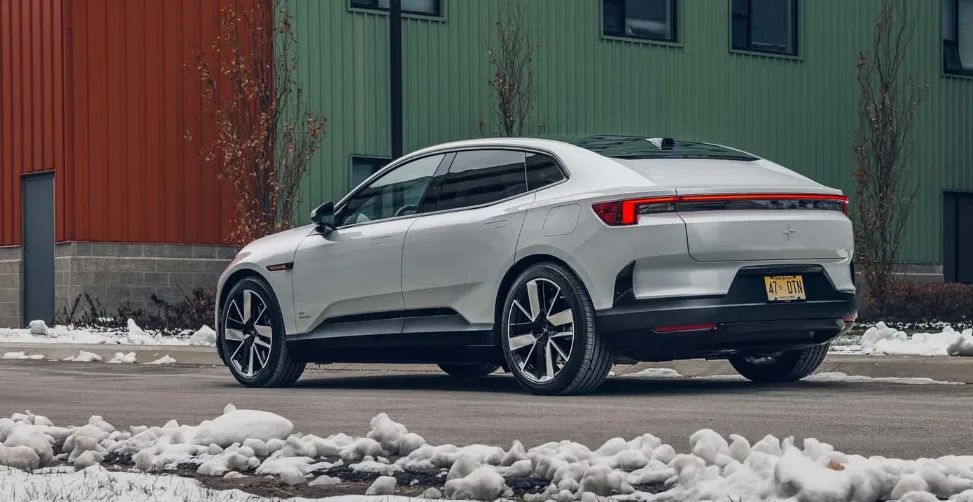
Models such as the Polestar 2, Polestar 3 and Polestar 4 feature clean exterior styling, aerodynamic bodywork and premium lighting signatures that distinguish them from conventional luxury EVs.
The vehicles also offer spacious cabins equipped with sustainable materials, large infotainment displays powered by Android Automotive OS, over-the-air software updates and advanced connectivity features.
These connected technologies have been central to Polestar’s premium ownership experience, making the new U.S. regulations particularly challenging for the brand.
Strong Performance But Regulatory Challenges
Polestar’s current lineup includes high-performance dual-motor electric powertrains capable of producing over 500 hp in flagship variants. Depending on the model, the company offers driving ranges exceeding 600 km (WLTP), rapid DC fast charging and advanced battery management systems.
Despite its competitive products, regulatory hurdles now pose a greater challenge than technological capability. The new rules could force manufacturers with Chinese-linked connected systems to either redesign their vehicles for the U.S. market or suspend sales altogether. Polestar appears to be choosing the latter, at least for the foreseeable future.
Also Read: China’s EV Exports Reach Record $9.2 Billion In May 2026; Demand Surges Worldwide
Cabin, Safety And Connected Features
Polestar vehicles are widely recognised for their premium interiors and advanced safety technologies. Features include Google-integrated infotainment, a fully digital instrument cluster, panoramic glass roof, premium audio systems, wireless smartphone connectivity and regular over-the-air updates.
On the safety front, the vehicles come equipped with adaptive cruise control, lane keeping assist, blind-spot monitoring, autonomous emergency braking, driver monitoring systems and multiple airbags.
However, it is these connected features and their underlying software architecture that have become the focus of the latest U.S. regulations.
What Happens Next?
If Polestar officially exits the U.S. market, it will instead focus on Europe, China and other international regions where demand for premium electric vehicles continues to grow.
Existing U.S. customers are expected to continue receiving after-sales support, although future product availability may become limited.
The situation also highlights how geopolitical regulations are increasingly influencing the global automotive industry, especially as vehicles become more connected and software-driven.
Also Read: Ampere Crosses 4 Lakh Sales Milestone In India; Greaves Electric Reports Strong FY26 Growth