BS7 Norms Coming in 2029: Everything You Need to Know
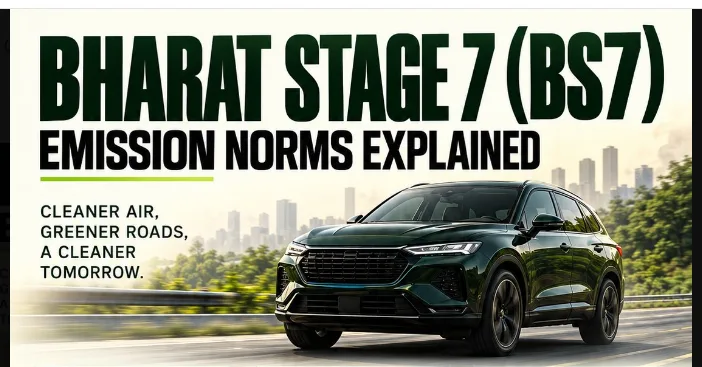
India is preparing to take a major step forward in its automotive environmental policy. The central government plans to introduce the next generation of vehicle emission standards, known as Bharat Stage VII (BS7 norms in India), starting in April 2029.
Approved by the Ministry of Road Transport and Highways, this upcoming framework aims to significantly strengthen pollution controls across the country as urban vehicle ownership continues to expand.
The transition builds on the existing BS6 framework and sets clear benchmarks for cleaner mobility, defining what will change for upcoming vehicles, which categories will fall under the new rules, and how the phased implementation will unfold.
What Are BS7 Emission Norms?
Bharat Stage emission standards regulate the amount of air pollutants released by motor vehicles sold and driven across India. Modelled closely on global best practices, the upcoming Bharat Stage 7 norms represent the next evolutionary step following the nationwide adoption of BS6 standards.
The proposed Indian guidelines align closely with Europe’s stringent Euro 7 framework. However, policy alignment with European regulations does not mean every specific timeline or technical parameter will be identical.
Instead, the framework adapts international standards to suit Indian driving conditions, fuel availability, and manufacturing realities, aiming to curb tailpipe emissions and improve urban air quality.
When Will BS7 Norms Be Implemented in India?
The government plans a structured rollout to give automakers adequate time to adapt production lines and testing protocols. According to initial announcements, the transition will occur across a multi-phase timeline:
April 1, 2029: Implementation begins for new passenger cars and SUVs.
April 1, 2030: Regulations extend to small goods delivery vehicles and pickup vans.
April 1, 2031: Heavy-duty commercial vehicles follow in the subsequent phase.
A comprehensive phased approach spans over several years up to 2035 to ensure that testing agencies and component suppliers can successfully transition to the stricter compliance regime. Timelines for two-wheelers and other vehicle categories will be detailed as official draft notifications are formally published.
What Will Change Under BS7 Compared With BS6?
The upcoming regulatory framework introduces substantially tighter limits on conventional tailpipe pollutants. Compared to BS7 vs BS6 benchmarks, the new rules lower allowable thresholds for nitrogen oxides, carbon monoxide, hydrocarbons, and fine particulate matter.
Furthermore, the framework expands pollution regulation beyond traditional exhaust emissions. It introduces oversight for non-exhaust pollution sources, specifically particulate matter generated by brake wear and tyre abrasion. The proposed standards also place greater emphasis on real-world driving emission testing and advanced onboard monitoring systems, ensuring that vehicles maintain lower pollution levels throughout their entire operational lifespan rather than just during laboratory tests.
How Will BS7 Affect Petrol and Diesel Cars?
Complying with tighter emission caps requires automotive manufacturers to refine internal combustion engines further. Carmakers will likely need to upgrade engine management software, improve catalytic converters, introduce advanced sensors, and install sophisticated onboard diagnostic equipment.
While both petrol and diesel models must meet the same strict tailpipe emission limits, diesel vehicles traditionally require more complex exhaust after-treatment systems to control nitrogen oxides. The new standards establish rigorous technical requirements for all internal combustion engines, but they do not make either fuel type unavailable or illegal for consumers to purchase.
Will Electric Cars Also Come Under BS7?
Electric vehicles produce zero tailpipe emissions while driving, meaning conventional exhaust tests do not apply to them. However, the comprehensive Euro 7-aligned framework includes relevant provisions that apply across all modern vehicle types, including electric cars.
Under the proposed rules, battery-powered vehicles must comply with emerging regulations concerning battery durability and health monitoring, alongside non-exhaust particle limits governed by tyre wear and braking systems. These provisions ensure that the environmental impact of EVs is monitored holistically across their operational life.
Will BS7 Increase Car Prices in India?
Upgrading vehicle engineering, incorporating advanced sensors, integrating enhanced after-treatment components, and completing rigorous certification processes naturally involve additional research and development expenses. These manufacturing investments can influence production costs for carmakers.
However, the actual impact on showroom prices remains uncertain until individual manufacturers disclose their pricing strategies closer to the implementation date. Market competition and localized component sourcing will ultimately determine how much of these development costs reach the final retail prices.
What Will BS7 Mean for Existing BS6 Cars?
A common concern among vehicle buyers involves the legal status of currently registered automobiles. The upcoming regulations apply strictly to the manufacture and registration of new vehicles produced after the implementation deadlines take effect.
Owners of existing BS6 or earlier vehicles do not need to replace their cars in 2029. Existing vehicles will remain fully legal to drive, buy, and sell, provided they maintain valid registration, pass mandatory fitness tests, and comply with local transport rules.
How Are Automakers Preparing for BS7?
Automobile manufacturers operating in India are evaluating their global technology portfolios to prepare for the upcoming standards. Because many Indian subsidiaries share engineering platforms with international parent companies, several brands are already familiar with Euro 7-style requirements.
The multi-year phased rollout provides manufacturers with a predictable window to calibrate engines, secure component supply chains, and upgrade testing infrastructure without disrupting current market operations.
Conclusion
The introduction of BS7 standards marks another major milestone in India’s vehicle-emission policy. By establishing a structured, phased rollout starting in April 2029 and expanding pollution controls to cover non-exhaust particles and real-world durability, the framework aims to achieve cleaner urban air.
Car buyers and industry watchers should review final official notifications from the Ministry of Road Transport and Highways as draft rules are formally enacted.
Frequently Asked Questions (FAQs)
Q1: When will BS7 emission norms come into effect in India?
A1: The proposed Bharat Stage VII norms are scheduled to begin with new passenger cars and SUVs starting April 1, 2029, followed by commercial vehicles in subsequent phases.
Q2: Will my existing BS6 car become illegal once BS7 arrives?
A2: No. BS7 rules apply only to the production and registration of new vehicles manufactured after the implementation dates. Existing vehicles remain completely legal to drive and trade.
Q3: Do BS7 regulations apply to electric vehicles?
A3: While EVs do not have tailpipe emissions, they fall under specific provisions within the framework regarding battery durability, health monitoring, and tyre and brake wear particles.