Chinese EV Battery Makers Commit to Faster Supplier Payments Amid Industry Pressure
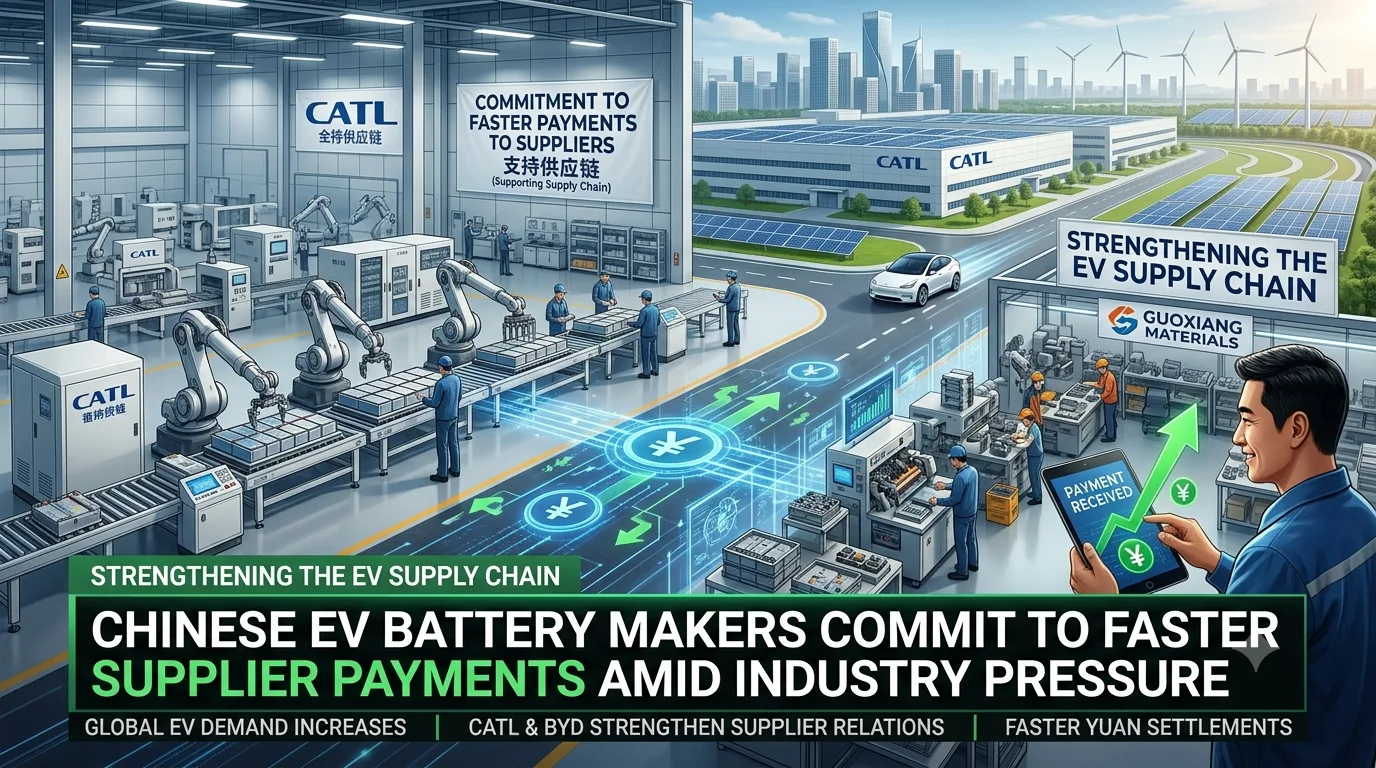
China’s electric vehicle (EV) battery industry is moving toward a major financial discipline shift as leading manufacturers pledge to speed up payments to suppliers, responding to growing regulatory pressure and tightening supply chain stress across the sector.
Several top battery makers, including major industry names such as CATL, CALB, and Sunwoda, have committed to settling supplier dues within a maximum of 60 days, according to an industry-wide initiative backed by Chinese automotive and energy storage alliances.
The move comes as Beijing intensifies enforcement of payment discipline rules designed to ease financial strain on smaller suppliers, many of whom have been hit by delayed receivables amid aggressive pricing competition in the EV sector.
Government Push for Supply Chain Stability
China introduced formal guidelines last year requiring large companies to clear supplier payments within 60 days. However, enforcement across the automotive value chain has remained inconsistent, particularly during periods of intense price competition in electric mobility.
The latest initiative, coordinated through industry bodies such as the China Automotive Battery Innovation Alliance, aims to standardize payment cycles and reduce cash flow pressure on small and medium-sized suppliers who form the backbone of the battery supply ecosystem.
Also Read: Renault Kwid Facelift in the Works? Here’s What We Are Expecting From the Upcoming Hatchback
Why Suppliers Are Under Pressure?
The EV industry in China has been undergoing a prolonged price war, forcing manufacturers to cut vehicle and component prices aggressively to maintain market share. While this strategy has boosted sales volumes, it has also squeezed margins throughout the supply chain.
Battery production—one of the most capital-intensive segments in EV manufacturing—has been especially affected. Suppliers often face delayed payments, limiting their ability to invest in R&D, scale production, or manage rising raw material costs.
Industry-Wide Participation
According to industry association updates, more than ten major battery manufacturers have joined the initiative, signaling broad alignment within China’s EV ecosystem. The pledge is also seen as part of a broader effort to stabilize industrial relations after repeated complaints from upstream sectors such as steel and raw materials suppliers.
Strategic Importance for Global EV Market
China remains the world’s largest EV battery production hub, with companies like CATL playing a dominant global role in lithium-ion supply chains. Any improvement in payment discipline is expected to strengthen supply chain resilience and improve confidence among global automakers sourcing Chinese battery technology.
At the same time, analysts note that sustained compliance will be crucial. If implemented effectively, the 60-day payment standard could significantly reduce liquidity stress for smaller suppliers and help stabilize pricing structures in the EV ecosystem.
The Bigger Picture
The pledge reflects Beijing’s broader attempt to curb excessive competition in the EV sector while ensuring long-term industrial sustainability. As China’s electric mobility market matures, financial discipline is becoming as critical as technological innovation.
With EV adoption accelerating globally, stability in China’s battery supply chain will remain a key factor shaping the future cost and availability of electric vehicles worldwide.
Also Read: Hyundai Recalls Over 96,000 Vehicles in the US Over Faulty Instrument Panel Display