India Targets Commercial Electric Air Taxi Launch by 2028
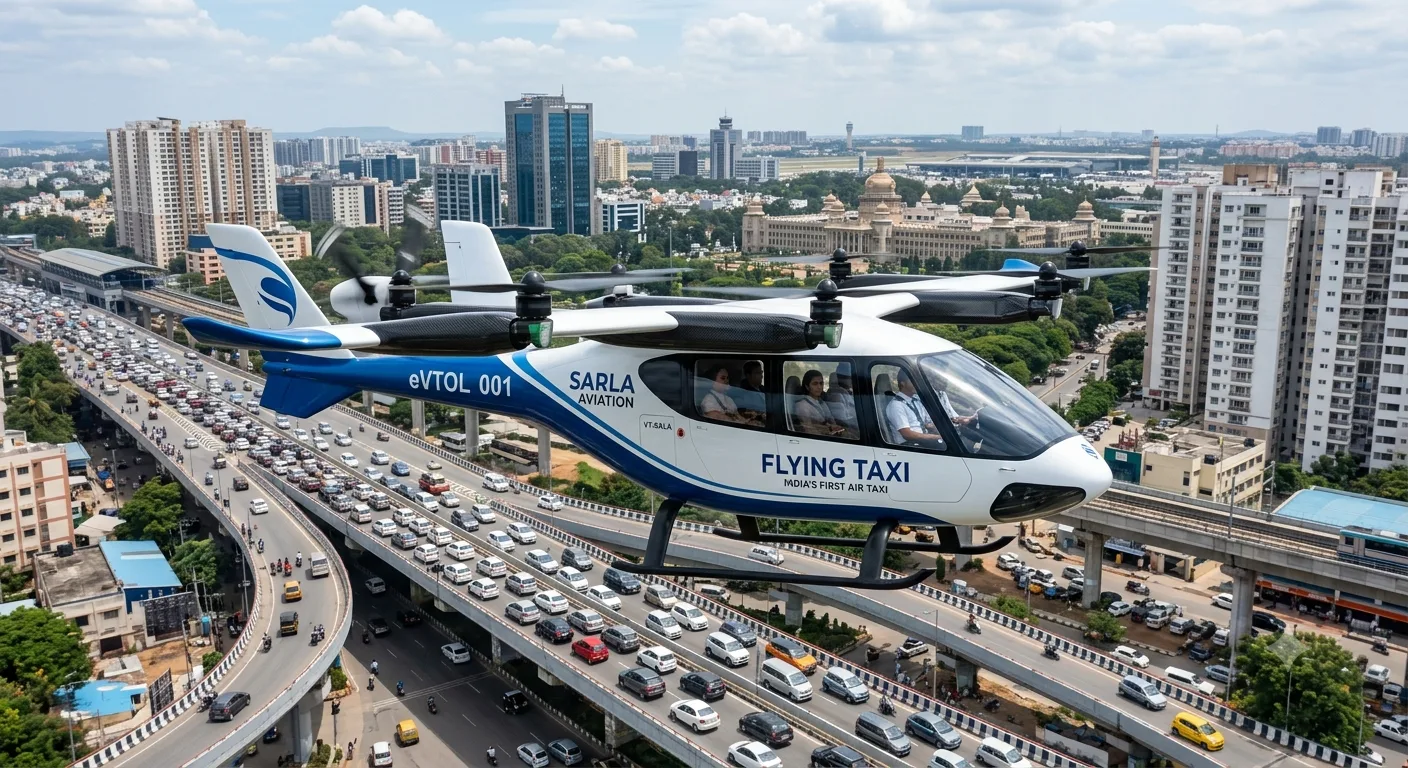
In a significant stride toward modernizing urban transportation, India is aiming to introduce commercial electric air taxis by 2028. Union Minister for Civil Aviation Kinjarapu Ram Mohan Naidu shared this vision during the opening of Sarla Aviation’s new headquarters in Bengaluru, emphasizing that electric vertical take-off and landing (eVTOL) technology could offer a real solution to gridlocked traffic in major urban hubs.
The central government views eVTOL aircraft as a practical addition to existing public transit, particularly for heavily congested areas across Delhi, Mumbai, and Bengaluru.
Comprehensive Flight Testing Scheduled for Next Year
The project takes a major step forward next year, when Sarla Aviation begins full operational flight testing. Throughout these trials, the Ministry of Civil Aviation and the Directorate General of Civil Aviation (DGCA) will work alongside the developers to shape regulatory standards and establish strict safety protocols.
Sarla Aviation has already secured Design Organisation Approval (DOA) from the DGCA—an important regulatory checkpoint confirming that the startup meets national engineering and safety requirements for advanced aircraft development.
Understanding the Technology Behind eVTOL Aircraft
Adrian Schmidt, co-founder and chief executive of Sarla Aviation, described the design as a combination of features drawn from helicopters, conventional airplanes, and heavy-lift drones. Formally classed as a powered-lift vehicle, the aircraft is built to handle both dense urban corridors and short regional routes.
Design Highlights:
Seating Capacity: Designed to transport six passengers and one pilot.
Motor Setup: Powered by seven separate electric motors—six dedicated to vertical takeoff and landing, with a single rear-mounted unit driving forward flight.
Range Extension Options: While relying primarily on battery power, the design accommodates an optional turbo-generator system to recharge batteries during longer flights.
Strategic Funding and the Goal of Low-Cost Travel
Developing urban air mobility requires substantial backing, and Sarla Aviation has gathered support from prominent investment funds and tech entrepreneurs, including venture firm Accel and key figures associated with Zerodha, Flipkart, Swingy, and IndiGo.
Minister Naidu stressed that consumer adoption will depend as much on ticket pricing as on safety. To keep travel costs realistic for everyday passengers, the government is prioritizing localized manufacturing, aiming to produce the vast majority of structural and mechanical components within India.
Broader Urban Uses Beyond Daily Commutes
Beyond serving as an alternative to highway transit, electric air taxis could radically shorten travel times across key metropolitan zones, turning typical two-hour airport drives into fast 20- to 30-minute transfers.
Potential operational uses include:
Dedicated Airport Corridors: Direct aerial routes connecting city centers directly with international airport terminals.
Emergency Medical Transport: Rapid medical evacuations, critical supply deliveries, and air ambulance services through healthcare partnerships.
Logistics & Freight: Fast-tracked freight delivery across high-density commercial districts.
By building out local manufacturing and infrastructure early, India aims to address its own urban transit bottlenecks while positioning its aerospace sector to participate in the global transition toward sustainable aviation.