
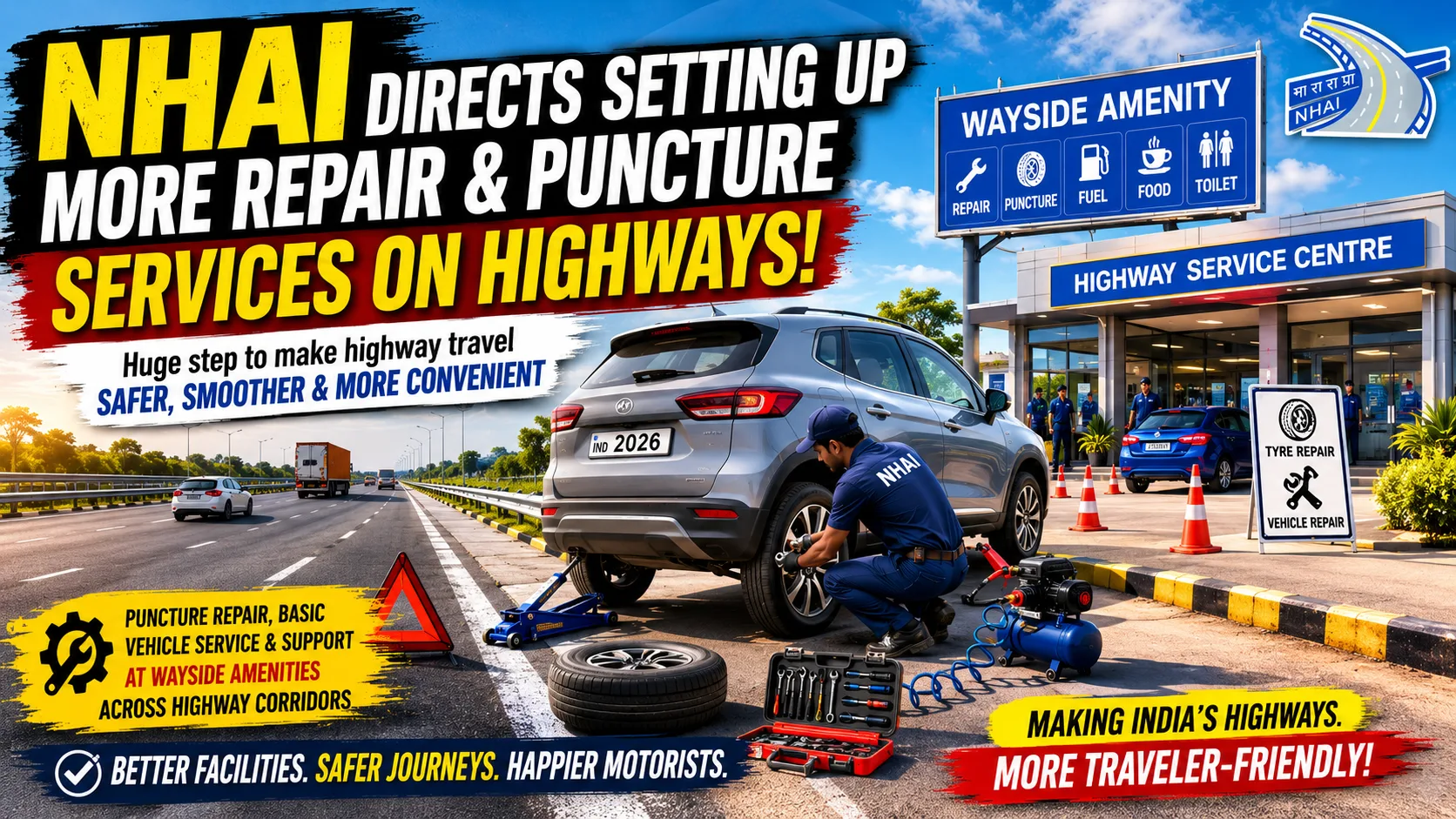
NHAI To Set Up More Puncture Repair And Vehicle Service Facilities On Highways; Here’s What It Means For Road Users
Travelling on India’s expanding network of expressways and national highways could soon become much more convenient. The National Highways Authority of India (NHAI) has directed operators of Wayside Amenities (WSAs) to prioritize the establishment of vehicle repair shops and puncture repair facilities across key highway corridors.
The move comes in response to the growing number of highway users facing tyre punctures, minor breakdowns, and mechanical issues far from service centers.
With traffic volumes increasing rapidly on major expressways, NHAI aims to improve roadside assistance, reduce travel disruptions, and make long-distance journeys safer for both private vehicle owners and commercial transport operators.
Why NHAI Is Expanding Repair Facilities On Highways
India’s national highways and expressways have witnessed a sharp rise in traffic over the past few years. While the country has invested heavily in building modern road infrastructure, access to basic repair services remains limited on many routes.
Vehicle breakdowns and tyre punctures often leave motorists stranded for long periods, especially on access-controlled expressways where nearby towns and workshops may be several kilometres away.
Recognizing this challenge, National Highways Logistics Management Limited (NHLML), a wholly-owned subsidiary of NHAI, has instructed its field offices to encourage WSA operators to establish repair and puncture service facilities at the earliest.
The initiative is aimed at reducing downtime, improving commuter convenience, and enhancing overall road safety.
What Facilities Will Be Available?
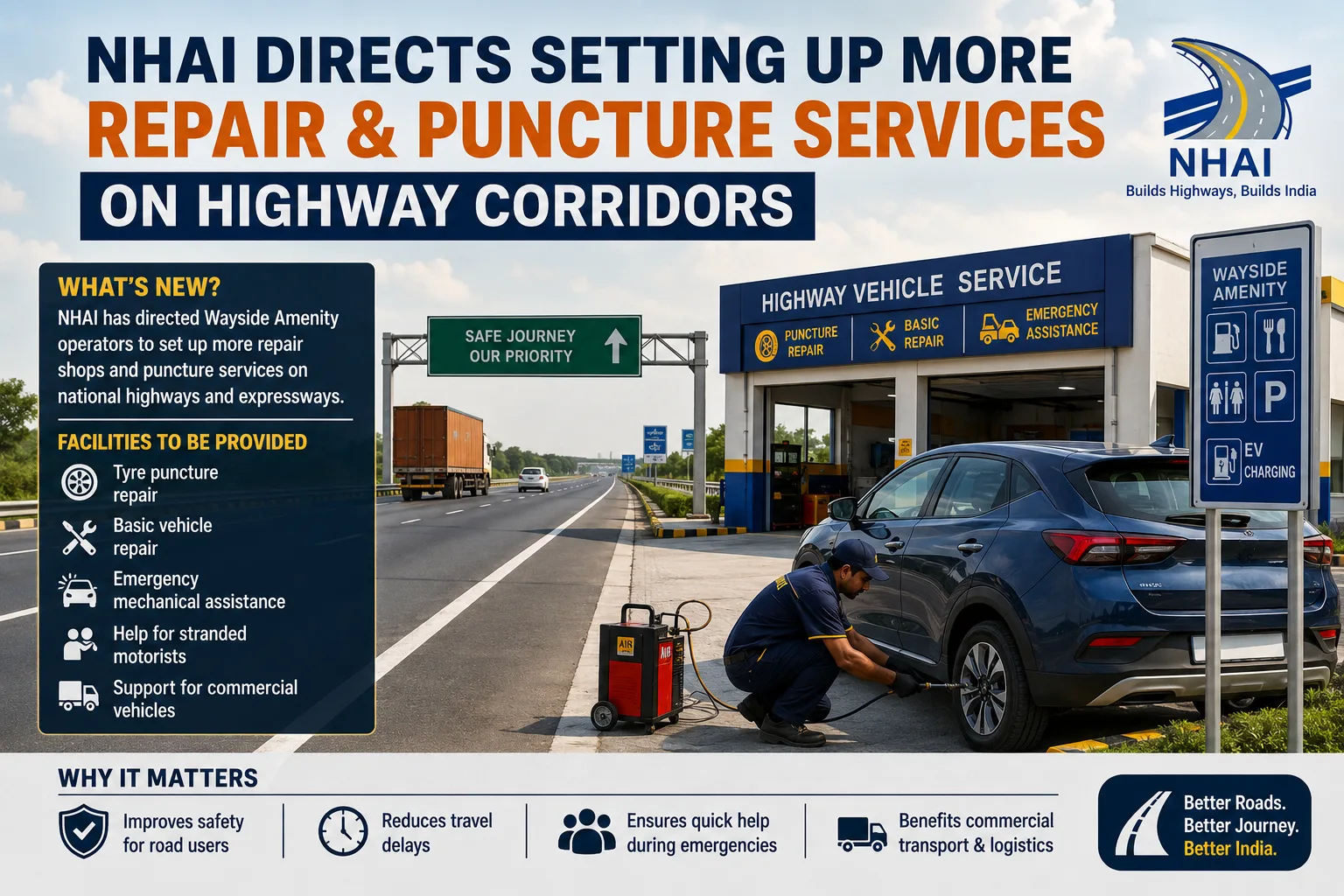
The new facilities will be developed at Wayside Amenities located along national highways and expressways. These amenities are typically built at intervals of around 40-60 kilometres and already offer services such as restaurants, fuel stations, washrooms, parking spaces, EV charging stations, and rest areas for travellers.
Under the new directive, operators will now be encouraged to add:
- Tyre puncture repair services
- Basic vehicle repair workshops
- Emergency mechanical assistance
- Support for stranded motorists
- Assistance for commercial vehicles and freight operators
The goal is to ensure that travellers can quickly access help without having to leave the highway network in search of repair facilities.
A Major Boost For Highway Safety
One of the biggest benefits of the initiative is improved safety. A vehicle stranded on the shoulder of a high-speed expressway can create a serious hazard for both occupants and other road users. Faster access to repair services can reduce the time vehicles spend immobilized on highways and lower the risk of secondary accidents.
The move is expected to benefit not only private motorists but also logistics operators and truck drivers who rely on uninterrupted transportation for timely deliveries. Prompt roadside assistance can help minimise delays and improve efficiency across freight corridors.
Delhi-Meerut Expressway Could Become A Model
NHAI has already announced plans to introduce puncture repair facilities at regular intervals on the Delhi-Meerut Expressway. According to recent reports, such facilities could be available every 25 kilometres, providing motorists with faster access to essential services during emergencies.
Industry experts believe similar measures could eventually be implemented across other major highway corridors, creating a more reliable support network for millions of road users.
What This Means For Indian Motorists
The latest initiative highlights NHAI’s increasing focus on improving the overall travel experience rather than simply expanding road infrastructure. As India’s expressway network continues to grow, the availability of roadside support services will become equally important.
For motorists, this means fewer worries about getting stranded due to a puncture or minor mechanical issue during long journeys. If implemented effectively, the new repair facilities could make highway travel safer, faster, and significantly more convenient across the country.
Also Read: China’s EV Exports Reach Record $9.2 Billion In May 2026; Demand Surges Worldwide