
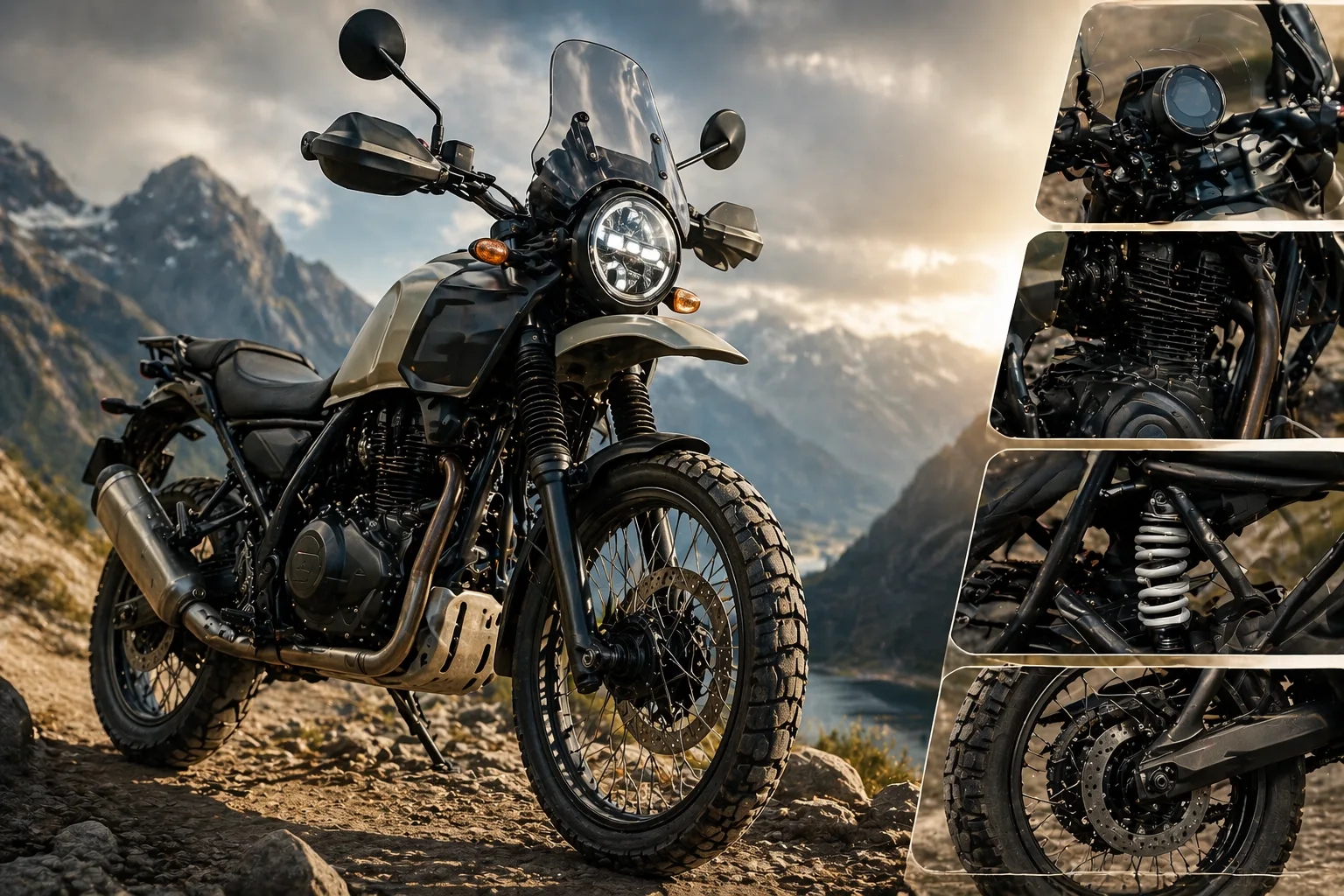
Royal Enfield Himalayan 440 In Works: 5 Features Expected From This Upcoming Adventure Bike
The Indian adventure motorcycling scene is currently at its zenith. From weekend trail raids to trans-Himalayan expeditions, the demand for versatile, go-anywhere machines has never been higher. While the Royal Enfield Himalayan 411 pioneered this segment with its “built-for-all-roads” philosophy, its successor, the Himalayan 450, took a quantum leap into the premium territory with liquid cooling and ride-by-wire tech.
However, many purists still yearn for the simplistic, torque-heavy, and accessible nature of the original LS411. Sensing this gap, Royal Enfield is reportedly developing a new middleweight contender: the Royal Enfield Himalayan 440.
But why is the Chennai-based marque bringing back a simpler ADV? Let’s dive into the details of this upcoming machine, internally known by its codename D4G, and what it brings to the table for the Indian rider.
Himalayan 440 Overview: What We Know So Far
The Himalayan 440 is not just a bored-out 411; it is a strategic move by Royal Enfield to offer a rugged, “analogue” alternative to the tech-heavy Himalayan 450. Currently in the advanced stages of development, the 440 is expected to be the spiritual successor to the now-discontinued Himalayan 411.
Positioned neatly between the urban-focused Scram 440 and the high-performance Himalayan 450, this bike targets riders who prioritize affordability, ease of maintenance, and low-end grunt over high-speed touring. It is built on a philosophy of rugged usability, making it an ideal tool for explorers who prefer fixing their bikes with a basic toolkit rather than a laptop.
Expected Design: A Return to Minimalist Roots
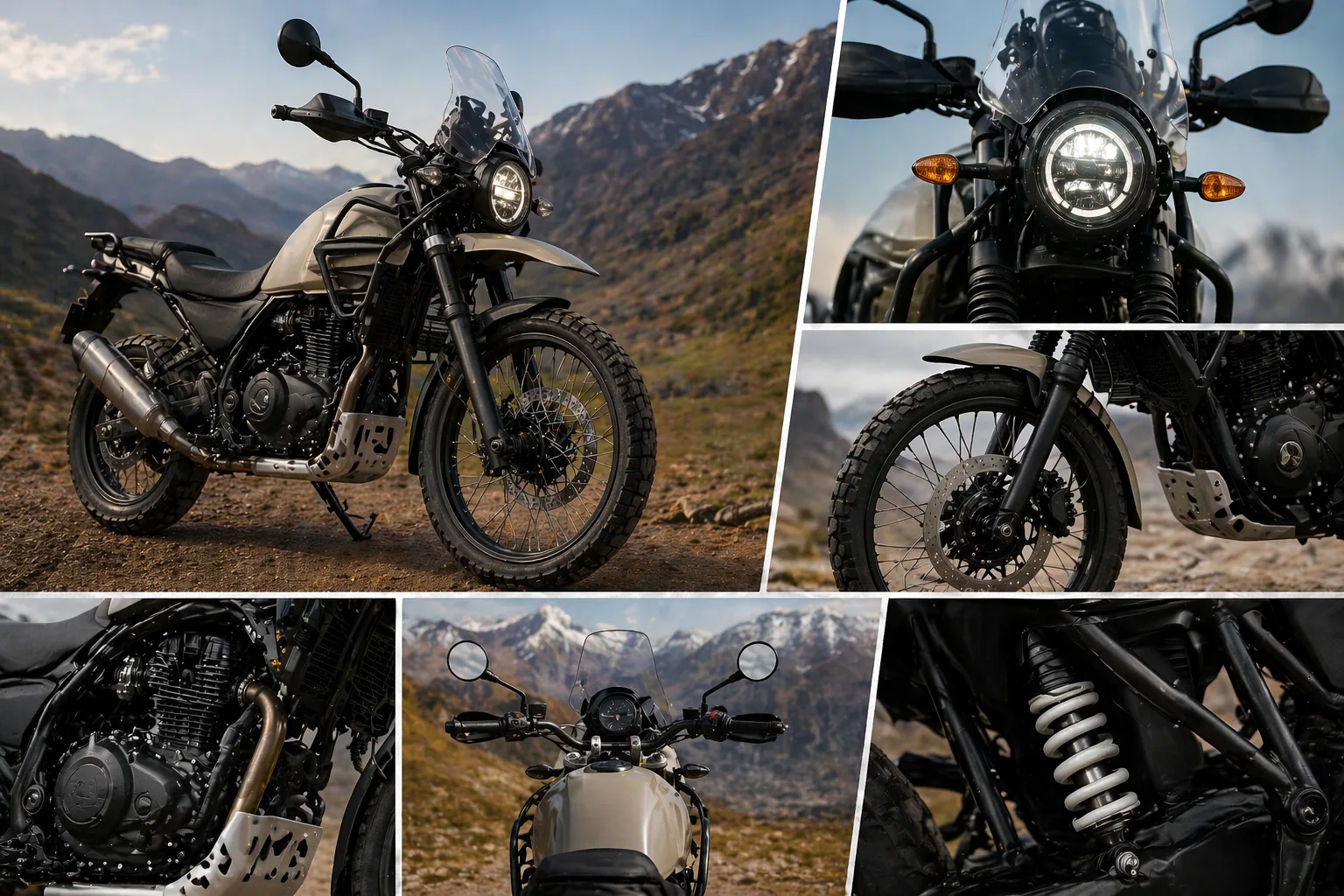
If the Himalayan 450 is a modern “Sherpa,” the upcoming Royal Enfield Himalayan 440 is likely to be a “Mountain Goat.” We expect the design to lean heavily into the function-over-form aesthetic that made the 411 a cult classic.
Key Design Elements:
Minimalist ADV Silhouette: Expect the signature exoskeleton-style metal frames around the fuel tank, serving as both crash protection and jerrycan mounts.
Accessible Ergonomics: A lower seat height (likely around 800mm) is expected, making it far more approachable than the tall 825mm+ stance of the 450.
Modern Touches: While the look remains retro, a round LED headlamp and updated LED indicators are likely to be standard, bringing it in line with RE’s 2026 design language.
Off-Road Stance: To maintain its “Himalayan” badge, a 21-inch front spoked wheel and a 17-inch rear setup are almost certain, wrapped in dual-purpose rubber.
Himalayan 440 Engine Specs: Simple, Grunt-Heavy, and Reliable
The heart of the Himalayan 440 will be its defining feature. Unlike the liquid-cooled “Sherpa” engine, the 440 is expected to utilize the 443cc single-cylinder, air/oil-cooled engine recently debuted in the Scram 440.
Technical Expectations:
Power & Torque: The engine is tuned to deliver approx 25.4 bhp and 34 Nm of torque. While the power is lower than the 450’s 40 bhp, the focus here is on “usable torque” available early in the rev range.
Transmission: A 6-speed gearbox is a highly anticipated addition, which will solve the 411’s biggest flaw—strained highway cruising at triple-digit speeds.
Maintenance: An air/oil-cooled setup means fewer moving parts and no radiator to worry about in the middle of a remote trail.
Expected Mileage & Top Speed
While official figures remain under wraps, we can draw parallels from the Scram 440’s performance. The Himalayan 440 is expected to be more fuel-efficient than its liquid-cooled sibling.
Mileage: Expect a real-world figure between 30–35 km/l, making it a frugal companion for long-distance touring.
Top Speed: The bike will likely be tuned for a comfortable “sweet spot” at 90–100 km/h, with a top speed in the 120–130 km/h range. It isn’t built to break land-speed records but to chug along indefinitely.
Suspension & Hardware: Built for the “No Roads” Phase
Adventure bikes are defined by their suspension, and the Himalayan 440 is expected to feature a robust hardware setup tailored for Indian conditions.
Front Forks: Telescopic front forks with gaiters (likely 190mm travel) will handle damping. While USD forks are trendy, telescopic units are easier to service in remote areas.
Rear Setup: A link-type monoshock with preload adjustability will manage the rear.
Braking: Large discs at both ends with Switchable Dual-Channel ABS will be standard, allowing riders to lock the rear wheel for controlled slides off-road.
5 Features Expected From the Himalayan 440
Based on recent industry reports and the shared platform with the Scram 440, here are the top 5 features we expect:
Switchable Dual-Channel ABS: A non-negotiable for any serious ADV rider to tackle loose gravel and dirt.
Tripper Navigation System: The familiar pod-based turn-by-turn navigation will likely be offered to keep the cockpit clean yet functional.
LED Lighting Setup: A full LED transition (Headlamp, Tail lamp, and Indicators) for better night-time visibility on unlit highways.
Touring-Ready Ergonomics: Expect a wide handlebar, serrated footpegs with removable rubbers, and a sturdy rear luggage rack as standard.
Simplified Instrument Cluster: A digital-analogue mix that provides essential data (Gear indicator, fuel gauge, clock) without the complexity of a full TFT screen.
Himalayan 440 Launch Date India & Expected Price
The Himalayan 440 launch date India is expected to fall in the second half of 2026. Royal Enfield is currently focused on the 750cc twin-cylinder platform, but the D4G project is a high priority for the domestic market.
In terms of pricing, the Himalayan 440 is expected to sit in the ₹2.4 lakh to ₹2.7 lakh (ex-showroom) bracket. This makes it significantly cheaper than the Himalayan 450, positioning it against the likes of the Yezdi Adventure and the upcoming KTM 250 Adventure.
Is It Worth Waiting?
For the Indian enthusiast, the Himalayan 440 presents a classic dilemma: Do you go for the high-tech 450 or wait for the simpler 440?
The Pros:
Affordability: A lower entry price and likely lower insurance/service costs.
Low-Speed Manners: The long-stroke-like character is better for crawling through traffic and technical trails.
Beginner Friendly: Lower seat height and manageable power make it perfect for those new to ADV riding.
The Cons:
Highway Limits: It won’t have the top-end “legs” of the 450 for fast expressway runs.
Lack of Bragging Rights: You miss out on features like Ride-by-Wire and a TFT display.
Conclusion: The Return of the Practical Explorer
The Royal Enfield Himalayan 440 represents a return to the roots of adventure motorcycling. By combining the refined 443cc engine with the classic ruggedness of the original Himalayan frame, Royal Enfield is creating a machine that values reliability over raw power.
If Royal Enfield gets the balance right, the Himalayan 440 could become India’s next mass adventure motorcycle—a bike that is as comfortable on the daily commute as it is on the highest passes of Ladakh. For the rider who wants a “forever bike” that is easy on the pocket and tough on the terrain, the wait for the 440 might just be worth it.
Also Read: Nitin Gadkari’s E100 Vision: Will Your Petrol Car Survive the Ethanol Revolution?


