Tesla Expands Robotaxi Service to Miami: A Major Milestone for Autonomous Driving
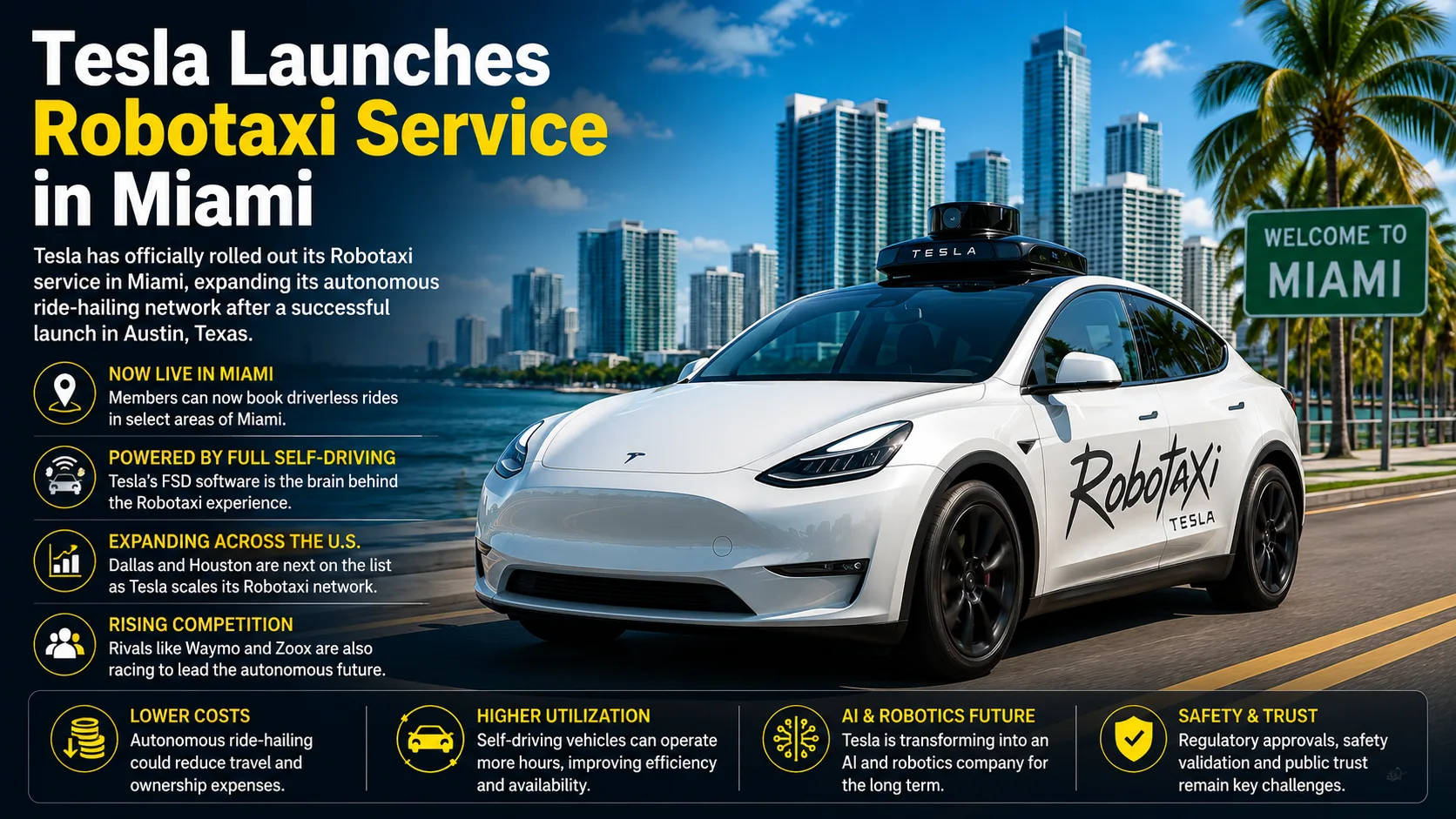
Tesla has officially launched its highly anticipated autonomous ride-hailing service in Miami, marking a pivotal moment for the autonomous driving industry.
The rollout represents a major victory for CEO Elon Musk’s aggressive strategy to pivot Tesla from a traditional electric vehicle manufacturer into a global leader in artificial intelligence and robotics.
As self-driving vehicles become a reality on Florida’s streets, this expansion signals a rapid acceleration in the race to dominate the future of driverless urban transportation.
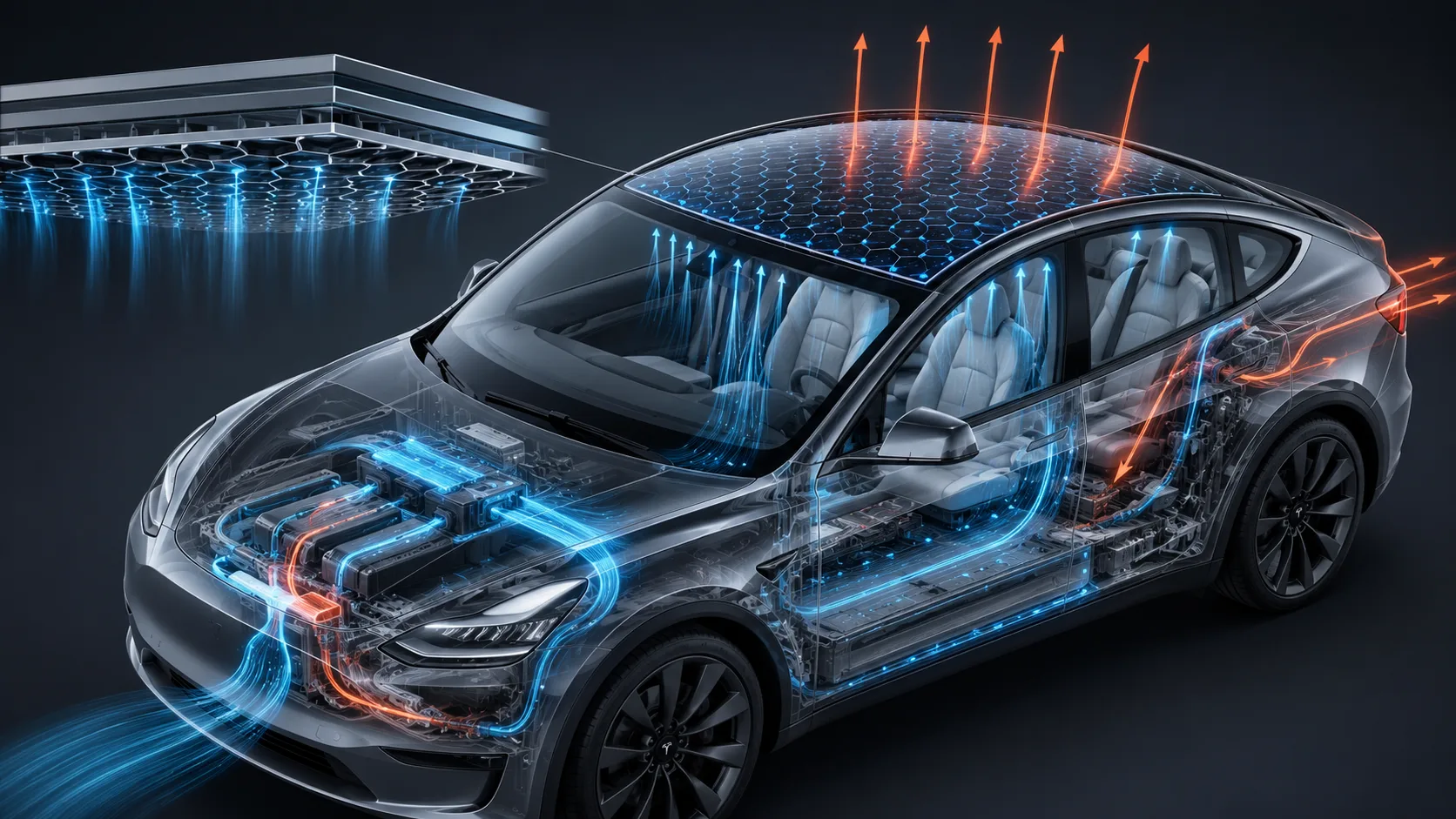
Tesla Robotaxi Arrives in Miami
The strategic Tesla Robotaxi Miami launch marks the company’s second major market entry in the United States. This expansion follows a successful initial rollout in Austin, Texas, where Tesla first deployed its dedicated autonomous fleet to transport passengers.
By targeting Miami a city famous for its complex traffic patterns, dense tourist corridors, and unpredictable weather Tesla is putting its autonomous platform to a rigorous real-world test. Following the Florida launch, Tesla plans to sustain its aggressive Tesla Robotaxi expansion by targeting Dallas and Houston next.
Powered by Full Self-Driving Technology
At the core of the new Tesla Robotaxi service is the company’s proprietary Tesla Full Self-Driving (FSD) software. Unlike competitors that rely heavily on expensive LiDAR and HD mapping, Tesla’s system operates on an end-to-end neural network powered entirely by cameras and artificial intelligence.
This camera-vision approach forms the backbone of Tesla’s autonomous mobility network. For years, Musk has maintained that scaling this technology would allow ordinary passenger cars to transition into revenue-generating assets, effectively shifting Tesla’s valuation toward AI and autonomous transportation network infrastructure.
Competition in the Robotaxi Market Intensifies
As Tesla scales up its operations, the autonomous ride-hailing landscape is becoming increasingly crowded. Tesla faces stiff competition from established autonomous mobility companies like Alphabet’s Waymo and Amazon’s Zoox.
Waymo has already logged millions of commercial driverless miles across San Francisco, Phoenix, and Los Angeles, and is actively expanding its footprint. Meanwhile, Zoox is ramping up deployments of its custom-built, purpose-driven passenger shuttles.
This intensifying rivalry is forcing automakers to accelerate software validation and improve ride costs to capture early market share.
Also Read: Top Selling Cars in June 2026: Tata Dominates, Maruti Holds Ground
Why This Story Matters?
The Robotaxi Miami launch could radically reshape how cities approach public transit and vehicle ownership. Proponents argue that driverless networks will dramatically reduce transportation costs, optimize vehicle utilization rates, and reduce traffic congestion.
However, the industry still faces steep hurdles. Regulatory approvals remain fragmented across different states, and gaining widespread public trust regarding safety validation remains an uphill battle.
How Tesla manages its Miami network will likely influence federal autonomous vehicle policies and dictate the pace of global commercialization.
Also Read: New Yamaha R2 India Launch Likely on August 27: Everything We Know