Audi Q4 e-tron Facelift Unveiled With 592 km Range: Top 5 Rivals in India
Luxury cat maker Audi has finally unveiled its all new Audi Q4 e-tron facelift. This is Audi’s most successful entry-level electric SUV and the new update isn’t just a cosmetic exercise; it is a calculated move to dominate the premium compact EV segment.
The updated model will give you electric range of 592 km range on a single charge and significant efficiency gains, the Q4 e-tron is positioning itself as the “Goldilocks” of luxury EVs—offering the perfect size, premium badge value, and now, highway-crushing range.
In an Indian market that is rapidly warming up to luxury electric crossovers, the arrival of the Q4 e-tron facelift could redefine what buyers expect from a sub-70 lakh luxury vehicle.
Features of Audi Q4 e-tron Facelift
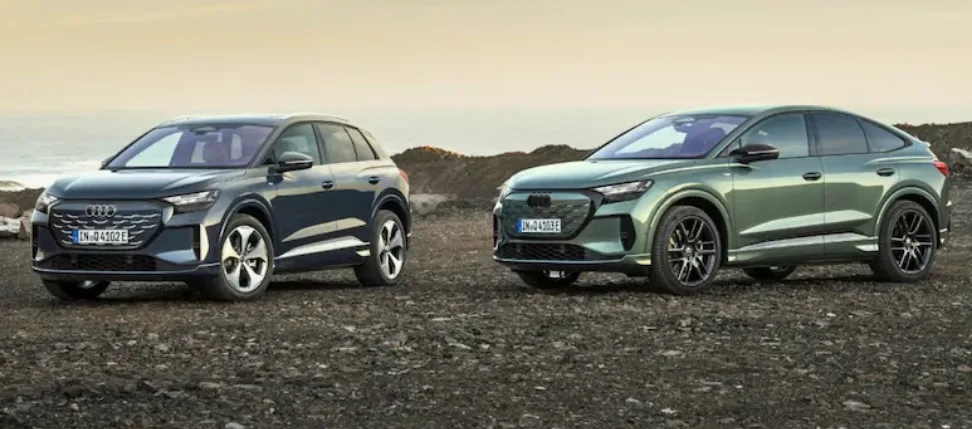
Talking about the features, Audi Q4 e-tron facelift brings a host of technical and aesthetic upgrades that focus on real-world usability.
Visually, it boasts a sharper design with a new digital stage, featuring updated LED DRLs with customizable light signatures and Matrix LED headlights.
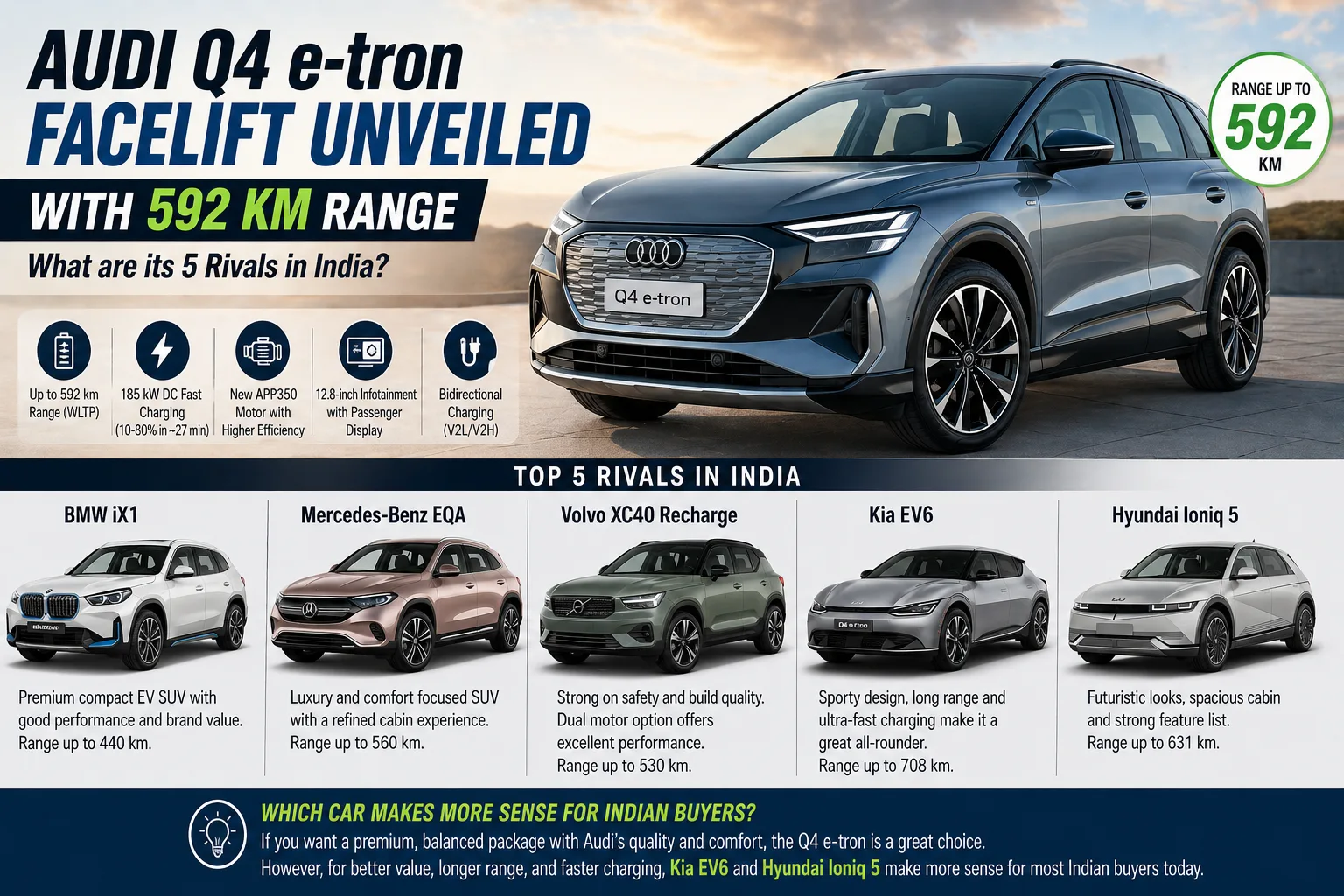
Apart from this latest car comes equipped with more efficient APP350 motor, which provides a roughly 10% gain in efficiency over its predecessor. This new powertrain allows the RWD variant to achieve a claimed 592 km range (WLTP).
Inside, the “digital stage” is headlined by an 11.6-inch MMI touchscreen and the iconic Audi Virtual Cockpit. Charging has also seen a boost, now supporting up to 185 kW DC fast charging, allowing a 10–80% top-up in just 27 minutes.
With bidirectional charging capabilities and a more intuitive driver assistance suite, the Q4 e-tron feels like a truly mature product ready for the evolving Indian charging infrastructure.
Top 5 Rivals in India
1. BMW iX1
The BMW iX1 is currently the most direct rival to the Audi in the Indian luxury space. Priced around Rs 66.90 lakh, the iX1 xDrive30 offers a dual-motor AWD setup as standard, delivering a punchy 308 bhp. While its range of roughly 417–440 km is lower than the new Audi’s 592 km, the BMW wins on driving dynamics and that “instant torque” thrill.
It is the go-to choice for those who want a sporty, driver-centric EV, though it lacks the sheer distance-covering ability of the refreshed Audi.
2. Mercedes-Benz EQA
Mercedes-Benz recently introduced the EQA 250+ in India, focusing heavily on cabin opulence and the “Star” brand value. Priced at approximately Rs 66.50 lakh, the EQA delivers a respectable 560 km (WLTP) range, making it a very close competitor to the Audi in terms of efficiency.
However, the EQA’s interior, filled with ambient lighting and premium materials, targets a comfort-oriented buyer. The Audi Q4 e-tron, by comparison, feels more spacious and technologically avant-garde.
3. Volvo XC40 Recharge
The Volvo XC40 Recharge remains a powerhouse in this segment, especially for those who value safety and raw performance. With a dual-motor setup producing 402 bhp, it is significantly faster than the base Audi Q4 e-tron.
However, its range sits at about 475–505 km, and the boxier design—while classic—doesn’t feel quite as futuristic as the new Audi. The Volvo is for the “no-nonsense” buyer who wants safety and speed above all else.
4. Kia EV6
The Kia EV6 is the “wildcard” that consistently punches above its weight. Despite not having a “luxury” badge in the traditional sense, the EV6 offers a massive 708 km (ARAI) range and ultra-fast 350 kW charging. It is wider and lower than the Audi, looking more like a futuristic spaceship.
While it lacks the brand prestige of the four rings, its 800V architecture and V2L (Vehicle-to-Load) features make it a technically superior machine for tech-savvy buyers.
5. Hyundai Ioniq 5
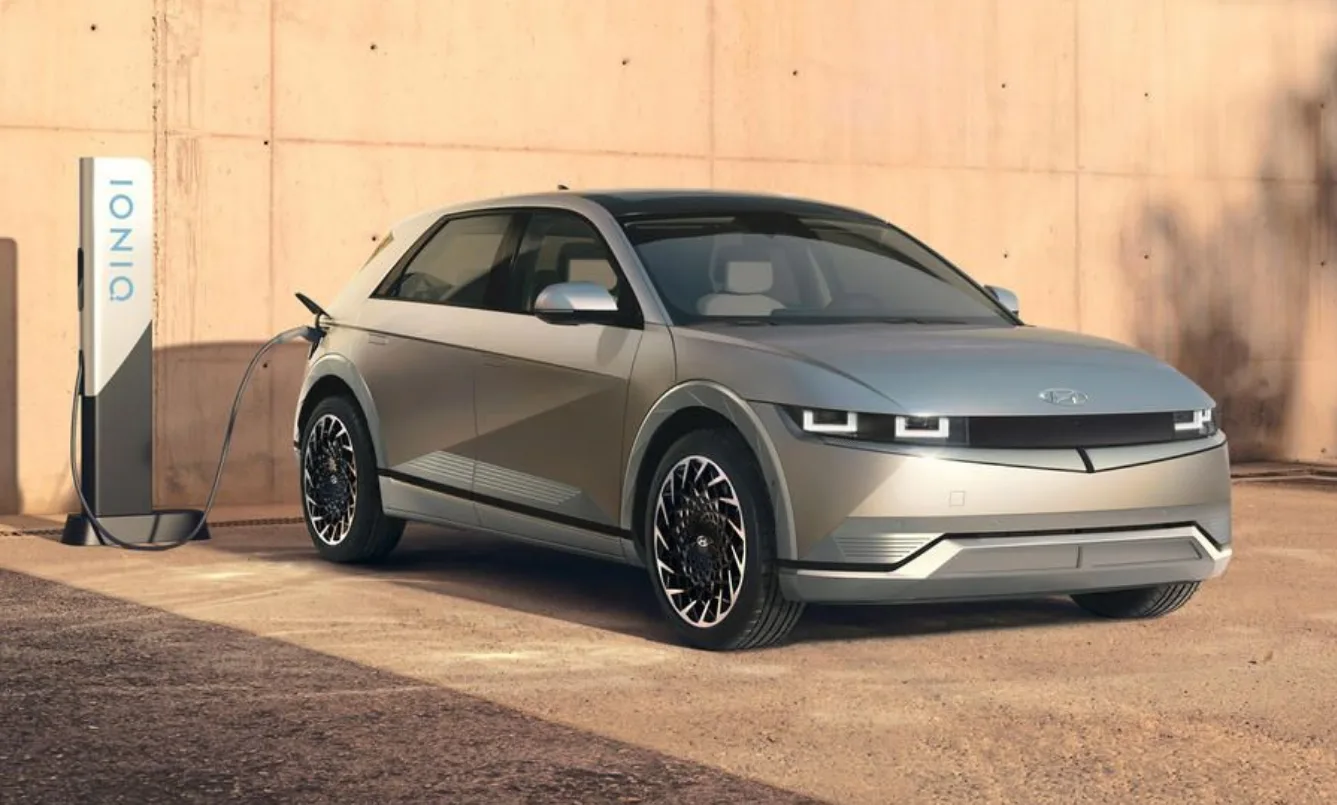
The Hyundai Ioniq 5 is the pricing king of this comparison. Locally assembled in India, it is priced significantly lower than the Audi, often sitting near the Rs 46 lakh mark. It offers a lounge-like interior and a very impressive 631 km (ARAI) range.
While it doesn’t compete in the “luxury badge” tier, the sheer value for money and space it offers makes it a tough rival for any premium EV, including the Q4 e-tron.
Which Car Makes More Sense for Indian Buyers?
Choosing between these EVs depends on whether you prioritize “The Badge” or “The Tech.” For the quintessential Indian luxury buyer, the Audi Q4 e-tron facelift makes immense sense because it balances a high-end brand image with a range that finally eliminates “range anxiety” for inter-city travel (like Mumbai to Goa or Delhi to Chandigarh).
However, from an expert analytical perspective, the Hyundai Ioniq 5 and Kia EV6 offer better value for money and faster charging speeds. If you want the status and the most refined driving experience, the Audi is the winner. But if you are a pragmatist looking for the best electric tech and maximum space per rupee, the Ioniq 5 remains the most sensible choice in the Indian market today.
Also Read: Viral Video: Massive Pickup Truck Runs Over Lamborghini in Florida