Delhi EV Policy 2.0 Explained: Rs 1 Lakh Scrappage Bonus, Road Tax Waiver, EV Subsidies and More
The Delhi government has unveiled its new Electric Vehicle (EV) Policy 2.0, introducing a series of incentives aimed at accelerating EV adoption in the national capital. The revised policy offers benefits across multiple vehicle categories, including electric cars, scooters, auto-rickshaws, commercial vehicles and trucks.
Buyers can take advantage of road tax exemptions, registration fee waivers, purchase subsidies and scrappage incentives, making electric mobility more affordable than ever.
With Delhi targeting a significant increase in EV penetration over the next few years, the new policy is expected to encourage both private buyers and commercial fleet operators to transition away from conventional petrol and diesel vehicles.
Road Tax and Registration Fee Waiver for Electric Cars
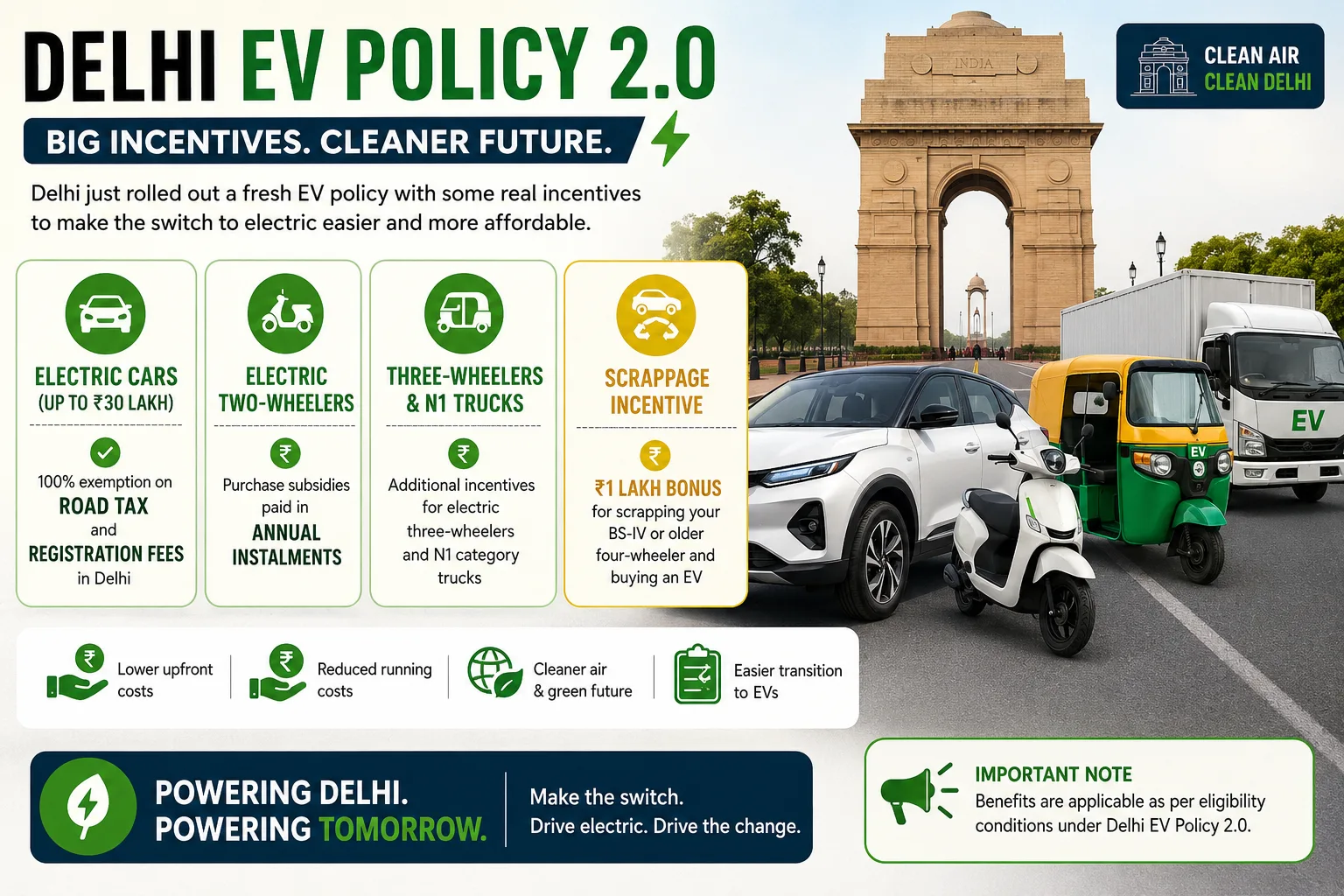
Under the new EV Policy 2.0, buyers purchasing electric cars priced up to ₹30 lakh (ex-showroom) will be exempt from paying road tax and registration charges in Delhi.
This benefit significantly reduces the overall on-road cost of an EV, making premium electric hatchbacks, sedans and SUVs more affordable. The exemption applies to eligible new electric passenger vehicles registered in Delhi and is expected to boost demand in the state’s rapidly growing EV market.
Subsidies for Electric Two-Wheelers
The policy also continues financial support for electric two-wheelers through direct purchase incentives. Eligible buyers will receive subsidies that will be disbursed in annual instalments, encouraging long-term ownership while reducing the upfront cost of purchasing an electric scooter or motorcycle.
The government expects this move to accelerate the adoption of electric two-wheelers, which currently account for the largest share of EV registrations in Delhi. The scheme is likely to benefit both first-time buyers and daily commuters.
Benefits for Electric Three-Wheelers and Commercial Vehicles
Commercial EV buyers have also received a major boost under the revised policy. Electric auto-rickshaws, cargo three-wheelers and N1-category electric trucks will qualify for dedicated incentives aimed at reducing acquisition costs and encouraging fleet electrification.
These benefits are expected to help logistics companies, delivery operators and commercial transport businesses transition to cleaner mobility solutions. The government believes electrifying commercial vehicles will play a key role in reducing urban pollution and lowering operating costs for businesses.
₹1 Lakh Scrappage Incentive Explained
One of the biggest highlights of Delhi EV Policy 2.0 is the introduction of a ₹1 lakh scrapping incentive for eligible car owners.
Individuals who own a BS-IV or older four-wheeler and scrap it through an authorised vehicle scrapping facility before purchasing a new electric car can receive this additional financial benefit.
The incentive aims to remove older, more polluting vehicles from Delhi’s roads while encouraging buyers to switch directly to cleaner electric alternatives.
Who Can Benefit from the New EV Policy?
The revised policy is designed to benefit a wide range of buyers, including private car owners, electric scooter users, commercial fleet operators, logistics companies and small business owners.
By combining purchase subsidies, tax exemptions and scrappage incentives, Delhi aims to make electric vehicles financially attractive across multiple vehicle segments.
The policy also supports the government’s long-term objective of increasing EV adoption while reducing vehicular emissions and improving air quality.
Expected Impact on Delhi’s EV Market
Industry experts believe the new EV Policy 2.0 could significantly boost electric vehicle sales in Delhi over the coming years. Lower acquisition costs, combined with tax exemptions and scrappage benefits, are expected to encourage faster replacement of ageing internal combustion engine vehicles.
The policy may also strengthen demand for affordable electric SUVs, premium scooters, commercial EVs and electric cargo vehicles, helping manufacturers expand their presence in one of India’s most important EV markets.
Why This Story Matters ?
Delhi’s latest EV Policy is one of the country’s most comprehensive incentive programmes for electric mobility. By offering benefits across passenger, commercial and fleet segments, the government is addressing key barriers to EV adoption, including high upfront costs and the continued use of older polluting vehicles.
If implemented effectively, the policy could serve as a model for other Indian states looking to accelerate the transition towards sustainable transportation.