Hyundai To Launch New EV in India Soon? New Compact Electric SUV Spied In Chennai
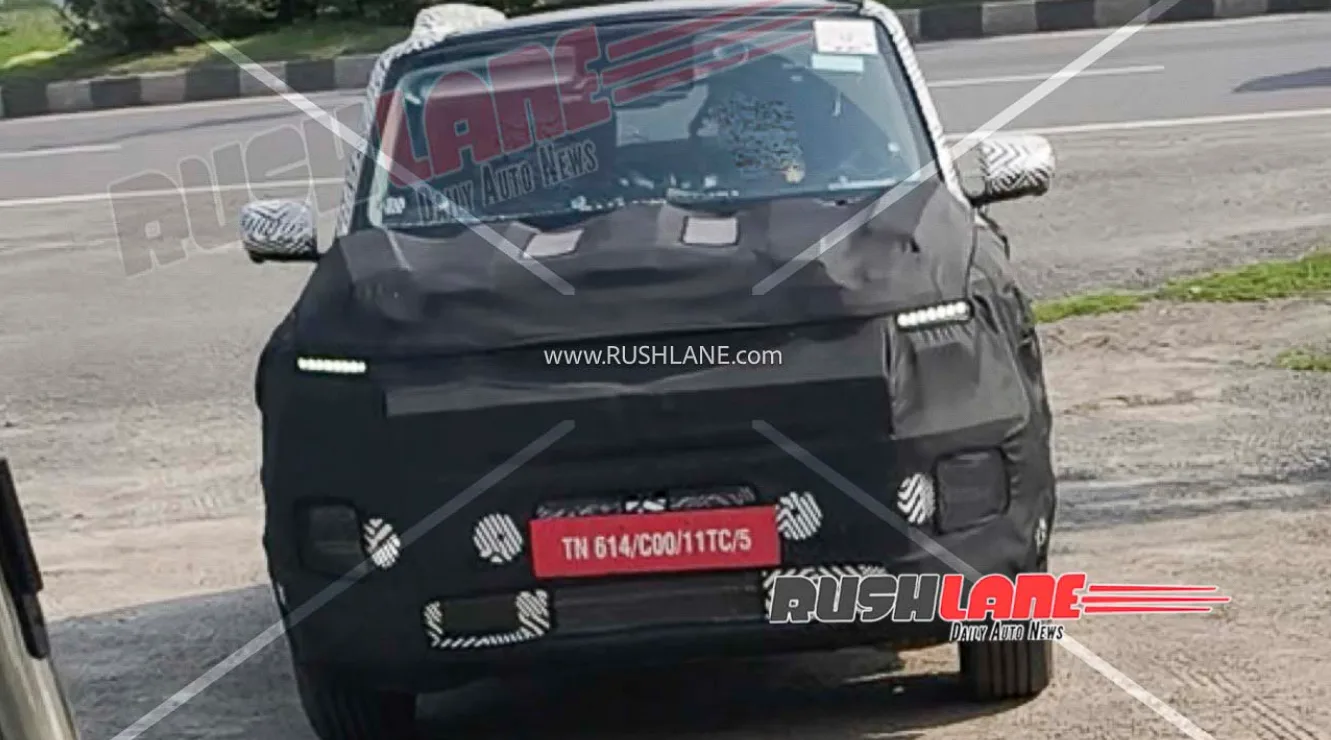
Hyundai appears to be moving closer to the launch of its next mass-market electric vehicle in India. The Hyundai’s New EV, internally known as HE1i, has been spotted testing again on Chennai roads with a new camouflage design.
The latest test mule is particularly interesting because its camouflage features large lettering, similar to the teaser-style wrap Hyundai used on the Bayon before its reveal.
Hyundai has not announced the production name yet, but the new EV is expected to sit below the Creta Electric in the company’s Indian lineup. The compact SUV could make its debut in early 2027, with January currently emerging as a possible launch window.
Hyundai New EV: Expected Design
The latest Chennai spy shots suggest that Hyundai’s new electric SUV will follow a boxy and upright design rather than a conventional coupe-inspired profile.
The test vehicle gets a tall roofline, large windows, roof rails and a relatively squared-off rear section. These proportions could help Hyundai offer better cabin space while keeping the SUV within the sub-four-metre category. Geometric dual-tone alloy wheels also stand out under the camouflage.
The rear appears to feature compact horizontal lighting elements, while the front could use a split-headlamp arrangement with slim LED daytime running lights positioned above the main lamps. Heavy camouflage still hides the final bumpers, grille treatment and body surfaces.

Hyundai New EV: Powertrain And Battery
Hyundai has not revealed the final battery capacity, motor output or certified range of the India-spec EV. However, the company has confirmed that the new compact electric SUV will use its E-GMP (K) architecture, which also supports the Hyundai Inster in international markets.
Reports suggest that Hyundai could offer Standard Range and Long Range versions in India. Earlier reports have pointed towards battery packs in the 40-50kWh range, while other reports indicate that the model could borrow technology from the Kia Syros EV, including larger 42kWh and 51kWh battery options.
The final battery sizes, motor output, charging speed and driving range remain unconfirmed.
Cabin And Safety Features
The upcoming Hyundai EV could get a technology-focused cabin with a large central touchscreen and a digital driver display. Earlier spy shots have already revealed a screen setup believed to be linked to Hyundai’s new Pleos Connect infotainment system.
Hyundai has also confirmed Level 2 ADAS for the upcoming electric SUV. Other expected equipment could include a 360-degree camera, connected-car technology, automatic climate control, ventilated seats and a sunroof, although the final variant-wise equipment list remains unknown.
The dedicated EV platform should also allow Hyundai to optimise cabin space within the compact exterior. Multiple airbags and electronic safety systems are expected, but Hyundai has not yet released the complete India-spec safety package.
Expected Price And Rivals
Hyundai could position its upcoming compact electric SUV aggressively in India. Current reports suggest an expected starting price around Rs. 10 lakh, while the top variants could extend towards the Rs. 15-17.5 lakh range, depending on battery and equipment.
The final prices will be announced closer to launch. The new EV will sit below the Creta Electric and could compete with the Tata Punch EV, Tata Nexon EV, Mahindra XUV 3XO EV and Kia Syros EV.
Hyundai New EV Launch Timeline
The latest developments suggest that Hyundai is entering the final phase of testing for its new compact electric SUV. The company has already confirmed the model for India and plans to manufacture it at its Sriperumbudur facility in Tamil Nadu.
Hyundai is also working on higher localisation to keep the new EV competitive in the price-sensitive Indian market. Earlier reports pointed towards a 2026 launch, but the latest information indicates a Q1 2027 debut, with January 2027 being a possible timeline.
If Hyundai manages to keep the starting price close to the Rs. 10 lakh mark, this new electric SUV could become one of the brand’s most important EV launches for the Indian market.
Also Read: 2026 Bajaj Pulsar NS200 Vs TVS Apache RTR 200 4V: Price, Mileage, Top Speed and Specs Compared